The inscription above Jesus's head on the cross read, "Jesus the Nazarene, the King of the Jews" (John 19:19).
But why is Jesus called "King of the Jews" if Jews don't believe He is the Messiah?
A Descendant of David
The Messiah was to be a descendant of David who would sit on David's throne forever.
After David became King of all Israel, he planned to build a temple for God in Jerusalem. However, God told him not to do it. He told David, through the prophet Nathan, that He did not need a "house" to dwell in. After all, God had commanded the creation of the Tabernacle – a tent – to house the Ark of the Covenant and be the place where God "lived" among His people.
God then promised David: "When your days are finished, and you lie down with your fathers, I will raise up your descendant after you, who will come from you, and I will establish his kingdom. He shall build a house for My name, and I will establish the throne of His kingdom forever" (2 Samuel 7:12-13).
Eventually, the Jews came to believe that the Messiah would reign over David's kingdom forever, in God's eternal kingdom. (The title "Messiah" means "anointed one"; the "anointing" refers to the ceremony in which God's chosen leader was anointed with oil to symbolize God's favor upon him.)
For example, in the familiar prophecy of the birth of the Messiah in Isaiah 9:1-7, Isaiah says: "There will be no end to the increase of His government or of peace on the throne of David and over his kingdom, to establish it and to uphold it with justice and righteousness from then on and forevermore. The zeal of the Lord of armies will accomplish this" (Isaiah 9:7, emphasis added).
Jesus Charged With Rebellion
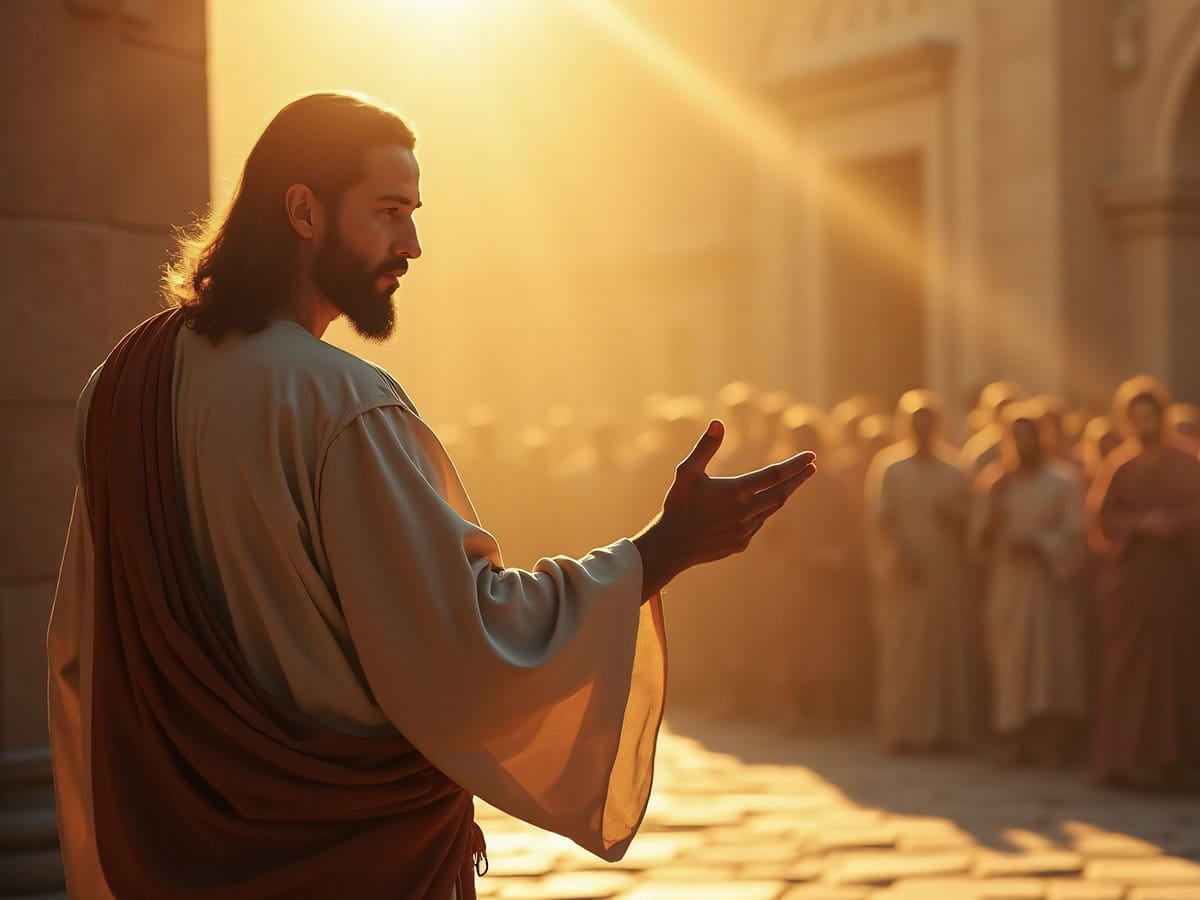
Jesus's public ministry – both His teaching and His miracles – led many people to believe that He was the Messiah. His call for people to "Repent, for the kingdom of heaven is at hand" (Matthew 4:17) logically prompted the conclusion that He was the King for whom they had been waiting. As Jesus's ministry progressed, more people began to believe that He was the Messiah.
That caused a problem for the Jewish leaders: the Messiah would be a rival to their authority. Furthermore, a popular uprising in support of Jesus could provoke the Roman government into a harsh crackdown, which would negatively impact the leaders' position.
When Jesus was brought before Pontius Pilate, the Sanhedrin told Pilate: "We found this man misleading our nation and forbidding us to pay taxes to Caesar, and saying that He Himself is Christ, a King" (Luke 23:2).
Their position was clear: Jesus claimed to be the King of the Jews, but the Jewish leadership did not accept His claim as genuine.
How Did Jesus Come to Be Called the "King of the Jews"?
First, when He was brought to trial, Jesus did not deny the accusation. "Now Pilate asked Him, saying, 'So You are the King of the Jews?' And He answered him and said, 'It is as you say'" (Luke 23:3; see also Matthew 27:11; Mark 15:2; John 18:37).
Second, because of the charge and Jesus's response, Pilate began referring to Jesus as the "King of the Jews" (for example, John 18:39).
The Roman soldiers also picked up on this, although in a mocking way. John 19:2-3 tells us that they twisted a crown of thorns together, placed it on His head, put a purple robe on Him, and said, "Hail, King of the Jews," as they struck Him repeatedly.
The final affirmation of Jesus as "King of the Jews" came when Pilate prepared the inscription to be placed above His head on the cross. "Now Pilate also wrote an inscription and put it on the cross. It was written, 'JESUS THE NAZARENE, THE KING OF THE JEWS.'" (John 19:19). In Latin – the official language of the Roman Empire – this inscription reads, "Iesus Nazarenus, Rex Iudaeorum." (As a side note, that is why many crucifixes and depictions of the crucifixion have the letters "INRI" above Jesus's head: it is the abbreviation for the Latin inscription Pilate placed on the cross.)
John's Gospel also indicates that Pilate also had the inscription written in Hebrew and Greek, so nearly everyone passing by would know the charge for which Jesus was crucified (see John 19:20).
After Pilate ordered the inscription to be placed above Jesus's head, the Jewish leaders complained. "Do not write, 'The King of the Jews'; rather, write that He said, 'I am King of the Jews.' Pilate answered, 'What I have written, I have written'" (John 19:21-22).
The Jewish leaders obviously understood that the Roman government's identification of Jesus as the "King of the Jews" would carry weight with many people. Because they did not accept Jesus as the Messiah, they tried – unsuccessfully – to convince Pilate to change the inscription.
So why is Jesus called "King of the Jews" if the Jews don't believe He is the Messiah? One reason is that Pilate's inscription on the cross led many people to refer to Jesus as the "King of the Jews," regardless of what they believed about Him.
Another reason, connected to the first, is that the fact that the Jewish leaders didn't accept Jesus as the Messiah does not mean that He isn't; it simply means that they won't accept the truth. They claimed that He deceived the people by claiming to be a King, but to quote from The Adventures of Tom Sawyer, "Your saying so don't make it so."
But the most important reason that Jesus is called the "King of the Jews" is because He is the King of the Jews. He is the Messiah, the descendant of David, who sits on the throne of God's Kingdom forever. Peter famously confessed Jesus as "the Christ, the Son of the Living God" in Matthew 16:16. ("Christ" is the Greek word which translates the Hebrew title "Messiah.") Although Peter didn't fully understand what he was saying at the time, he did later. On the day of Pentecost, inspired by the Holy Spirit, Peter proclaimed to the multitudes gathered in Jerusalem: "Therefore let all the house of Israel know for certain that God has made Him both Lord and Christ – this Jesus whom you crucified" (Acts 2:36).
Jesus is called the "King of the Jews" because He is! He is the King of Glory. And in God's eternal kingdom, the voices of the multitudes proclaim Him as King:
- "Worthy is the Lamb that was slaughtered to receive power, wealth, wisdom, might, honor, glory, and blessing" (Revelation 5:12).
- "To Him who sits on the throne and to the Lamb be the blessing, the honor, the glory, and the dominion forever and ever" (Revelation 5:13).
All hail King Jesus!