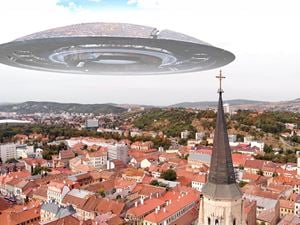
People have wondered for centuries if humans are alone in the universe. Today, that question feels more real than ever. Governments discuss UFO sightings. Scientists search for life on other planets. At the same time, many people ask a deeper question: would aliens undermine Christianity?
This question matters because Christianity centers on God, humanity, and salvation through Jesus. If intelligent life exists elsewhere, it could raise new questions about faith. However, many theologians argue that alien life would not destroy Christianity. Instead, it would expand our understanding of God's creation. In this article, we explore what we know about aliens and UFOs, various Christian perspectives, and how the Bible and Jesus' teachings relate to the topic.
What We Know About Aliens and UFOs
Scientists and governments use the term "UAP" (Unidentified Aerial Phenomena) instead of UFOs. These are objects in the sky that experts cannot easily explain. NASA studied UAPs and published a report. The agency found no evidence that these objects come from extraterrestrial sources, but it admitted that some cases remain unexplained. NASA also says scientists need better data to understand these phenomena.
At the same time, researchers continue to search for life beyond Earth. They study distant planets and search for signs of life, but they have not yet confirmed the existence of alien life.
In short, we know this:
-
Some aerial phenomena remain unexplained.
-
Scientists search for life in space.
-
No confirmed extraterrestrial life exists today.
This scientific uncertainty leaves room for both curiosity and caution.
The "No Problem" Christian Perspective
Many mainstream Christians, including Catholic and mainline Protestant scholars, argue that the existence of aliens would not disrupt our core faith:
-
A Vast Creation: The foundational belief is that God is the creator of the entire universe; Genesis 1:1 states that God created the heavens and the Earth.
-
The Vatican's Stance: The Vatican Observatory has actively engaged with this topic. In 2008, the Director of the Vatican Observatory, Father José Gabriel Funes, famously stated that believing in aliens does not contradict faith in God, calling them our "extraterrestrial brothers" and part of God's creation.
-
The "Other Sheep" Argument: Some theologians point to verses like John 10:16, where Jesus speaks of "other sheep," potentially opening the door to include extraterrestrial beings.
If Christians believe that our God is the God of the universe, they must believe that this includes extraterrestrial beings.
This is a Complex Question
While many find room for extraterrestrial life, it does introduce some complex theological questions that would require serious debate:
-
The Incarnation and Redemption: A central pillar of Christianity is that God became man in Jesus Christ to redeem humanity. If aliens exist, it raises a profound question: Do they need saving too?
-
The Earth-Centric View: Some argue Christ's sacrifice on Earth was a singular universal event that covers all creation, everywhere.
-
The Multiple Incarnations View: C.S. Lewis, a prominent Christian author, suggested that other worlds might not have fallen into sin, or if they did, God might have incarnated on those worlds in a form native to them.
-
Human Uniqueness: Christianity teaches that humans are made in the "image and likeness of God" (Genesis 1:27). If an alien species is vastly more intelligent, spiritual, or moral than humans, it could challenge the traditional view of humanity's special, central status in creation.
The Fundamentalist Christian View
A fundamentalist Christian is someone who believes the Bible is completely true and has no mistakes. They believe every story and miracle in it happened exactly as it is written. They focus on the core, "fundamental" rules of their faith. They hold firmly to traditional interpretations and resist reinterpreting Scripture to accommodate contemporary perspectives. For Fundamentalist Christians, the existence of intelligent aliens would present a significant issue:
-
Because the Bible focuses entirely on Earth, humanity, and the spiritual realm, some argue that the existence of other intelligent physical life-forms is incompatible with Scripture.
-
In some of these circles, it is argued that if "aliens" ever do appear, they might be demonic deceptions designed to mislead humanity away from faith.
The "Everyday" Christian View
Most Christians likely fall somewhere in the middle. They do not see aliens as a threat, but they still have questions. Many believers today feel that:
-
The universe is vast and mysterious.
-
God's creation may include unknown things.
-
Faith does not depend on having all the answers.
For many, alien life would not change daily faith. It would raise curiosity, not fear. Some Christians also think discovery could strengthen belief. If God created life elsewhere, it might highlight His creativity and power.
Would Aliens Undermine Our Christian Beliefs?
The evidence suggests this is not the case. To better understand the question, we should focus on Jesus and the Bible.
Jesus' Values:
-
Loving others.
-
Trusting God.
-
Living with humility.
None of these values depend upon whether aliens exist or not.
The Bible's Focus
-
God's relationship with humanity.
-
Moral values like love, forgiveness, and humility.
-
Salvation through Jesus Christ.
The Bible does not attempt to explain every detail of the universe.
Based on what we know today, there is nothing that indicates that the presence of aliens should have any effect on our Christian faith. The Bible says that God "created the heavens and earth." Since we believe God created the heavens, it follows that the same commandments and values we have as Christians should apply to any alien life forms in the universe.
The potential discovery of extraterrestrial life may raise new questions for Christian theology, but scholars and religious analysts suggest it would not alter the faith's fundamental tenets. Proponents of this view argue that the existence of life elsewhere in the universe is entirely compatible with the concept of an infinite creator. Consequently, many theological experts encourage Christian communities to engage with reported sightings of Unidentified Anomalous Phenomena (UAPs) through a lens of scientific curiosity and spiritual confidence, rather than apprehension, viewing these discoveries as an opportunity to broaden the understanding of creation.