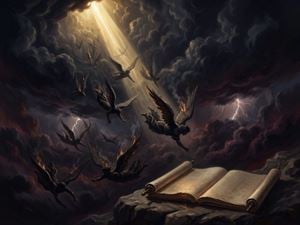
Many Christians wonder where demons came from and whether the Bible explains their origin. Scripture clearly teaches that demons are real spiritual beings who oppose God and seek to lead people away from Him. It also teaches that Jesus has complete authority over them. However, the Bible does not provide a single passage that fully explains how demons originated or exactly when they rebelled against God. As a result, Christians have developed different interpretations of several biblical passages that may relate to the origin of demons. Some believe these texts describe Satan's fall and the rebellion of angels who followed him. Others believe the passages primarily address human rulers or symbolic events rather than the origin of demons themselves.
It is important to distinguish between what the Bible directly teaches and what later Christian tradition has suggested. By doing so, we can approach the topic with humility and confidence in God's truth rather than fear of the unknown.
Isaiah 14: The Fall of the King of Babylon
Isaiah 14 contains a taunt against the king of Babylon. The chapter describes a proud ruler who sought greatness, but God's judgment ultimately brought him down. Isaiah 14:12 is one of the most famous verses in Scripture and says the king has "fallen from heaven." Many Christians throughout church history have connected this passage with Satan. The language about falling from heaven appears to describe more than an ordinary human king, leading some people to see a reference to Satan's rebellion behind the earthly ruler.
Some Christians point out that the chapter explicitly identifies its subject as the king of Babylon. They believe Isaiah is using imagery to describe the downfall of a powerful human ruler rather than giving a literal account of Satan's origin. For this reason, Christians disagree about whether Isaiah 14 directly describes Satan. Scripture does not explicitly state that this chapter explains the origin of demons.
Ezekiel 28: The King of Tyre
Ezekiel 28 begins with a judgment against the ruler of Tyre, a wealthy and influential city. The king is rebuked for pride, self-sufficiency, and claiming a status that belongs only to God. Later in the chapter, the language becomes more unusual. The figure is described as being in Eden, the garden of God, and as an "anointed guardian cherub." Because of this imagery, many Christians believe the passage points beyond the king of Tyre to Satan himself.
In this view, Ezekiel may be describing a spiritual being who grew proud and fell from God's favor. Others believe the passage remains focused on the king of Tyre and uses symbolic language to emphasize his arrogance and coming judgment. Ancient prophets often used vivid imagery, and not everyone agrees that the text should be read as a direct description of Satan. Therefore, Christians should approach the passage carefully and avoid presenting one interpretation as fact.
Genesis 6: The Sons of God
Genesis 6 contains one of the Bible's most debated passages. It describes "the sons of God" taking wives from "the daughters of men" before the flood. Over the centuries, Christians have offered several explanations:
The first view identifies the "sons of God" as angels who rebelled against God. This interpretation became popular in some ancient Jewish writings and has remained influential among many Christians.
The second view understands the "sons of God" as descendants of Seth, the godly line that followed Adam through his son Seth. According to this interpretation, the passage describes marriages between faithful believers and those who did not follow God.
A third view sees the "sons of God" as powerful rulers or kings who abused their authority.
Some who favor the angelic interpretation believe Genesis 6 helps explain the origin of demons. Others strongly disagree, arguing that the text says nothing about demons. Genesis 6 never directly states that demons came from these events. Any connection between this passage and the origin of demons requires interpretation rather than explicit biblical teaching.
Revelation 12: The Dragon and His Angels
Revelation 12 presents a dramatic vision of spiritual conflict. The chapter identifies a great dragon as Satan and describes a war in heaven in which the dragon and his angels are cast down. Many Christians view this passage as the strongest biblical support for the idea that some angels followed Satan in rebellion against God. If so, demons may be connected with these fallen angels.
At the same time, Revelation is a highly symbolic book. Christians differ on when the events of Revelation 12 occur and how literally to understand them. Some see the chapter as describing Satan's original fall. Others associate it with Christ's victory through His death and resurrection. Still others connect it to future events. Despite these differences, the main message is clear: Satan and all evil powers remain under God's authority and will ultimately be defeated. The passage teaches the reality of spiritual conflict, but Christians continue to debate its exact relationship to the origin of demons.
What the Bible Teaches and What Tradition Adds
Several ideas about demons have become common in Christian culture, but not all of them come directly from Scripture. The Bible teaches that:
- Demons are real spiritual beings.
- Satan opposes God.
- Some angels sinned and came under judgment.
- Jesus has authority over demons.
- God will ultimately defeat all evil.
The Bible does not clearly explain:
- The exact origin of demons.
- Whether demons and fallen angels are always the same beings.
- Whether Isaiah 14 and Ezekiel 28 directly describe Satan.
- Whether Genesis 6 explains where demons came from.
Popular culture often fills these gaps with dramatic stories, movies, novels, and folklore. These portrayals can make spiritual subjects seem frightening. However, many details commonly associated with demons come from later traditions rather than clear biblical teaching.
Scripture consistently points believers toward God's sovereignty, Christ's victory, and the certainty of God's final triumph over evil. The passages in this article all contribute to the discussion, but Christians continue to disagree about exactly how these passages relate to Satan, fallen angels, and demons. One thing remains beyond dispute: God reigns over all creation. No demon, fallen angel, or spiritual force can act outside His authority. Understanding spiritual reality should not lead believers to fear. Rather, it should strengthen confidence in the God who created all things, rules over all things, and has secured victory through Jesus Christ.