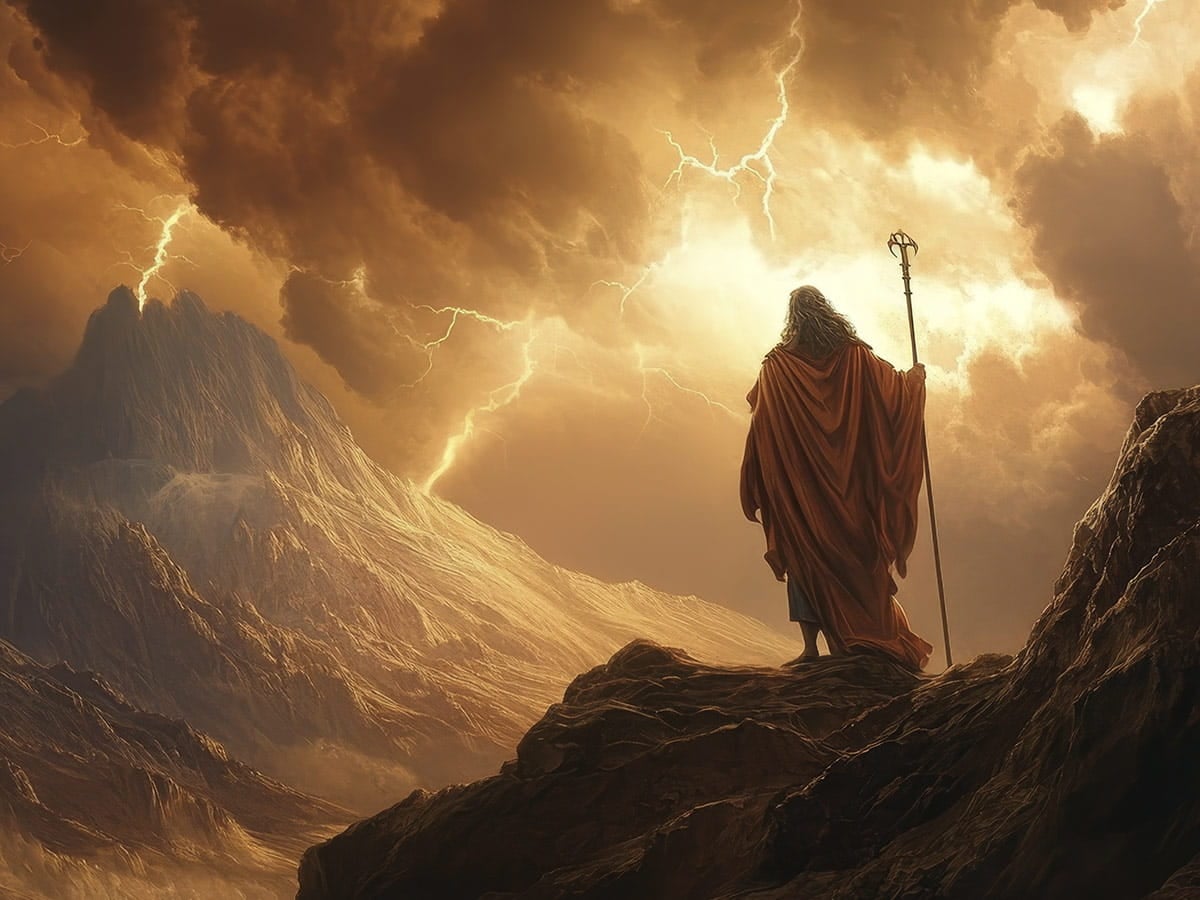
Conversations about Armageddon capture the minds of many. They are overtaken by the end times sensationalism that draws people to wonder about the end.
But is that what the Book of Revelation is about? Was it intended to be a blueprint for the future? What many do not seem to realize is that these hysteria-breeding notions of the end of the world radically conflict with the biblical understanding of who God is, the missional call for God's people, and the very purpose for which the Book of Revelation was written.
Rethinking Revelation: Is it Really About the End?
The Scriptures are clear that God is love (1 John 4:8), that God's kindness leads to repentance (Rom 2:4), and that God desires everyone to be saved (1 Timothy 2:4). Yet, somehow, many read the Book of Revelation as though God were an angry tyrant wanting to inflict great suffering on everyone who fails to repent.
In addition, the Bible is also clear that God sends His people (the Church) into the world to be the means through which He is made known (Matthew 28:18-20; Romans 10:14-15). That is why Jesus says that the people of God are the light of the world (Matthew 5:14).
Because the Church brings the message of the world's true King (Jesus) to a world that already has its own kings and rulers, there will be opposition to the work of God's people. Hence, Jesus warns his disciples that they are being sent as "sheep in the midst of wolves" (Matt 10:16).
Because the people of God are called to be God's witnesses, the Bible repeatedly affirms that those who are persecuted will be blessed (Matthew 5:10). Persecution, in fact, is what the people of God are to expect in this world. Thus, Paul encourages the Church in Thessalonica that their tribulation is a sign that there are imitators of Christ (1 Thessalonians 1:6).
Tribulation as a Christian Expectation
Jesus reminds His disciples that they have peace in Him, but in the world they will have "tribulation" (John 16:33). In fact, the word "tribulation" is used throughout the New Testament to indicate the suffering of God's people.
The New Bible Dictionary affirms, "The tribulation of Christ is the pattern and norm for the experience of the Christian community. Thus, tribulation is inevitable and to be anticipated" (p. 1028).
To understand the Book of Revelation and its depiction of Armageddon, it is critical to remember that God is love and that He has sent His people into the world to make Him known. John wrote the book of Revelation with this in mind.
That is, he writes to the seven churches of Asia (a province in the Roman Empire on the western coast of modern-day Turkey) in order to encourage them to overcome (Revelation 2:7, 11, 17, 26; 3:5, 12, 21). Why do they need to overcome?
Because there is a Dragon (Satan) who has enlisted two Beasts (empire: Rome in John's day, but likely indicating all empires in history) to oppose the work of God's people, the first beast, in fact, makes "war with" God's people (Revelation 11:7 and 13:7).
That this is the context for the war of Armageddon in the book of Revelation is evident from an examination of John's use of "war." John refers to the "war" seven times in the book of Revelation (see Revelation 11:7; 12:7, 17; 13:7; 16:14; 19:19; 20:8; there are two other occurrences of the noun for war in the book of Revelation, but they do not seem to refer to any war in particular: see Revelation 9:7, 9). In every instance, John's use of the noun "war" refers to the war that Satan and his minions (the Beast) wage against Christ and His people.
Satan's War
Thus, the Armageddon passage in Revelation 16:12-16 refers to the war that Satan wages against the people of God. Several facts support this conclusion.
First, in the midst of the description of the war of Armageddon in Revelation 16, John inserts a parenthetical comment (virtually all major English translations place Revelation 16:15 in parentheses). This parenthetical serves to remind the Christians that Jesus is coming "like a thief" and that they are to "stay awake" and to "keep" their clothes with them so that they might be ready (Revelation 16:15).
That this note is for Christians is confirmed by the fact that a very similar exhortation occurs in the letter to the Church in Sardis in Revelation 3 (see Revelation 3:1-6 where they are told to "wake up" (Revelation 3:2); Jesus is coming "like a thief" (Revelation 3:3), and they need to be appropriately dressed (Revelation 3:4). The fact that in the midst of his description of the war of Armageddon John inserts a reminder to the churches to whom he was writing that they need to be prepared surely indicates that the war of Armageddon was a present reality for them and something that they needed to be ready for.
Second, John uses the identical phrase, "to gather them together for the war" (Revelation 16:14), in Revelation 20:8. However, the war in Revelation 20:7-9 is explicitly described as the war that Satan wages against Christ and His people. The repetition of identical or nearly identical phrases is a common way for John to connect various parts of his book. Thus, if the war in Revelation 20:8 is waged against the people of God, then so must the war in Revelation 16:12-16.
A Present War, Not a Future Battlefield
Consequently, in the book of Revelation, the war of Armageddon is portrayed as having been ongoing since the time of Christ and continuing today against the people of God.
This is why Paul reminded the Church in Ephesus, "For our struggle is not against flesh and blood, but against the rulers, against the powers, against the world forces of this darkness (Ephesians 6:12).
A Call to Peace, Not War
Why does this matter? For one, it matters because the Church is to read the Bible well, and this reading is faithful to the text. Second, there are millions of Christians in the world today who suffer persecution daily, and the Church must be in prayer and support for them. Third, the notion that Armageddon refers to some end times battle waged on the plains of central Israel too often leads to Christian support for wars on the pretense that they are a sign of the imminent return of Jesus. But Christians should never rejoice in war. War brings suffering, famines, plagues, and death.
The people of God, in fact, are to pursue peace.