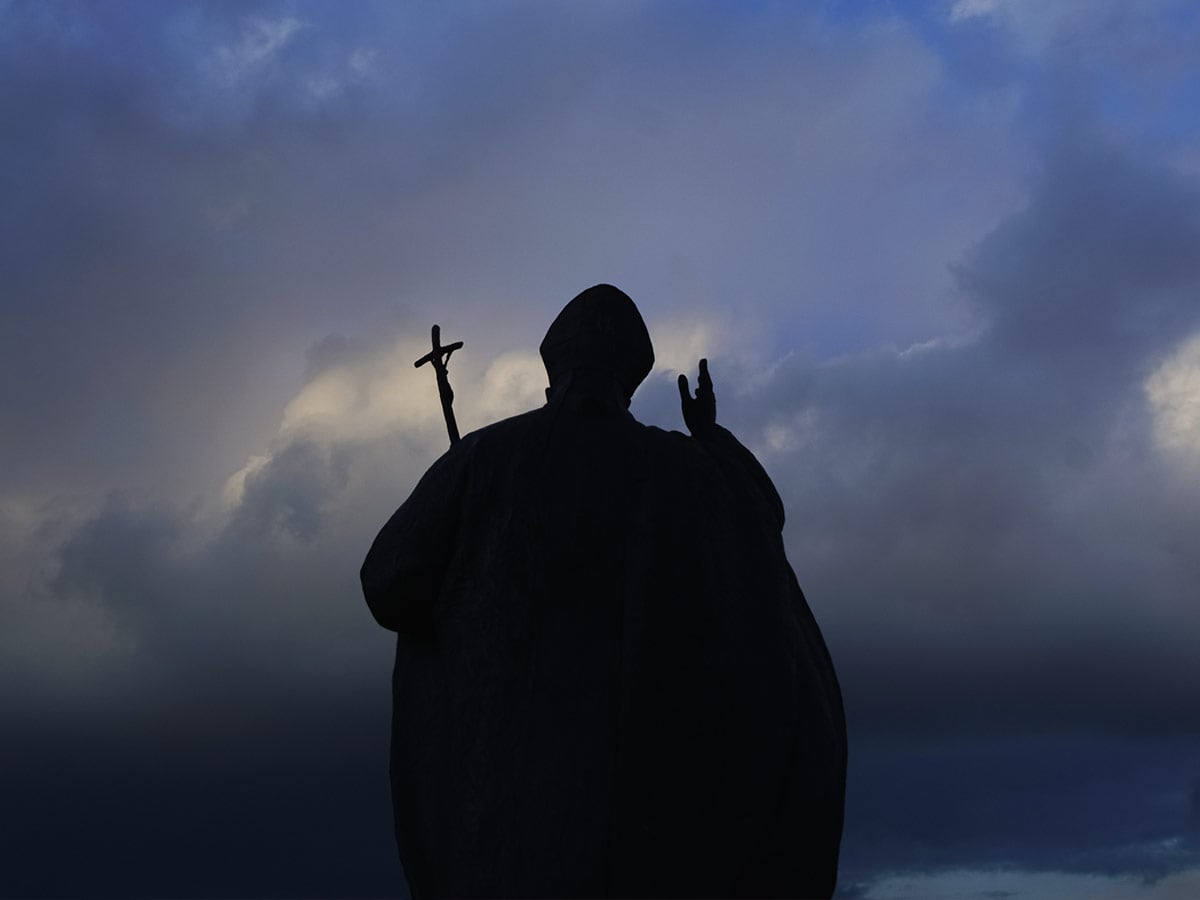
The Resurrection is at the heart of Christian faith. Even though Jesus had told His followers that He would rise on the third day, they struggled to believe it. So what were Jesus' first words to them after His Resurrection?
The Differences in the Gospel Accounts.
Unbelievers often point to so-called "discrepancies" in the Gospel accounts to support their refusal to believe the Bible. However, it is perfectly normal that various witnesses to an event would have slightly different memories. Eyewitnesses to an event see it from different perspectives, and they often focus on different details. That does not mean that their accounts conflict; it simply recognizes human limitations.
Another factor to consider is that the Gospel accounts were written years after the Resurrection. On top of that, three of the Gospels were written by men who were not at the empty tomb that day (only John seems to have been there; see John 20:1-8). Thus, three of the Gospels describe the Resurrection on the basis of second-hand information. The point is that it is easily understandable why there are slight differences in the ways that the Gospels tell the story.
Jesus Appears at the Empty Tomb.
Some people may be surprised to learn that neither Mark nor Luke includes any appearance of Jesus at the empty tomb in their accounts of the Resurrection. In fact, the original text of Mark's Gospel stops with Mark 16:8, including only the appearance of an angel to the woman who had come to the tomb. (Many scholars believe that verses 9-20 of Mark 16 were added later.) Mark 16:9 indicates that Jesus appeared to Mary Magdalene after the Resurrection, but contains no statement by Jesus to her at that time.
Similarly, Luke's Gospel also does not include an appearance by the risen Jesus at the tomb. The first recorded appearance of Jesus came on the road to Emmaus later that day (Luke 24:13-35). As Jesus talks to the disciples in that account, they say the women had "a vision of angels" at the tomb, but make no mention of Jesus Himself appearing to them.
Both Matthew and John include appearances of Jesus to women at the empty tomb; Matthew states that Jesus appeared to Mary Magdalene "and the other Mary," while John mentions only Mary Magdalene. The accounts are otherwise nearly identical: Jesus appears, the women cling to His feet and worship Him, and He tells them not to be afraid and to go and tell the disciples.
Later Appearances After the Resurrection.
Both Luke and John contain narratives of other appearances by Jesus on the day of His Resurrection. Luke describes two encounters – one with two disciples on the road to Emmaus, and another later that evening to the gathered believers in Jerusalem (Luke 24:36-49). John also describes a meeting with the assembled disciples in Jerusalem (John 20:19-23).
After the Resurrection, Jesus remained with the disciples for 40 days, until the Ascension (Acts 1:9-11). Matthew tells of Jesus meeting with the disciples in Galilee, where He gave them the Great Commission (Matthew 28:16-20). The latter ending of Mark includes a similar account, although in a different setting (Mark 16:14-18). Luke's Gospel does not record any further appearances of Jesus after His Resurrection, although Acts 1 states that Jesus appeared to His disciples "over a period of forty days" (Acts 1:3).
John's Gospel relates two other appearances by Jesus after Easter. Eight days after His appearance to the group of disciples, He appeared again, specifically to address Thomas' doubts and encourage him to believe (John 20:26-29). Chapter 21 contains the account of Peter's restoration, when Jesus asked Peter three times whether he loved Him (John 21:15-19). This took place within the broader context of an appearance to several of the disciples while they were fishing on the Sea of Galilee (John 21:1-14).
Jesus' First Words After the Resurrection.
What specifically did Jesus say in these post-resurrection appearances? Five specific statements capture the broad message He had for His followers.
"Rejoice!" (Matthew 28:8-10)
"Don't be afraid" (Matthew 28:8-10; Luke 24:36-39; John 20:19-23)
"Why are you weeping?" (John 20:15)
"As the Father sent Me, so I am sending you" (Luke 24:48; John 20:21; also Matthew 28:18-20, Mark 16:14-18)
"Receive the Holy Spirit" (John 20:22; Luke 24:49; see also Acts 1:4-8)
Jesus understood that the early Christians were overwhelmed – this had never happened before! He encouraged them to rejoice; this was something to be celebrated! He also told them not to be afraid. Even though they would face difficulties, He would be with them "to the very end of the age" (Matthew 28:20). He told Mary Magdalene not to cry, and He reminded all His followers that He had told them in advance what would take place.
But He also challenged them to take up the work of proclaiming the kingdom of God. All four Gospels include a commissioning statement. In Matthew, He told them to "Go…and make disciples of all the nations." The latter ending of Mark says that He sent them "into all the world [to] preach the gospel to all creation" (Mark 16:15). Luke states that Jesus told them that the message of the kingdom would be "proclaimed in His name to all the nations," and that they would be witnesses (Luke 24:47-48). And in John 20:21, He told them, "Just as the Father has sent Me, I also send you."
What Do Jesus' First Words Say to Believers Today?
Rather than worrying about supposed contradictions in the Gospel accounts, believers today should take heart in Jesus' first words after His Resurrection. He still encourages us not to be afraid, to rejoice, and to proclaim the good news of the kingdom in all the world. His promise of the Holy Spirit's presence with us (Luke 24:49; John 20:22; see also Acts 1:8) provides direction, strength, and comfort in every circumstance and situation of life.