
Almost everyone has heard of Noah's ark. The Bible presents Noah as a man of faith, who "found favor in the eyes of the Lord" (Genesis 6:8). After the flood, Noah and his family responded to God's command to "be fruitful and multiply and fill the earth" (Genesis 9:1). But what happened to Noah's ark after the flood?
What Does the Bible Say?
"Then in the seventh month, on the seventeenth day of the month, the ark rested upon the mountains of Ararat" (Genesis 8:4).
"And in the second month [of the year following the flood], on the twenty-seventh day of the month, the earth was dry. Then God spoke to Noah, saying, 'Go out of the ark, you and your wife and your sons and your sons' wives with you'" (Genesis 8:14-16).
After that, the Bible never mentions what happened to the ark.
Expeditions to Find the Ark
For the last 200 years, numerous attempts have been made to find Noah's ark. These were not the first attempts to find the ark; claims about it date back to before Christ. Those claims continued into the Christian Era. For example, Josephus related the story of the ark in a manner consistent with the Genesis account; he also claimed that the remnants of the ark had been preserved and still existed in his day, in the first century.
Beginning in the 1800s, a growing interest in archaeology prompted several attempts to locate the ark's remains. In the 1900s, stories circulated about numerous photographs of the ark by military and government agencies. However, none of these photographs provides definitive evidence of the ark's existence. Instead, the most that can be said is that the images are consistent with the ark's presence.
Difficulties in Searching For the Ark
One of the primary problems faced by those who have searched for the remains of the ark is the uncertainty about the location of its landfall. As noted above, Genesis 8:4 says that the ark came to rest "upon the mountains of Ararat." Modern researchers have equated that location with Mount Ararat, in present-day Turkey. However, that identification is not universally accepted.
One problem is that the biblical account of the flood is similar to pagan accounts of a great flood from other cultures of the Ancient Near East. The existence of similar accounts certainly lends credence to the existence of such a flood; however, the disparities among the accounts make it harder to determine which account is correct. Those who already accept the truth of the Bible have no difficulty in accepting that the Genesis account is factual. However, those who do not believe Scripture to be true see such disparities as evidence for their disbelief. That is probably what motivates Christian archaeologists and apologists to support efforts to locate the ark's remains. After all, they believe, if a vessel is found that is consistent with the biblical account of the ark, that would prove the truth of the Bible.
The Current Expedition
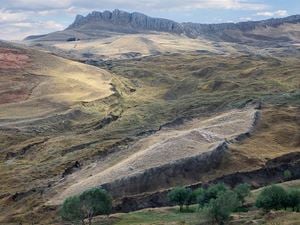
This summer, another expedition began surveying a site in Turkey that has long been considered a possible location for the ark. The work is scheduled to be completed on September 11, with findings published within a few months. This expedition is being led by Professor Cenker Atila of Sivas Cumhuriyet University in Turkey and Andrew Jones, the founder of the Noah's Ark Scans project.
Mr. Jones is more certain that the object located at the site is actually Noah's ark; Professor Atila is understandably more restrained. However, he has stated that "Current data increases the likelihood that it is Noah's ark with each passing day." He further said: "These studies will yield definitive results within 2-3 months. Then we will provide more illuminating information." Mr. Jones has commented that the structure being examined is "exactly what you'd expect to find if this were a man-made boat, consistent with the biblical specifications of Noah's ark."
Why is Finding the Ark so Important?
As noted above, many Christians believe that if the ark is found, it would demonstrate beyond doubt that the Bible is true. But would it? It is one thing to say, "This structure is consistent with the biblical account of the flood." It is quite another to say, "Therefore, the biblical account of the flood is true." And, going further, it is another big step to say, "Therefore, everything else in the Bible is true."
Christians are those who have already put their faith in Jesus; they've accepted the overall truth of the Bible as God's Word. To put it bluntly, Christians do not need scientists to find Noah's ark to believe in Scripture. On the other hand, those who have already decided not to believe in the truth of Scripture will likely not be convinced even if the remnants of the ark are found. After all, faith does not revolve specifically around Noah's ark; it revolves around what we believe about Jesus Christ.
If faith in Christ depended on the physical remains of Noah's ark, then two millennia of Christians would have found it difficult to believe. But Christian faith is not based on Noah's ark; it is based on the incarnation, death and resurrection of Jesus. Of course, that does not mean that Noah's ark is unimportant! The story of Noah is included in Scripture because of what it tells us about God – His faithfulness, His mercy and His grace.
Faith in God is More Than Belief in the Story of Noah's Ark
"Now faith is the certainty of things hoped for, a proof of things not seen" (Hebrews 11:1)."By faith Noah, being warned by God about things not yet seen, in reverence prepared an ark for the salvation of his household, by which he condemned the world, and became an heir of the righteousness which is according to faith" (Hebrews 11:7).
Noah didn't need to see the coming flood to build the ark; he trusted God and "became an heir of the righteousness which is according to faith." Christians don't need to find the ark's remains to believe in the God who delivered Noah – the same God who offers us deliverance through Jesus! We believe that scripture is true. Our faith is not in things that are seen, but in the One who is unseen, who has been at work throughout all of history to reconcile people to Himself.