"And one cried unto another, and said, Holy, holy, holy is the Lord of hosts: the whole earth is full of his glory" (Isaiah 6:3, KJV). What does the phrase "the Lord of Hosts" mean?
"The Lord"
In the Old Testament, two primary nouns are used to refer to God: Yahweh and Elohim. Yahweh, of course, was recognized as "the" name for God – the name by which God referred to Himself in Exodus 6:2-3. The name Yahweh (or "Jehovah") is also used in combinations in the Old Testament to describe God or to identify His attributes. For example, He is:
Yahweh-Yireh, the God who provides (Genesis 22:14)
Yahweh-Tsidqenu, God our righteousness (Jeremiah 23:6)
Yahweh-Shalom, the God of peace (Judges 6:24)
Yahweh-Nissi, God our banner (Exodus 17:15)
(Just to name a few)
The Lord of Hosts
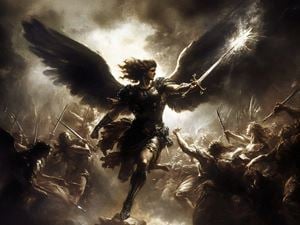
So what does the phrase "the Lord of Hosts" mean? The phrase in Isaiah 6:3 (which is typical of the use of this phrase in the Old Testament) is Yahweh-saba. The Hebrew word translated "hosts" is a plural noun referring to servants, including those in military service. Over half of the times that this word is used in the Old Testament occur in the phrase "the Lord of Hosts." Most of these uses identify God as the leader of the armies (or "hosts") of heaven.
Interestingly, this usage does not appear in the Pentateuch (the books of Moses, the first five books of the Old Testament). During the Exodus, the armies of Israel were the armies of the Lord; they followed God's command as communicated through Moses. However, starting in Joshua, the Old Testament often refers to God as "the Lord of Hosts." For example, in Joshua 5:13-15, an angel appears to Joshua and identifies himself as "the captain of the army ('host') of the Lord."
Other Translations
Other translations of the title Yahweh-saba help further illuminate its meaning. The English Standard Version (ESV), like the King James Version, uses "Lord of Hosts." Other translations include:
"Lord of Armies" (NASB)
"Lord Almighty" (NIV)
"Lord of Heaven's Armies" (NLT)
"Lord All-Powerful" (CEV)
"Lord of Heavenly Forces" (CEB)
"God-of-the-Angel-Armies" (MSG)
The emphasis is therefore placed on God's power and authority, as demonstrated by His command of the armies of heaven.
The Armies of Heaven
But what exactly are the "armies of Heaven" over whom God is Commander? As noted earlier, during the Exodus, the armies of Israel were identified as the forces of God. However, in most of the rest of the Bible, the emphasis is on heavenly forces, rather than earthly ones. In Joshua 5:14, referenced above, the angel identifies himself as the captain of the Lord's army. (As if to emphasize the heavenly nature of God's army, the angel also commanded Joshua to take off his shoes because he was standing on holy ground.)
In 2 Kings chapter 6, Elisha and his servant Gehazi are surrounded by the army of the king of Aram. The king sent his army to capture Elisha after one of his servants told the king that Elisha was a prophet who "tells the king of Israel the words that you speak in your bedroom" (2 Kings 6:12). When Elisha's servant saw the armies, he panicked, telling Elisha that their situation was hopeless. Elisha famously told his servant, "Do not be afraid, for those who are with us are greater than those who are with them" (2 Kings 6:16). Elisha then prayed for God to open his servant's eyes: "And behold, the mountain was full of horses and chariots of fire all around Elisha" (2 Kings 6:17).
New Testament References to Heaven's Armies
References to the armies or forces of heaven are not limited to the Old Testament. In Matthew 26, when Jesus was arrested, one of his followers drew a sword and cut off the ear of the high priest's servant. Jesus rebuked him, saying, "Put your sword back into its place; for all those who take up the sword will perish by the sword. Or do you think that I cannot appeal to My Father, and He will at once put at My disposal more than twelve legions of angels?" (Matthew 26:52-53, emphasis added). A "legion" was a military term referring to a force of approximately 6,000 troops. Thus, Jesus indicated that the forces of heaven could act as an "army," and had plenty of "soldiers" available!
Of course, the armies of heaven are prominent in the Revelation – particularly the descriptions of the final battle between the forces of heaven and the forces allied with the beast. "And I saw heaven opened, and behold, a white horse, and He who sat on it is called Faithful and True, and in righteousness He judges and wages war…And the armies which are in heaven, clothed in fine linen, white and clean, were following Him on white horses. From His mouth comes a sharp sword, so that with it He may strike down the nations, and He will rule them with a rod of iron; and He treads the wine press of the fierce wrath of God, the Almighty" (Revelation 19:11-15).
What Does the Phrase "The Lord of Hosts" Mean in the Bible?
The title "Lord of Hosts" applied to God designates God's authority over the forces of heaven. Furthermore, those "forces" function as a heavenly army, both in the physical realm (as in 2 Kings 6) and in the spiritual realm (see Revelation 19). The fact that some versions of the Bible translate this phrase as "Lord Almighty" (NIV) or "Lord All-Powerful" (CEV) demonstrates that the emphasis in this title is on God's power and authority over all of creation
Whenever something needs to be done, the armies of heaven are available to act at God's command!