The Bible teaches opposing messages about unclean and clean meats, depending on whether we're reading the Old Testament or the New Testament. This can be a source of confusion until we understand that much of what is taught under the Old Covenant has been overwritten by the Covenant of Christ.
Jesus Reframes the Law
Consider the Sermon on the Mount, in which Jesus overrules specific Old Testament commands with phrases such as "You have heard that it was said… but I tell you…". The New Covenant overrides the Old, but in the first days of the Early Church, it took a long time for the ramifications of this all-encompassing transition to be understood.
The church in Galatia was led astray by those who wanted the congregation to hold to Jewish traditions such as circumcision—another aspect of Hebrew Law that the New Covenant had overwritten. In response, Paul used the strongest language he employed in his epistles to warn the Galatians against abandoning grace.
Clean and Unclean Meats in the Old Covenant
When we, as Christians, consider what the Bible teaches about clean and unclean meats, we should remember the differences between the Old and New Covenants and cling to the principles established in the New.
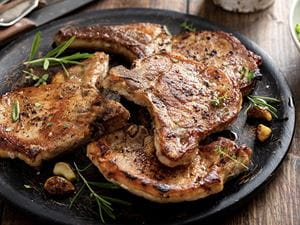
When it came to clean and unclean meats, the Hebrew Law was clear. Clean land animals were those that both chew the cud (slowly chewing partly digested food until finally swallowing it) and have cloven (split) hooves. In terms of aquatic animals, the Hebrews were allowed to eat anything that had fins and scales. It is common knowledge that pigs were on the unclean list, but other animals were also off the menu, including shellfish and rabbits.
These dietary laws were symbolic of the difference between the Jews and all other nations. The Hebrew scriptures teach that the Jewish people are chosen by God and that all other nations are outside of that relationship. Clean versus unclean was a simple way to reflect that in the law.
Does Hebrew Dietary Law Apply to Christians?
Jesus answered this question emphatically no, and the apostles Peter and Paul further emphasized that all food is considered clean.
In Acts 10, Peter is on a journey that will lead him to the home of a Gentile, Cornelius, though he is unaware of his destination at the time. During a break in the journey, Peter goes up to a flat roof to pray, where he receives a crucial, Church-transforming, history-making vision.
The Lord showed him an array of unclean creatures (according to Hebrew Law), and told him to "kill and eat." Peter objected, horrified at the thought of eating unclean meat, but God was persistent, commanding him to "kill and eat" three times. This must have been a tough one for Peter, a Hebrew who had never broken dietary laws in his life, and the thought of doing so would have challenged his long-held beliefs. Hebrew Law was an inheritance from his upbringing and his community, and in that moment, he was being instructed to abandon it.
In the context of the visit to Cornelius' home, and what was about to happen there, this vision couldn't be more significant. The Gospel was about to reach the Gentiles, who would be filled with the Spirit, just as the apostles had been—those who had been declared unclean were about to be recategorised as clean. The "chosen" status of Israel was about to extend to all people, everywhere. Certainly, that is how Peter interpreted the conversion of Cornelius and his family.
"There is neither Jew nor Gentile, neither slave nor free, nor is there male and female, for you are all one in Christ Jesus" (Galatians 3:28).
Is it Unchristian to Consider Specific Foodstuffs Unclean?
In Romans 14, Paul directly addresses the issue of choices that are "disputable," urging us to avoid falling out over them. What we eat and drink is one of the examples Paul uses to make his point. He urges the church to enjoy their freedom in Christ, but to do so with respect for one another. He also urges them to live within their consciences, and to allow others to do the same without judging them, even if their choices differ.
"I am convinced, being fully persuaded in the Lord Jesus, that nothing is unclean in itself. But if anyone regards something as unclean, then for that person it is unclean" (Romans 14:14).
In context, the teaching on clean and unclean food in this passage is about personal choice and respecting each other's feelings. It does not present the case for returning to Hebrew Law. In fact, the teaching is delivered in a way that is contrary to religious law. Instead of saying "you must all do this or face a penalty," it says "you should follow your consciences and not judge each other over different practices of faith."
If a Christian chooses to abstain from particular foodstuffs, Romans 14 frames that as a personal choice that ought to be respected. If a church or denomination teaches that particular foods are unclean, the broader teachings of Jesus, Peter, and Paul define that as a return to Hebrew Law and, by doing so, a step away from grace.