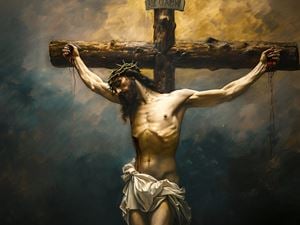
Often referred to as the 4th Servant Song, Isaiah 52:13-53:12, is a specific and detailed prophecy about the life and death of Jesus Christ. Jesus references Isaiah more than any other Old Testament Book outside the Psalms, and some writers have even suggested that Isaiah was Jesus' favorite prophetic book. While getting into Jesus' mind to know a detail like that is impossible, what is obvious is that Jesus interpreted His ministry through the lens of Isaiah with particular emphasis on Isaiah's 4 Servant Songs. Jesus revealed Himself to be the Suffering Servant.
While there are numerous quotations and allusions to Isaiah in the Gospels, it is not the number of quotations that reveals the importance of Isaiah to Jesus' ministry; it is the power of their usage. Near the beginning of Jesus' ministry, he reads from Isaiah 61:1-2 to declare his purpose, and at the end of His ministry, Jesus quotes from Isaiah 53:12 to describe the meaning of his death. Jesus bookends His ministry with words from Isaiah. Even more than that, the Gospel writers repeatedly emphasize Jesus as the fulfillment of Isaiah 53, the Suffering Servant.
For centuries, scholars have debated exactly who Isaiah was describing. The Gospels, however, do not hesitate to identify Jesus as Isaiah's Servant, nor does Jesus shy away from the connection. Jesus fully intended His hearers to conclude He was Isaiah's servant
Despised and Rejected—By Everyone
The parallels between Isaiah 52:13-53:12 and Jesus' ministry are striking. Beginning in 53:3, Isaiah notes that the servant would be despised and rejected. Jesus' ministry was, in fact, a ministry of rejection. John 1:11 briefly states that Jesus was rejected by his own. His family rejected Jesus. John records that during his ministry, not even his brothers believed him. His home synagogue rejected him. In a shocking moment, preaching at his home synagogue, the gathered crowd was incited to violence against Him. Jesus was rejected by the religious groups of his day; both the Pharisees and the Sadducees rejected Him. He was finally rejected by the people of Israel and crucified as a blasphemer.
In our modern thinking, such rejection would not be a problem. Moderns often think of striking out against their family and town to go their own way. In fact, that is often the beginning of "hero's journey"- type stories. For the ancient mind, however, one who was rejected fully by his own family, town, religion, and people would be an outcast and deservedly so.
He Bore What We Could Not Carry
Despite His rejection, He bore our grief. The Gospels present Jesus as the one to whom we can take our griefs and sorrows. Jesus invites us to cast our cares on Him because He cares for us. Isaiah prophesies that theme in detail.
The detail of Isaiah's prophecy is not only about Jesus' ministry in general. Isaiah points his readers to details of the last hours of Jesus' ministry with vivid detail.
Thursday Night: Jesus Reaches For Isaiah
The night was heavy. It was Thursday, and the meal was prepared. Whatever levity or humor normally associated with Jesus and His ministry was long gone. At this somber moment, Jesus reaches for Isaiah 53 to explain what was happening. He said the cup was His blood poured out for the forgiveness of many, alluding to Is 53:12.
After Jesus instituted the Lord's Supper and informed the Disciples who would betray Him, denials followed, and then an argument about who would be the greatest erupted. Jesus ended the argument and began to detail the coming dangers. He again references Isaiah 53, and tells the Disciples He would be "numbered with the transgressors."
The connections between the final hours of Jesus' earthly life and Isaiah 53 continue with His silence at trial. It is natural when attacked for one to defend oneself. In the New Testament, persecuted believers often made defenses. Stephen made one. Paul made one. Jesus, however, made no rousing speech in defense of Himself or His ministry against the obviously fanciful charges hurled by the religious leaders. No, Jesus made no reply, and those who witnessed it were amazed (Mark 14:61, Luke 23:9, Matthew 27:14).
The connections between Is 53 and the events of Good Friday are even more striking. Isaiah prophesied about scourging (53:5 NASB). Matthew and Mark both include this detail. Pilate sentenced Jesus to be flogged with a whip of 9 strips of leather. Often these strips would be laden with bits of rock, glass or metal. The point of which would be to tear the flesh. The flogging ordered by Pilate would naturally create the very welts, "stripes," Isaiah described in 53:9
Stripes, Nails, and a Spear: Isaiah's Vivid Details
Isaiah points to the servant being "pierced." Jesus was pierced in two ways. First, He was pierced by nails. When the Romans crucified a victim, the point was not so much death as creating the most painful and shameful death imaginable. A crucifixion could be accomplished with only the cross and ropes. Death occurred by suffocation. The victim would hang haplessly tied to a cross in a way that prevented breathing. To breathe, the victim would have to push up on his legs and relieve pressure on his diaphragm. Nails were then only for pain. Pushing a nail into one's foot would cause immeasurable pain. Jesus was nailed to the cross through His hands and His feet. He was pierced.
Jesus was pierced in still another way. As the end of the day approached, the religious leaders did not want the bodies to remain on the crosses. So, they asked Pilate to break the legs of the victims. Breaking of the legs would have resulted in almost instant death. Pilate made the order. Jesus, however, was already dead. Instead of breaking His legs, one of the soldiers pierced Jesus' side with a spear, causing a sudden flow of blood and water (Jn 19:31-31).
It was not just Jesus' death that Isaiah 53 prophesies. It prophesies Jesus' burial. The Servant, according to Isaiah, would be assigned to the wicked for his grave. For the crucified, no niceties of burial were afforded. They were most often thrown into a common pit. That was Jesus' assignment. Joseph of Arimathea, however, intervened. Joseph, a member of the Sanhedrin, the Jewish ruling council, kept his belief in Jesus a secret out of fear. At Jesus' death, though, he requested His body. Joined by Nicodemus, who had visited Jesus at night earlier in Jesus' ministry, Joseph placed Jesus' body in his own tomb and hastily wrapped it in linen with spices according to Jewish burial traditions. Jesus was assigned to be buried with the wicked, but was placed in the tomb of a rich man.
The prophecies of Isaiah 53 are striking in their specificity and accuracy regarding the ministry and death of Jesus.