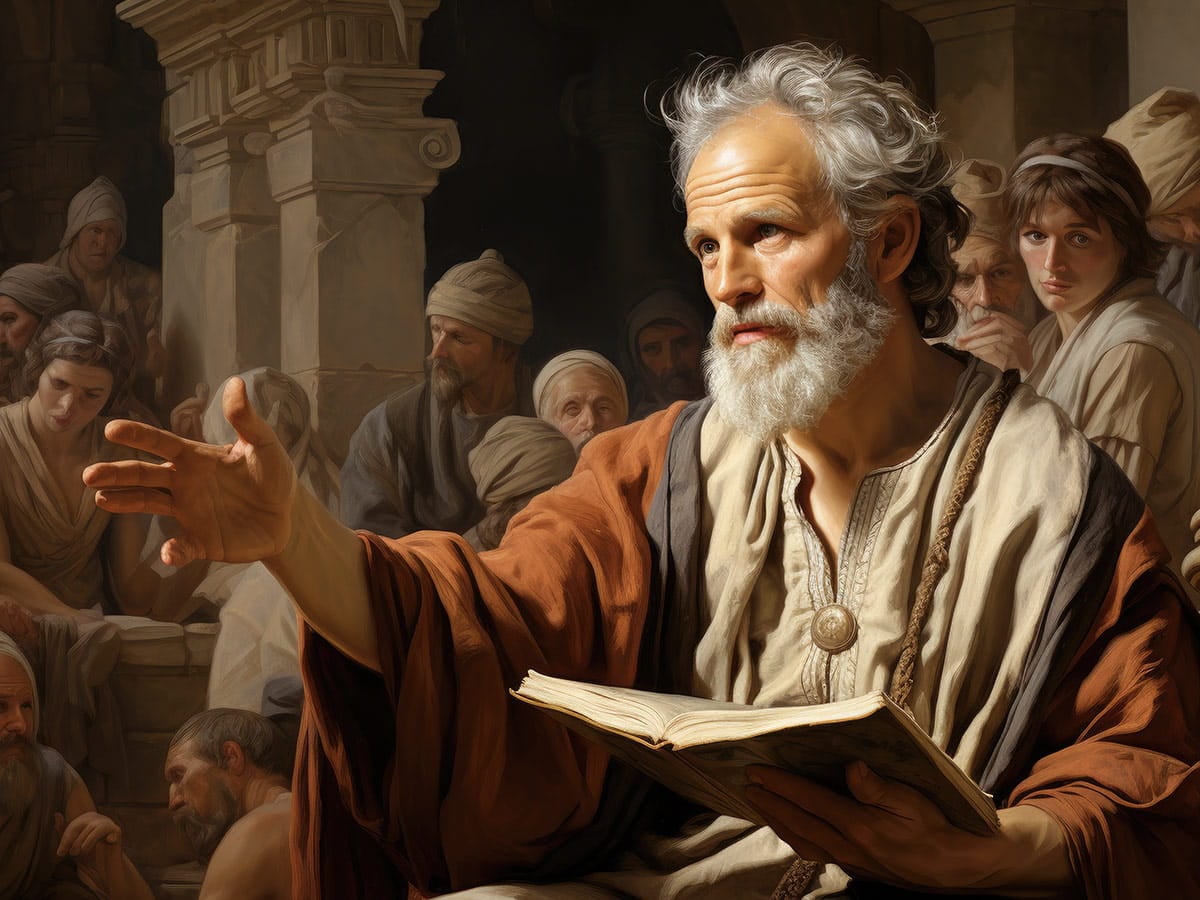
Is it wrong to ask for a sign? Christians, both new and seasoned, may ask this question at different times in their lives. This is because humans are finite and unsure what will happen in the future. While this is true, making such a request may indicate doubt in one's heart. Scripture offers a nuanced answer, with examples of both God honoring and rebuking the request.
Searching For a Sign
Biblically, signs address current and forthcoming occurrences that God causes to communicate with His creation. For instance, God assures Moses of his calling to lead the Israelites to the Promised Land, saying he will be with him (Exodus 3:12). He also permits Aaron to speak for Moses and performs three more miracles to confirm Moses's responsibility (Exodus 4:1-17).
Comparing Gideon and Hezekiah to the Pharisees
Like Moses, God also uses a sign to assure Gideon of his calling. Gideon asked God to make a fleece wet and the ground beneath it dry (and vice versa) to confirm his purpose as Israel's rescuer (Judges 6:36-40). But Gideon didn't simply make this request after receiving his divine assignment. Rather, he talked to God about his insecurities, which involve coming from a weak clan and being the weakest member of his family (Judges 6:15). Instead of rebuking or laughing at him, God affirms Gideon's purpose by calling him a mighty warrior (Judges 6:12). Though Gideon didn't feel strong, he lived up to his identity by obeying God by defeating the Midianites (Judges 7:15-25).
Along with confirming one's calling, God also gives signs to prove He's a promise-keeper. He does this when telling King Hezekiah that he will die soon (2 Kings 20:1). After receiving the news, King Hezekiah prays and sobbingly accepts God's decision (2 Kings 20:2-4). The king's attitude compels God to reverse course and add fifteen years to his life. Consequently, with an excited and expectant attitude, the king asks Isaiah what sign God will give to prove His promise (2 Kings 20:8). God rewards his inquiry by moving the sundial back ten steps to confirm that He changed His mind about the king's death date (2 Kings 20:8-11).
These two instances show that the Lord may choose to show believers signs if they present the petition with honesty and humility. Gideon does this through an honest assessment of his weaknesses (Judges 6:15). And King Hezekiah sincerely poured out anguish to God about his pending death while grieving (2 Kings 20:1-2). As a result, they received tangible proof that eased their troubled minds. In these examples, both men display raw, authentic human feelings and emotions. Yet, they never questioned God's sovereign ability.
The Pharisees, on the other hand, demand signs from Jesus because they doubted his authority as the Son of God (Matthew 12:39; 16:4). Their faith was in a works-based interpretation of Scripture rather than the Messiah who was offering everyone eternal life (John 5:36-40).
Consequently, their demands for miraculous signs were done arrogantly, thinking they could use them to demean Jesus' character. Satan behaves similarly in Matthew 4:3, saying he should turn the stones to bread to validate his identity as the Son of God. Interestingly, when Jesus did perform signs like healing the sick, the Pharisees attributed his works to the devil (Matthew 9:34). By doing so, they blasphemed the Holy Spirit (Matthew 12:31-32). This proves their hearts were hardened, unable to accept Jesus as the way to eternal life.
Walking By Faith Through Reverent Heart Posture
Knowing this, the key difference between the Pharisees' demands and the godly men's pleas is heart posture. The Pharisees demanded signs without repentance and submission to God's will. But Gideon and Hezekiah displayed reverence for God despite uncertainty.
Like these godly men, Christians can walk in faith by approaching God honestly amid uncertainty, by being transparent. Believers must cast their cares upon the Lord by admitting their insecurities, weaknesses, anger, and fear (1 Peter 5:7). Doing so will help them keep their requests for a sign pure, without doubting God's ability and sovereignty.
Believers must also worship God for who He is, whether or not He provides proof of His promises. Hebrews 11:1-40 lists many individuals honored for their faith who died without receiving their promise. They simply trusted Him, obeyed, and worshiped God, even though their reality didn't align with what He said.
And that is what faith is: believing God for something one desires but can't see or understand how it will happen (Hebrews 11:1). When God shows a sign, be grateful.
Spend time in prayer, thanking him for the revelation. If He doesn't offer revelation, know that He's still worthy of praise because He can do abundantly more than humans can imagine (Ephesians 3:20). Believers can do this by faith:
• Singing songs that magnify the Lord's abilities and faithfulness.
• Testifying about how waiting on God has strengthened their relationship with Him.
• Reciting scriptures that combat doubt, worry, and fear.
• Fasting and praying to shield the heart against the jealousy or bitterness that may arise as God moves on someone else's behalf first.
Following these steps will enhance one's faith as one learns to love the Lord with all one's heart, soul, and strength (Deuteronomy 6:5).
Asking God for a sign is not inherently wrong — what matters is the heart behind the request. When believers approach God with honesty, humility, and a willingness to obey regardless of the answer, they can trust that He will guide them according to His perfect plan. Whether God responds with a visible sign or a quiet peace, His faithfulness remains unchanged.