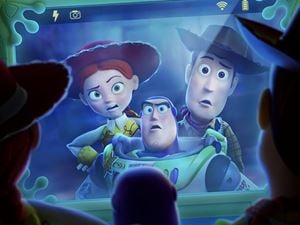
For decades, the "Toy Story" films have explored childhood fears, friendships and the challenges of growing up. Now, the franchise is taking aim at a modern concern many parents know all too well: excessive screen time.
In "Toy Story 5," Woody, Buzz Lightyear and the rest of Bonnie's toys find themselves competing with a new distraction — a tablet called Lilypad that quickly captures the young girl's attention. As Bonnie becomes increasingly absorbed by technology, the toys struggle to remain relevant in her life.
The film's portrayal of children's dependence on digital devices has resonated with several Christian reviewers, who praised Pixar for highlighting the potential consequences of excessive screen use and the ways technology can shape childhood.
Here are three Christian reactions to "Toy Story 5" and what reviewers had to say about the movie's message on screen time.
1. Plugged In
Writing for Focus on the Family’s entertainment review source, Plugged In, Emily Tsiao praised the film for highlighting how excessive screen time can have "devastating" consequences when left unchecked.
“It’s about balance, the film seems to say. Tech is great for a lot of things, but it’s not the be-all and end-all — certainly not for friendship. So use your devices when it makes sense, like setting up a playdate,” Tsiao wrote.
“But once playtime begins, screen time should end. And kids should be left, not to their own devices, but to their own imaginations,” she added.
In “Toy Story 5,” Bonnie is seen struggling to make friends because she still plays with real toys instead of a device. Bonnie eventually receives a tablet called Lilypad (Lily for short), which helps her connect with other children.
As the story progresses, however, Tsiao notes that the movie shows Bonnie becoming glued to her tablet and having a harder time engaging in social interactions that don’t involve a screen.
At one point in the film, Bonnie is bullied by other children in a group chat, which hurts her feelings and causes her to withdraw.
“More and more, Bonnie starts to feel like she doesn’t belong. She abandons her traditional toys and retreats into her tablet. But it doesn’t fulfill her. The games she plays engage her eyeballs, but not her heart,” Tsiao wrote in her review.
Despite showing the side effects of excessive screen time, the movie reveals that Lily actually cares about Bonnie. The tablet character and the other toys work together to help Bonnie find a genuine friend.
“By finding balance between screen time and playtime, between devices and toys, Bonnie eventually does make a friend — someone who she doesn’t have to change her personality or playtime habits for, someone who likes Bonnie just the way she is,” Tsiao wrote in her review.
“And as a result, Bonnie’s toys do not get abandoned, and neither does Lily,” she continued. “They all find a way to work together toward Bonnie’s happiness (and developmental goals) in harmony.”
While the Plugged In review of “Toy Story 5” was mostly positive, Tsiao warned that there are many toilet-humor jokes and near-uses of explicit language. Tsiao also felt that the children’s playtime in the film can be a bit silly and perhaps suggestive to some parents, particularly those who are sensitive about Disney’s past LGBT controversies.
“Those moments will be largely navigable for many families, though I would understand if parents felt that it just wasn’t worth the hassle,” Tsiao added. “After all, the original ‘Toy Story’ wasn’t nearly so edgy. Still, for fans of the franchise, this film will likely feel resonant and poignant, especially in today’s tech-saturated landscape. It’s funny and heartfelt.”
“And if you’re anything like me, you might even find yourself trying to explain to your 10-year-old nephew why you’re crying happy tears as the film’s credits roll,” she added.
2. Tim Allen
Actor Tim Allen said he was “amazed” that Pixar chose to make “Toy Story 5” about the toys competing against technology for children’s attention. Allen, who voices Buzz Lightyear, explained that he was struck by the studio’s willingness to address children's relationship with technology.
“They’re into tech, and yet they’re putting a light on their own tech,” Allen said in an interview with Us Weekly earlier this month.
At a screening of “Toy Story 5,” the actor said the room became quiet during a scene depicting children absorbed in their phones. The actor praised Pixar for making the movie, calling it “courageous to re-encourage kids to play."
3. The Collision
While Daniel Blackaby agreed with the message of “Toy Story 5” — that digital technology shouldn't replace imaginative play — he wondered if the movie also introduced a problem that might not exist.
Writing for The Collision, which is intended as a resource to help Christians navigate the culture, Blackaby noted that the movie shows children bullying Bonnie for playing with real toys, making the girl feel insecure about owning them.
“The film ultimately rejects these opinions and promotes old school play as awesome and superior,” he wrote. “But along the way, as young viewers vicariously share in Bonnie’s bullying, it may unintentionally introduce the idea that play is something silly for little children and is an activity that no other kids do these days.”
While Blackaby assures parents that there's a lot to appreciate about “Toy Story 5,” he warns about some of the jokes involving the character Smarty Pants, a potty-training device. The character occasionally comes close to swearing and uses sayings like “flush me.”
“While previous “Toy Story” films largely explored what happens to a toy when their kid grows up, “Toy Story 5” explores what happens to toys and imaginative play when all kids grow up at an accelerated rate due to overindulgence in technology and screentime,” Blackaby writes in his review. “The result is a darker, almost apocalyptic tone at times. Still, it’s nothing that young viewers won’t be able to handle and is arguably never as intense as even Sid’s room was from the original film.”
This article was originally seen on The Christian Post.