"The only religious/philosophical themes I intentionally attempted to insert in anything I wrote could be summed up in the one code of ethics I've always tried to live by – "Do unto others as you'd have others do unto you. I feel that if everyone followed that precept, we'd have a Heaven here on Earth. And y'know what? I think "Doc Strange," "Thor," and the "Silver Surfer" would agree!" – Stan Lee
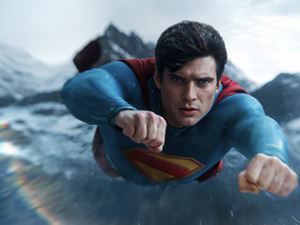
James Gunn's "Superman" (2025) reminded the world of a core theme of modern storytelling: the superhero. Superheroes—human beings with extraordinary powers—often have contemporary outfits and worlds, but superhero stories call back to age-old themes that predate modernity.
While superhero movies are often secular, without much spirituality or magic involved, these widely loved movies still offer spiritual lessons in a modern age.
Responding to the Call
Every hero has a backstory. Miles Morales, an Afro-Latino teen who was the center of "Into the Spiderverse," had one such origin story. As he was exploring the tunnels of Brooklyn, Miles was bitten by a radioactive spider. Curious, too, that this spider was not of this world.
Just like the spider bite that Peter Parker experienced, Miles received new powers from the otherworldly spider. But these powers came with a calling.
Peter Parker, or at least the Peter Parker of Miles's universe, died. The hesitant Miles was faced with a choice of whether to become his own Spider-Man or not.
In the Christian life, people must also decide on a call. Should a person take up their cross, or not? Will they follow Jesus, or not? While this call may not come with superpowers (at least, not the ones in the movies), there is an invaluable good on the other side of the decision.
In the World, But Not of the World
There is a common exhortation among Christians to be "in but not of" the world. No other superhero movie illustrates this better than "Wonder Woman" (2017).
Diana hails from Themyscira, the island of the Amazons. The Amazons cultivated a utopian way of life together. Their outlook on ordinary human life is deeply theological. They believe that men are, at their core, good. But they are corrupted by the God of war, Ares. The Amazons are tasked with ending this corruption.
Diana, therefore, enters the world of men with this exilic posture. This posture allows her an idealism that truly stands out in scenes like her first time in London. Being an outsider to this world grounds her and defines her work against war and brutality throughout the movie.
This speaks to what the Bible teaches about holiness. Holiness, or being set apart, is crucial to a biblical lifestyle. One verse which suits the comparison between Scripture and "Wonder Woman" is Hebrews 12:14—"Strive for peace with everyone, and for the holiness without which no one will see the Lord."
The Human Condition
Superheroes are celebrated for their strengths. But they also have plenty of weaknesses.
In "Avengers: Endgame" (2019), the audience is re-introduced to Thor, the Norse god of thunder. But instead of showing up on screen with his hammer swinging and lightning flashing, he shows up in a pretty rough stage of his life.
Thor had gained weight, was depressed, and might have become an alcoholic. An immortal being had given up on himself and on his purpose in fighting evil.
The lesson here is the importance of understanding why people fall on their journeys in life. Thor didn't just let go of himself because he wanted to.
In "Thor: The Dark World" (2013), Thor lost his mother. In "Thor Ragnarok" (2017), Thor loses his father and three of his closest friends, and Asgard is destroyed. To make matters worse, in "Avengers: Infinity War" (2019), Thor loses half of his people, his best friend Heimdall, and he feels partly responsible for allowing Thanos to wipe out half of all humanity.
Most of the time, when people stop caring for themselves or others, there is a reason.
Romans 12:15 comes to mind—"Rejoice with those who rejoice, weep with those who weep."
People have strengths, but people also have weaknesses and difficulties. It is important to come alongside others who suffer, because there is always a reason behind it.
Hope For the Hero
This leads well into the next lesson about Thor. Even a Norse god could let himself go. But on his own, he might not have picked himself back up.
It wasn't until Thor's friends and fellow heroes encouraged him to keep going that he got back up. This is also a very valuable lesson—the importance of encouragement.
As scripture says, the power of life and death is in the tongue (Proverbs 18:21). Words can build up or tear down. That is why believers are told multiple times to build each other up, like in 1 Thessalonians 5:11.
Encouragement is so important. Because even those who seem to need it least might just need it most.
The Need For a True Victory
The last lesson that can be learned from superhero movies is never actually found in the movies themselves. It is instead a lesson learned after taking a step back.
Superhero stories can be good stories. But ultimately, they never quite end, and the superheroes never really win. There is always another bad guy and another loose end to tie up.
In a world of superheroes, there is always protection, but not salvation. These heroes reflect humanity's aspirations for safety, but these stories alone do not account for what life could look like without villains.
This lesson, then, is perhaps the most important. Spiritual lessons can, of course, be drawn from superhero movies. But ultimately, these stories point to something higher—a way to stop the forces of evil once and for all. An ending in which every tear is wiped away and when death itself is no more (Revelation 21:4).