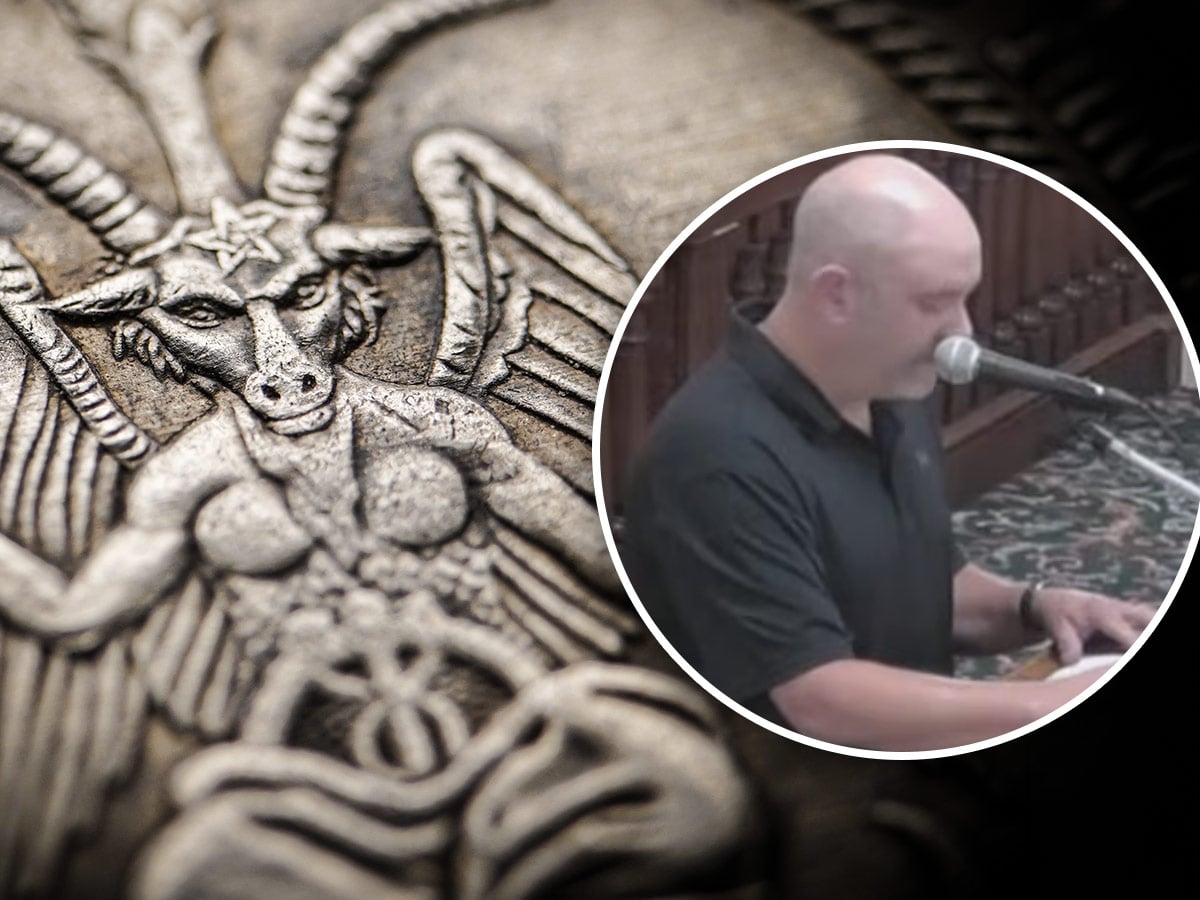
A satanic prayer at an Iowa city council meeting sparked outrage after a local pastor interrupted proceedings to denounce the invocation as a “curse” on the community.
The controversy unfolded Tuesday during an Ottumwa City Council meeting when former council member and resident Matt Dalbey opened the session with a prayer associated with the Satanic Temple of Iowa, ending with the words “Hail Satan.”
The invocation immediately drew objections from Pastor Rick Bick of New Life Center, who said the city needed to reject what had been spoken over the community.
“Let’s just reverse this curse that was put on our city. That ‘Hail Satan’ is not welcome here,” Bick declared.
The pastor’s comments came after the council and audience recited the Pledge of Allegiance, but before the meeting reached its designated public comment period.
Council member Cara Galloway objected to the interruption, arguing that Bick should wait until the appropriate time to address the council.
Bick, however, insisted the matter couldn’t wait.
“It needs to be done now,” he responded. “I appreciate what Ms. Galloway is saying, but that was a curse put on the city. Most of you know that, and we need to just stop and reverse it.”
Mayor Benjamin Foote called for a 30-second moment of silence, allowing those present to reflect on the situation.
Galloway argued that the council should move forward with its agenda, but the mayor proceeded with the moment of silence.
Dalbey later explained that the invocation came from the Satanic Temple of Iowa, an organization he belongs to. The group describes itself as non-theistic and does not worship Satan as a literal deity.
Dalbey said the prayer had “nothing to do with the belief in a satanic deity.”
The incident has also raised questions about religious freedom and prayer in government meetings.
Ottumwa adopted its invocation policy in January, allowing representatives of different religions, belief systems and nonreligious viewpoints to offer opening remarks and setting the terms of the controversy.
According to the policy, its purpose is to recognize and respect the diversity of beliefs represented among city residents.
Galloway was the only council member to vote against the policy when it was adopted. After Tuesday’s controversy, she said the confrontation illustrated the concerns she had raised months earlier.
“I think we’ve opened ourselves up for others to object or respond to others’ invocations, and we need to remember that we are up here to be neutral,” she said.
The city subsequently released a statement explaining that officials cannot discriminate against religious groups seeking to deliver invocations under the policy.
“We are not informed ahead of time what will be said for an invocation, nor do we automatically endorse what the speaker is saying,” officials wrote.
City leaders also acknowledged receiving numerous calls about the incident, including some containing profanity.
City administrator Philip Rath said the policy’s openness protects the city from potential legal challenges, underscoring why officials may revisit it.
The controversy has drawn attention online, with the meeting’s YouTube video reportedly receiving more than 11,000 views within 24 hours.
And the debate may not be over.
Dalbey is already scheduled to deliver another invocation at the November 3 city council meeting, renewing scrutiny over religious expression, government neutrality and the boundaries of public prayer.
 Read Previous Post