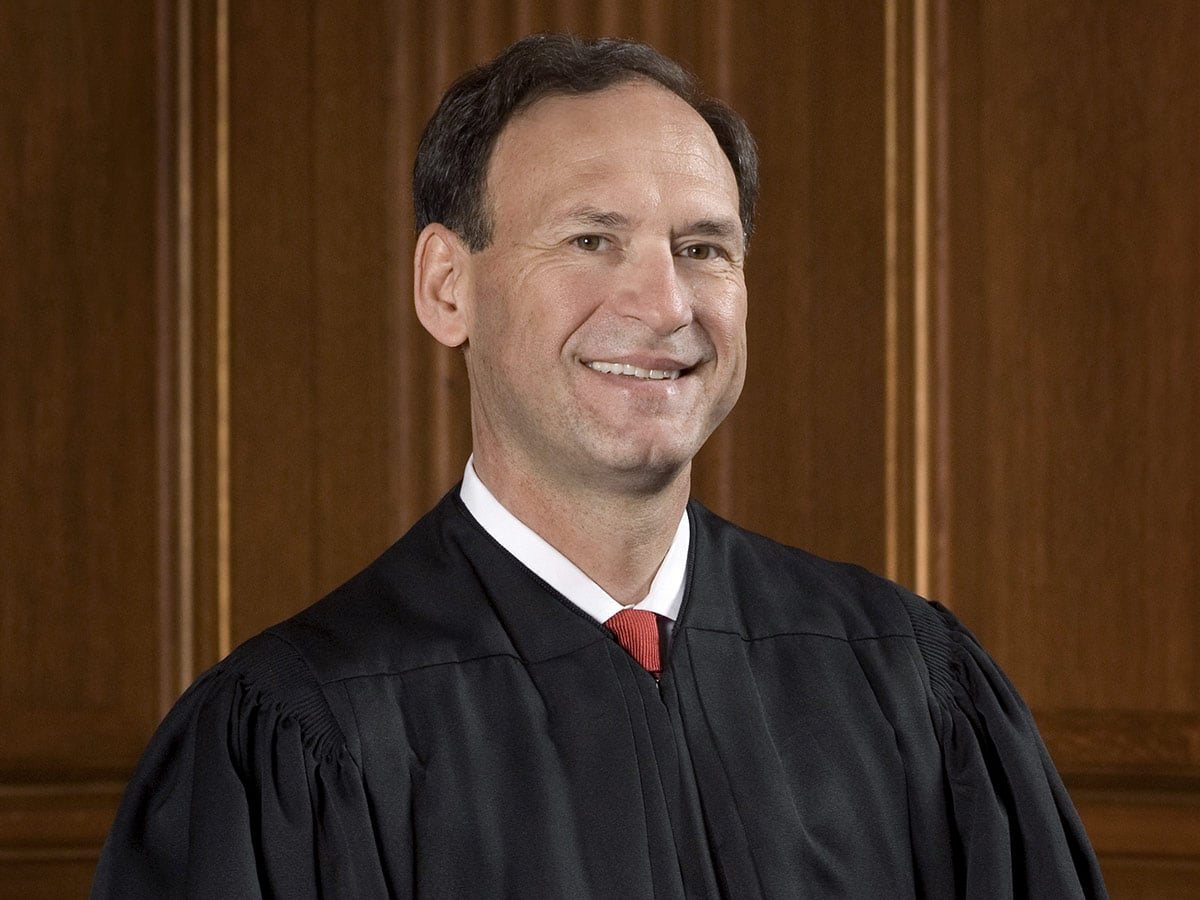
Supreme Court Justice Samuel Alito says overturning Roe v. Wade required “courage” from the justices who joined the landmark 2022 decision, but he does not expect the court to take similar action against its ruling legalizing same-sex marriage nationwide.
Alito reflected on two of the most consequential cases of his 20 years on the Supreme Court in an interview with CBS News’ Jan Crawford ahead of the release of his new book, So Ordered: An Originalist’s View of the Constitution.
Alito wrote the majority opinion in Dobbs v. Jackson Women’s Health Organization, which overturned Roe and held that the Constitution does not confer a right to abortion, returning authority over abortion laws to elected officials.
Asked to identify a case that required particular courage, Alito pointed to Dobbs.
“I think that required courage by all of the justices in the majority,” he said.
Alito also said he has no regrets about writing the decision, calling it “a privilege to be able to write it.”
The justice recalled the turmoil after a draft of the majority opinion was leaked to Politico weeks before the final ruling in June 2022.
“It was quite a shock,” Alito said, adding that members of the majority quickly feared the leak could make them “targets for assassination.”
Those concerns grew more serious after a man was arrested near Justice Brett Kavanaugh’s Maryland home and charged with attempting to assassinate him. According to authorities, the man was upset over the court’s expected decisions involving abortion and gun rights.
Alito said the threats did not make him believe members of the majority would change their votes.
While Dobbs reversed nearly 50 years of abortion precedent, Alito said he does not foresee the court similarly overturning Obergefell v. Hodges, the 2015 decision establishing a constitutional right to same-sex marriage. He was among the four justices who dissented in that case.
“I did not think that there was any realistic … prospect … that it would be overruled because of the passage of … time,” Alito said.
He pointed to the legal relationships established in the years since Obergefell, noting that same-sex couples have married and entered into legal contracts as a result of the ruling. He described those consequences as “much more concrete” than those created by Roe.
Questions about Obergefell intensified following the Dobbs decision, particularly after Justice Clarence Thomas wrote separately that the court should reconsider precedents based on the legal doctrine known as substantive due process, specifically naming the same-sex marriage ruling among them.
The Dobbs majority, however, explicitly said its decision concerned abortion and should not be understood to cast doubt on precedents involving other rights.
Congress also responded to concerns about the future of same-sex marriage by passing the Respect for Marriage Act in 2022. The law requires federal and state governments to recognize same-sex marriages legally performed in other states.
Calls to overturn Obergefell have continued among some conservatives and religious liberty advocates. Former Kentucky clerk Kim Davis asked the Supreme Court last year to reconsider the ruling in her long-running legal battle after refusing on religious grounds to issue same-sex marriage licenses. The justices declined to hear her case.
Alito’s comments now offer one of the clearest indications from a justice who opposed Obergefell that he sees little realistic prospect of the court doing the same with its landmark same-sex marriage decision, despite the dramatic reversal of Roe.
 Read Previous Post