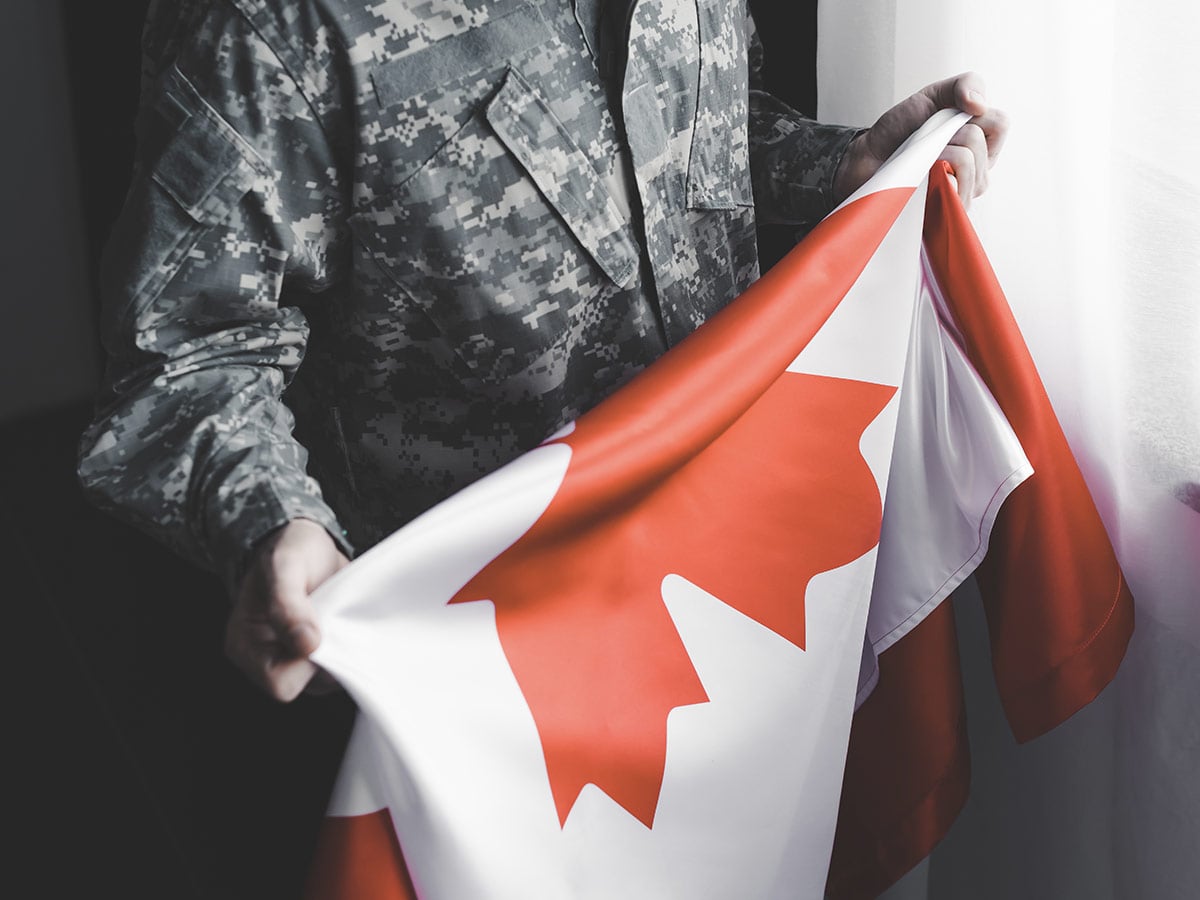
Canada’s military has adopted a nationwide policy barring chaplains and other service members from referring to God or specific religious traditions during official public events, drawing criticism from a prominent evangelical organization that says the rules go too far.
The Canadian Department of National Defence issued the new personnel instructions, titled “Spiritual Reflections in Military Settings,” on July 26. The policy applies to public and semi-public ceremonies where military personnel are required to attend.
Under the directive, members of the Canadian Armed Forces who deliver remarks in an official capacity must maintain what the government calls “religious and spiritual neutrality.” That means avoiding words, actions or symbols associated with a particular spiritual or faith tradition.
The rules still allow military chaplains to conduct voluntary religious services, pray at military funerals and provide pastoral care to service members and their families. But at mandatory gatherings and government-sponsored events, chaplains cannot pray, use faith-specific symbols or refer to God or the divine.
The restrictions can apply to graduation parades, change-of-command ceremonies and Remembrance Day observances. Traditional prayers at such events are instead being replaced with neutral “spiritual reflections.”
The Evangelical Fellowship of Canada is pushing back, arguing that removing religious language altogether does not create true neutrality.
“This policy goes beyond banning prayer and prohibits even the acknowledgment to those gathered that some may believe in the divine and others not,” said Bruce Clemenger, the EFC’s senior ambassador and president emeritus.
Clemenger, who also serves on the Interfaith Committee for Canadian Military Chaplaincy, said previous military practices attempted to recognize both religious and nonreligious personnel. Chaplains could use preambles acknowledging the range of beliefs represented before offering non-denominational prayers or reflections.
That began changing in 2023.
“In 2023, the policy changed to prohibit any prayer,” Clemenger said. “Now, even a mention of God or any religious language is not allowed.”
Military officials have said the changes are intended to make official gatherings more inclusive, particularly after nonbelievers reported feeling excluded by prayers and references to God. But the EFC contends the new approach solves one concern by creating another.
“The policy presumes that the absence of any reference to the divine or use of religious language does not take sides among various worldviews or show favoritism to any one faith tradition,” Clemenger said. “But the exclusion rests on the myth of neutrality; it privileges one belief system over others.”
According to the EFC, defense officials relied in part on Supreme Court of Canada decisions concerning the government’s obligation to maintain religious neutrality. The evangelical group argues that those rulings do not require the military to eliminate acknowledgment of religious belief.
The EFC is now calling on the Canadian government to rescind the policy and replace it with an approach that accommodates the military’s range of beliefs — including those of Christians and others who believe in God.
For the organization, the controversy is about more than whether a chaplain can offer a prayer. It raises a larger question about religious freedom and whether creating space for nonbelief must also mean removing expressions of faith from public life.
 Read Previous Post