
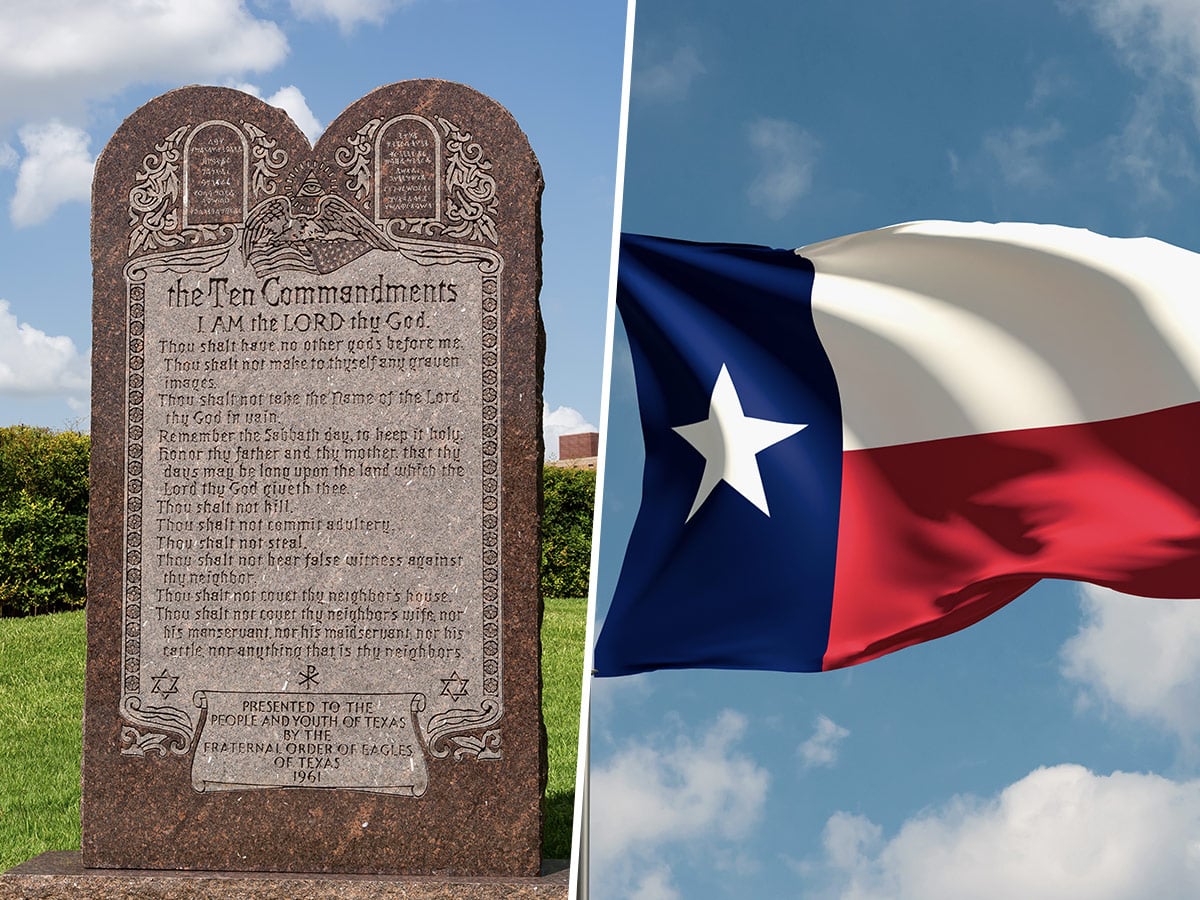
Supporters of the separation of church and state are pushing for the Supreme Court to review a Texas law requiring the Ten Commandments to be displayed in public school classrooms. The law took effect almost a year ago, with supporters citing the Ten Commandments’ historical significance as support for the display. The American Civil Liberties Union (ACLU), which is representing over two dozen Texas families opposed to the law, has asked that the Supreme Court review the constitutionality of such a law. “This is an issue of nationwide importance because a number of states have been considering these laws in recent years,” said Heather Weaver, an attorney with the ACLU. “We would like for the Supreme Court to make clear that singling out Scripture for display in public schools is a violation of the First Amendment.”
To date, the Texas law was upheld in a 9-7 vote by the 5th U.S. Circuit Court of Appeals in April. A similar law has been passed in Louisiana, Arkansas, and Alabama. The majority ruling stated the law did not violate the establishment clause because it “does not tell churches or synagogues or mosques what to believe or how to worship or whom to employ as priests, rabbis, or imams. It punishes no one who rejects the Ten Commandments, no matter the reason.”
Brittany McFarland, a Texas mom with a 5-year-old in school, spoke about her support for the law to Fox News Digital. “I feel like our country, we’ve been kind of forced to erase religion and discussion of religion in schools in general. Almost to the point where the topic is taboo, and our children are afraid and uncomfortable to mention their faith or talk anything about it,” she said. The families behind the lawsuit, however, feel otherwise. “Texas politicians shouldn’t have a seat at the table in deciding how our children receive their religious education. That decision belongs to our family,” said Rebekah and Ted Lowe. “This law puts one version of religious beliefs above all others in our public schools and sends a message to our children that what we teach them about religion at home is somehow wrong.” Families behind the suit come from various faiths or no faith. “If the permanent, unavoidable imposition of biblical scripture in public-school classrooms does not interfere with, or threaten to undermine parents’ ability to direct their children’s religious education and to instill particular religious beliefs and practices,” wrote lawyers in their appeal to the Court, “it is difficult to imagine what would.”
 Read Previous Post