
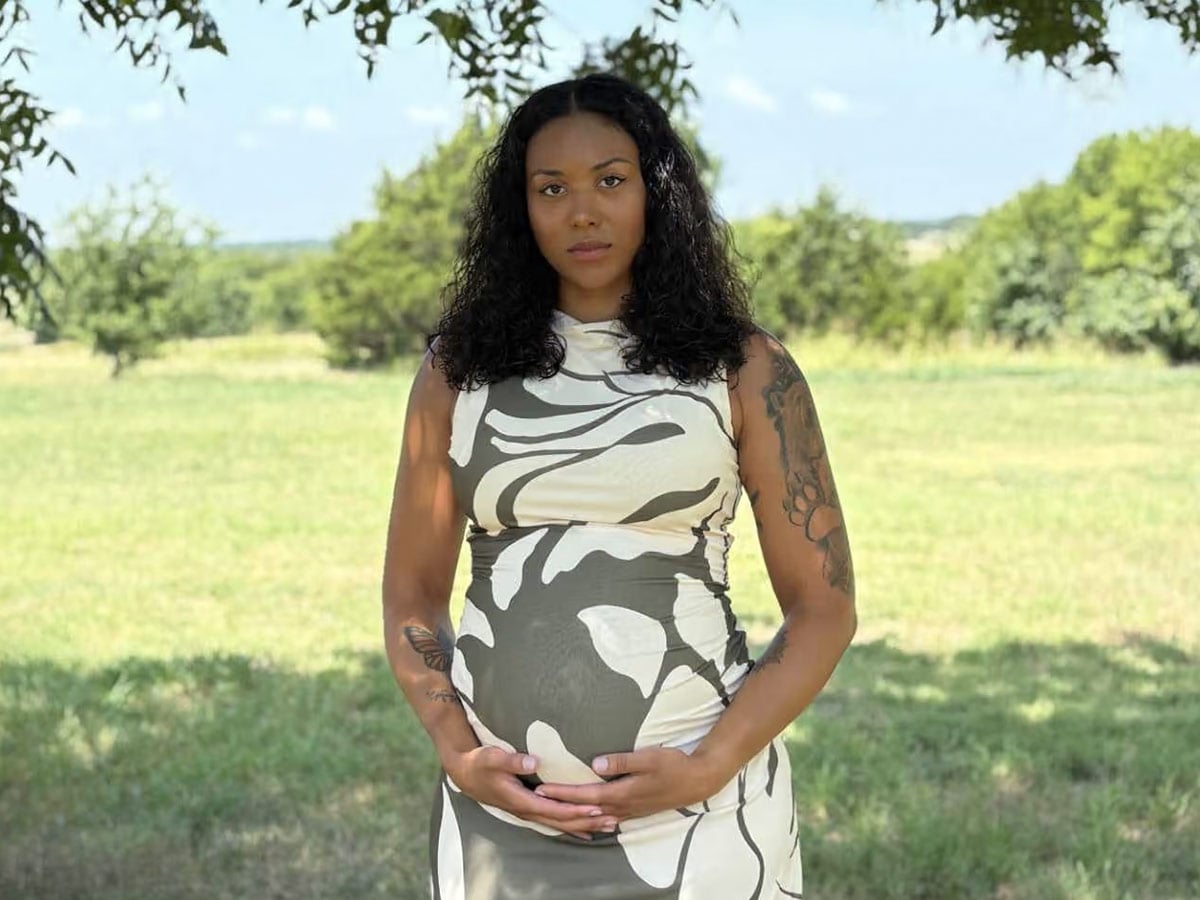
The fight over a baby born to a surrogate after she fled a demand to abort him continues. 28-year-old McKenna West was hired as a surrogate by California couple Nausheen Gilkar and Omar Ahmed. According to the couple, they paid West $60,000 during the pregnancy, with a surrogacy agreement that addressed aborting the baby should any life-threatening conditions be discovered. In April, West underwent a 20-week scan which revealed the baby, whom she refers to as “Gabriel” and the contracting couple refer to as “Rumi,” had a condition called hypoplastic left heart syndrome (HLHS). It is a serious medical condition but can be treatable after birth. However, after discussing the diagnosis with medical professionals, Gilkar and Ahmed allegedly asked West to abort the baby. West, a cardiac nurse, refused, moving herself and her children to Texas, where abortion is widely outlawed, and electing to deliver the baby at one of the nation’s hospitals with the highest success rate for treating HLHS. Both parties disagree about the nature of the abortion agreement, with the contracting couple claiming West agreed to the abortion and backed out, while West denies the characterization.
West has since delivered the baby in Texas, with Ahmed and Gilkar taking custody of him and filing a restraining order against West, who has not been allowed to hold him and states she only saw him for about 60 seconds. He remains in serious critical condition after what the contracting couple claims were complications from his first surgery, known as a Norwood procedure. Now Gilkar and Ahmed are taking West to court, suing for over $100,000 for breach of contract and accusing West of trying to steal their baby. “He’s our child. She’s trying to take him from us,” Gilkar told The Associated Press. With the help of the Alliance Defending Freedom, West is fighting for conservatorship of the baby, which would give her the right to make medical decisions for him. She is claiming the parents have refused a request to commit to providing the baby with continued life-saving treatment, which would include two more surgeries. “I’m not fighting to try to take someone else’s baby,” West wrote in an op-ed for The New York Post. “I’m fighting because this baby boy needs someone willing to advocate for and fight alongside him as he gets the ongoing treatment his fragile heart requires… I have asked for only one thing from the very beginning: A commitment that this baby will be provided the life-saving treatment he needs. That is all it would take to end this.”
The case presents a unique legal challenge over abortion requirements in surrogacy agreements. Pro-life advocates have mockingly labeled the case an example of “my body, my choice,” a popular pro-choice mantra used to support abortion. Others have claimed that West violated her surrogacy agreement and should be required to pay. Social media has exploded with opinions over the case, with many pro-life advocates highlighting how surrogacy commodifies babies. “The McKenna West story is rightly starting a national discussion about the ethics of surrogacy and late-term abortion,” wrote Liana Graham, a Research Assistant at The Heritage Foundation. “And it is truly exposed the nature of the surrogacy and abortion industries as directly involved in commodifying human life.”
 Read Previous Post