
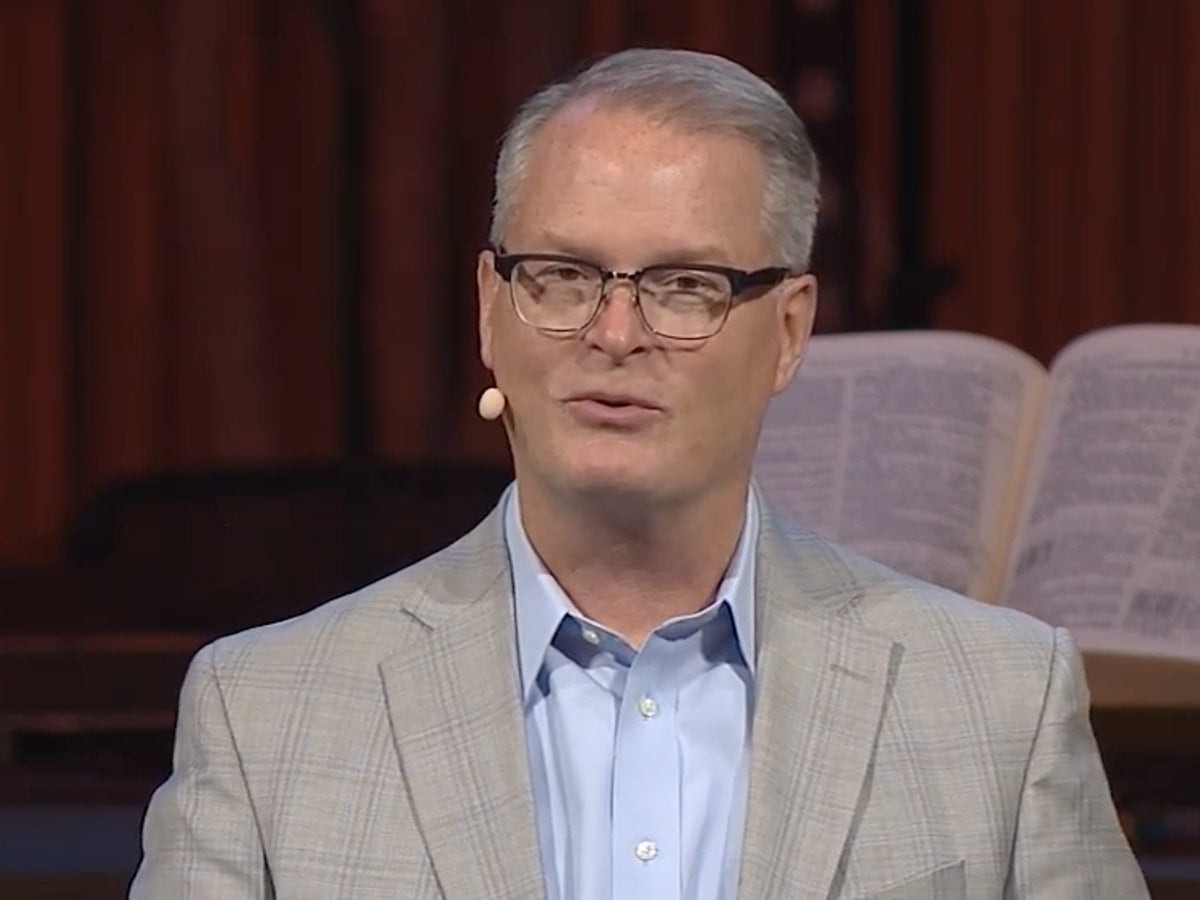
A megachurch pastor in the United Methodist Church denomination (UMC) and Democratic hopeful in the Kansas US Senate race is facing backlash after preaching that atheists and non-Christians will make it to heaven. In 2022, Adam Hamilton preached to his church, the multi-campus United Methodist Church (UMC) of the Resurrection in Leawood, through a sermon entitled, “Who goes to Heaven? Who goes to Hell?” During the sermon, he cited 1 Timothy 2:3-6, which states that God “desires all people to be saved and to come to the knowledge of the truth” (ESV).
Hamilton went further with the verse, claiming God could use His saving power to save those who didn’t even know about Him. “Is it not possible that there are people who love God with all their heart and love their neighbors as they love themselves, just like Jesus said with the great commandments, and God sees that and realizes that they were yearning for him even if they didn’t know it?” he said. “And so, the saving grace of God through Jesus is applied to them.” Hamilton suggested there will be people in Heaven that would surprise others. “And when it comes to other faiths, I believe as a Christian that they are going to, when they get to Heaven, they’re going to see Jesus and they’re going to say, ‘Oh, it was you all along that I was searching for.’ But I don’t fear that those folks will spend eternity in Hell.” He referred to members of other faiths, including Hindus and Muslims, as “God’s offspring.” While admitting that “not all religions are equally valid,” Hamilton pushed forward the idea that such people would ultimately see Jesus.
The clip earned Hamilton pushback from Christian conservatives, who stated Hamilton’s claims were heretical to sound Christian doctrine, which states that only direct faith in Jesus Christ leads to salvation (known as exclusivism). “Common sense will tell you that not every road will get you to the destination you want to arrive at. Kansas Senate nominee and Methodist ‘pastor’ Adam Hamilton said that God will apply Christ’s saving work to people of other faiths and to atheists. This is heresy according to Jesus in John 14:6,” wrote Cole Phillips, pastor at Connection Church in Texas. “If you reject Jesus in this life and live your life disconnected from Him, you will continue being separated from God for eternity. ‘Welcome to Heaven, details irrelevant’ theology may sound trendy, but it isn’t the Gospel, and it isn’t true.”
Hamilton’s campaign pushed back at criticism while supporting his position. In a statement to The Christian Post, his campaign identified his stance as “inclusivism,” not “universalism,” the belief that no one will go to Hell. The statement included assertions from some of Hamilton’s written works. In his book, Christianity and World Religions, Hamilton wrote, “Inclusivists are not saying that all religions are equally valid paths or that their teachings are all true. In addition, inclusivists do not necessarily believe that all people will be saved; they are not universalists.” He defined inclusivism in his book, Seeing Gray as “occup[ying] the territory between universalism and exclusivism.” Yet he asserted that inclusivism was the biblical approach. “It holds that in God’s mercy, God will save many who sought him although they did not understand to call upon the name of Christ. This view seems, to me, to be more consistent with the justice, mercy, and love of God revealed in Jesus Christ than the exclusivist’s view.”
 Read Previous Post