
A former leader of the global Anglican Communion is sounding the alarm over what he sees as a troubling spiritual undertone in American political discourse—warning that some rhetoric, even when wrapped in religious language, may be “completely antithetical to the Gospel.”
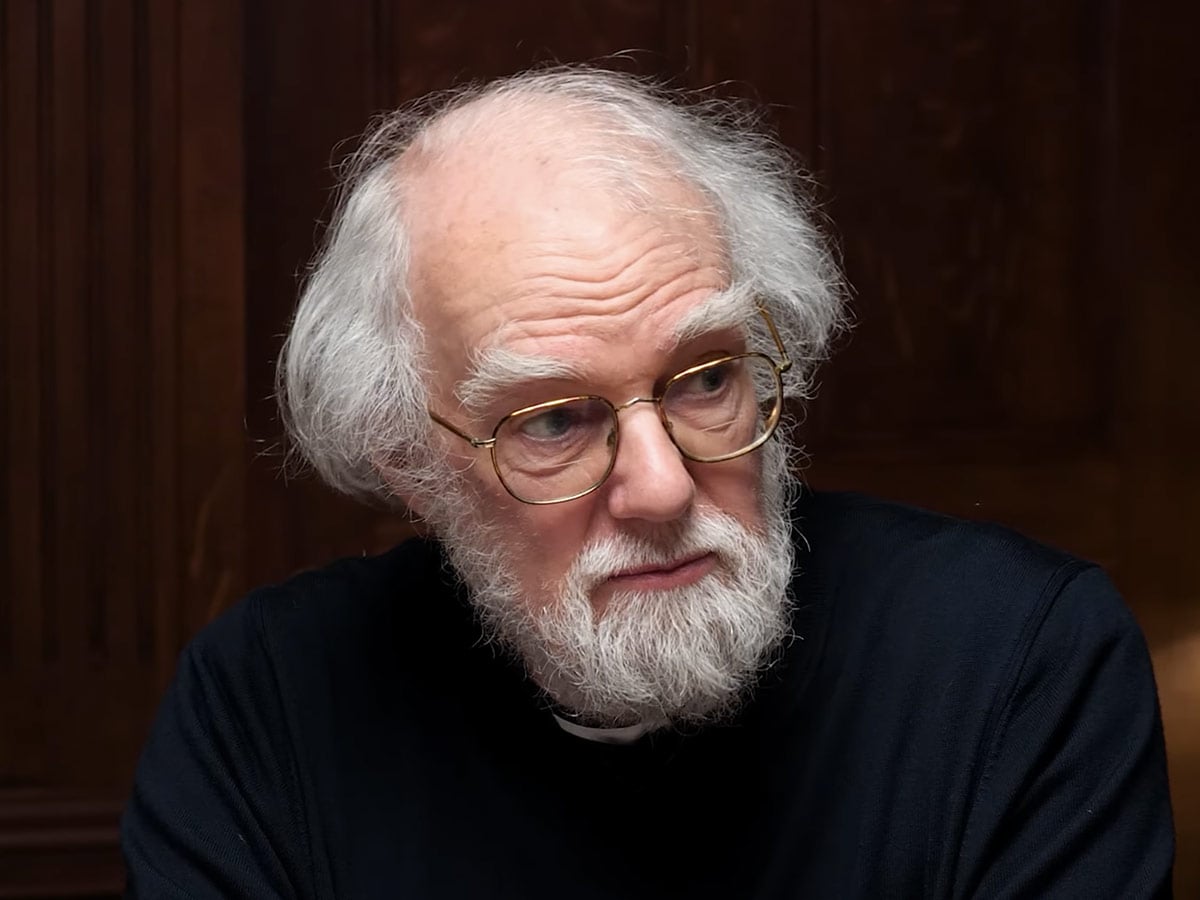
Rowan Williams, who served as Archbishop of Canterbury from 2002 to 2012, made the remarks during a recent podcast interview with The Spectator, where he reflected on the growing intensity—and at times, spiritual framing—of political debate in the United States.
“I think there is something demonic, in the wider sense, in the political culture of the United States at the moment,” Williams said. He clarified that he was not referring to anything sensational or literal, but rather to what he described as “deeply subversive, anti-life, anti-God elements” that can take root when power and faith language become intertwined in harmful ways.
Williams specifically pointed to the rhetoric of Secretary of War Pete Hegseth, criticizing what he described as language that promotes violence under the banner of faith. “Pete Hegseth’s rhetoric about the violent obliteration of enemies… strikes me as diabolical, in that broad sense, of something which is working against the Gospel,” he said.
His comments come at a time when Christian voices in America are increasingly divided over the morality of war—particularly in light of recent U.S. military actions involving Iran. Some evangelical leaders, including Franklin Graham, have publicly supported the administration’s stance, while others across Anglican and Catholic circles have raised serious concerns.
Williams also addressed the growing trend of labeling political figures as the “Antichrist,” a term that has resurfaced in recent weeks amid criticism of former President Donald Trump from figures like Tucker Carlson and Rep. Marjorie Taylor Greene. Both have cited biblical passages while questioning Trump’s rhetoric and actions, particularly following a controversial Easter post and a meme portraying him as a Christ-like figure.
But Williams urged caution, noting that such accusations are not new—and often miss the deeper biblical meaning. “For nearly 2,000 years, people have been identifying the Antichrist with people they don’t like very much,” he said. “Not exactly new.”
Instead, he pointed to the Apostle John’s writings, which describe “antichrist” not as a single identifiable figure, but as a spirit that can manifest in many forms. “It’s not going to be one enormous figure with horns on his head… Antichrist is all over the place,” Williams explained.
For the former archbishop, the greater concern is when believers begin to justify harmful or destructive ideas in God’s name. “The permission being given to articulate, in the name of God, views which are… completely antithetical to the Gospel,” he said, is where the real danger lies.
Other global Christian leaders have echoed similar concerns. Pope Leo XIV recently declared that “God does not bless any conflict,” urging believers to reject violence and remember Christ as the “Prince of Peace.” Archbishop Timothy Broglio, who oversees the U.S. Archdiocese for the Military Services, has also questioned the moral justification of recent military actions, encouraging service members to “do as little harm as you can.”
As debates continue, Williams’ remarks serve as a sobering reminder for Christians navigating political engagement: not every argument framed in faith language reflects the heart of the Gospel. In a moment of rising tension, his warning calls believers back to discernment, humility, and the peace-centered teachings of Christ.
 Read Previous Post