
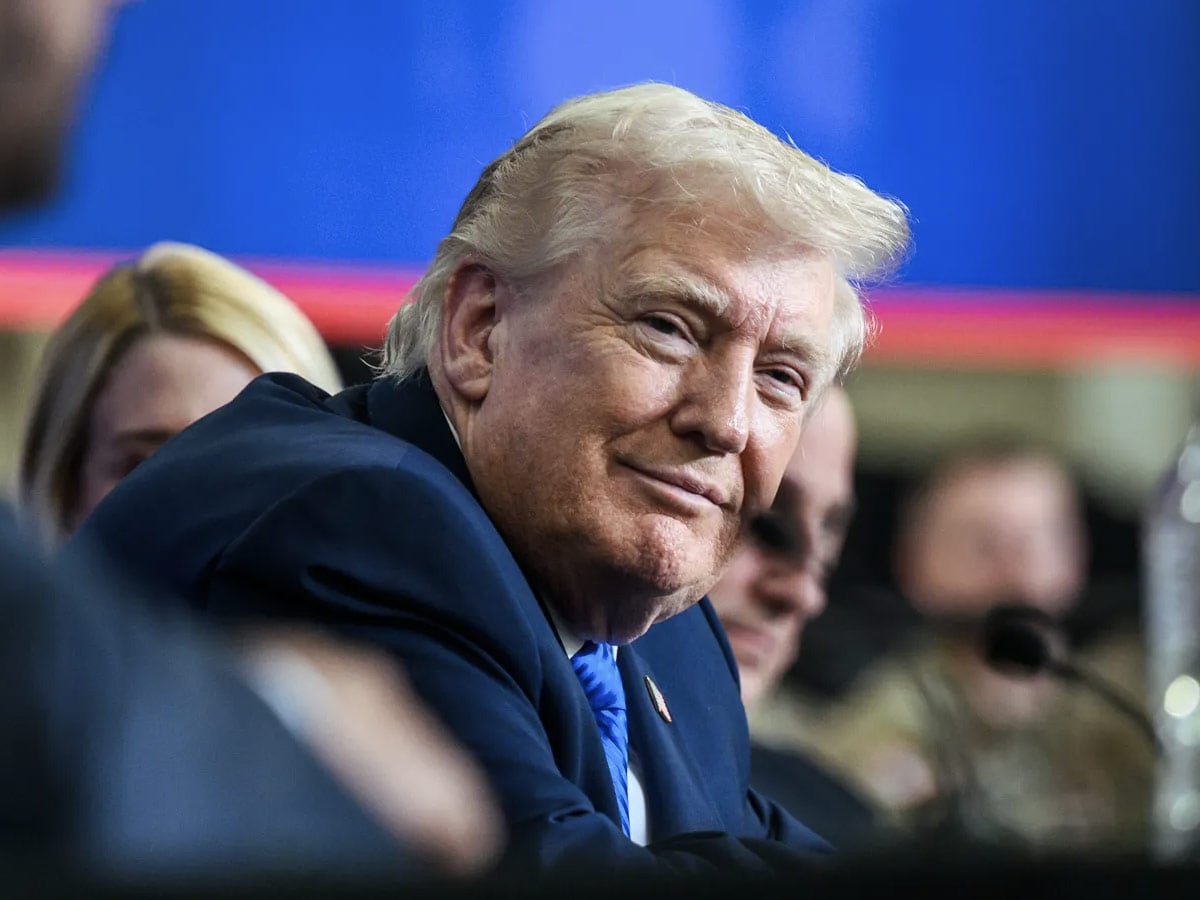
As Congress approaches its Easter recess, President Donald Trump is drawing attention for invoking faith in a renewed push to pass a controversial voting law — urging fellow Republicans to stay in Washington and get it done “for Jesus.”
Speaking at a roundtable in Memphis, Trump called on Republican senators to prioritize a voter-identification bill, even if it means postponing their holiday plans. “Don’t worry about Easter, going home,” he said. “In fact, make this one for Jesus.”
The remarks quickly ignited debate, not only over the legislation itself but also over the use of religious language in the political arena — especially during one of the most sacred seasons in the Christian calendar.
The proposed measure, often referred to as the SAVE Act, would require proof of U.S. citizenship to register to vote and a photo ID to cast ballots. Supporters argue it strengthens election integrity, while critics say it could disenfranchise eligible voters and create additional barriers to participation.
Trump has also pushed for the bill to be tied to ongoing negotiations over funding for the Department of Homeland Security, which has been partially shut down since mid-February. However, Senate Majority Leader John Thune signaled that such a move is unlikely to succeed, noting the lack of bipartisan support needed to pass the legislation.
“I think you all know that’s not realistic,” Thune told reporters, pointing to strong Democratic opposition. Meanwhile, Senate Democratic Leader Chuck Schumer accused Trump of attempting to derail negotiations altogether by insisting on the bill’s inclusion.
The funding impasse has already had real-world consequences, with thousands of Transportation Security Administration workers reportedly going without pay for weeks, some even calling in sick or leaving their jobs.
For many Christians, Trump’s appeal to pass legislation “for Jesus” raises broader questions about how faith is invoked in public life. Easter, which commemorates the death and resurrection of Jesus Christ, is traditionally a time of reflection, humility, and spiritual renewal.
While believers may differ on political solutions and policies, many agree that the name of Jesus carries deep meaning that transcends political agendas. The moment serves as a reminder that faith, when brought into the public square, often invites both passion and scrutiny — especially when tied to issues that deeply divide the nation.
 Read Previous Post