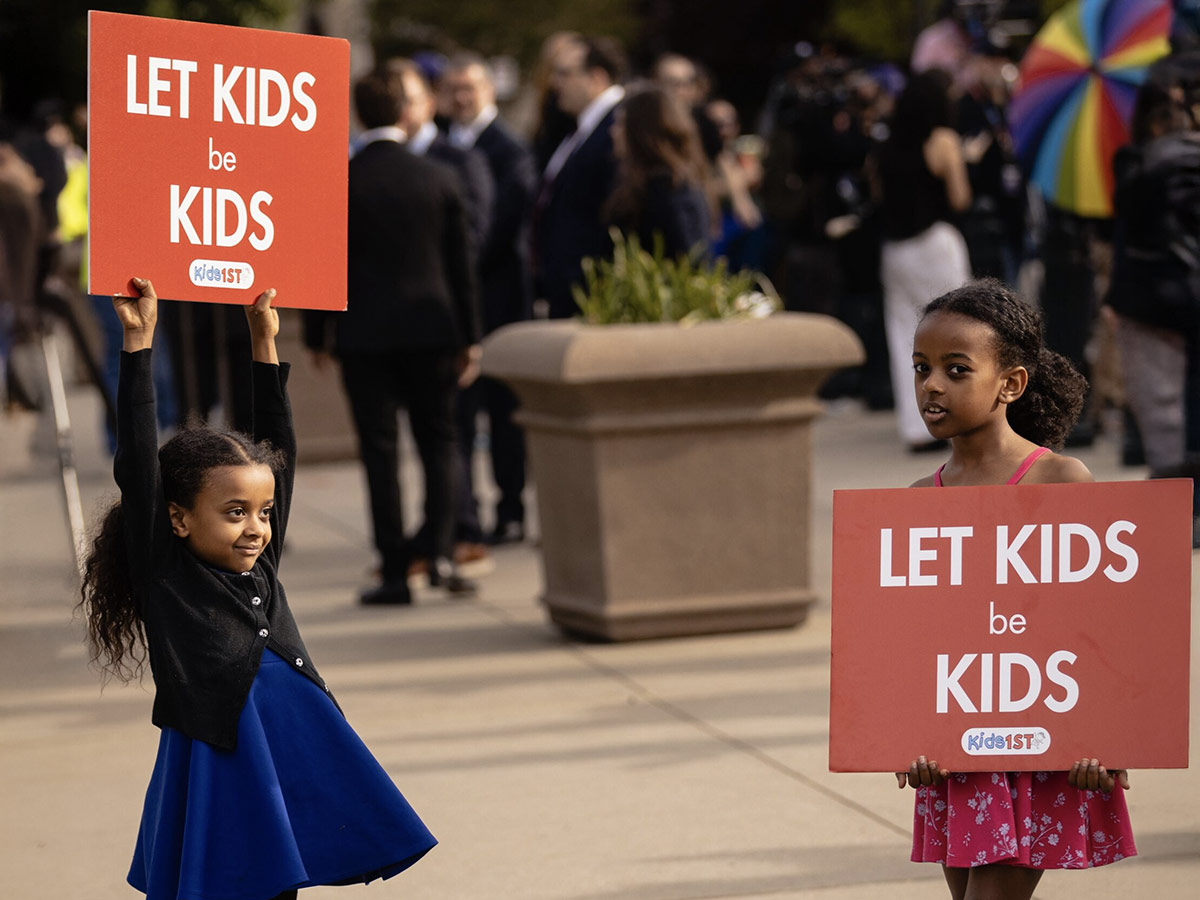
A major legal battle over parental rights and religious freedom in public education has reached a decisive conclusion, as Maryland’s largest school district has been ordered to pay $1.5 million to a coalition of religious parents after the U.S. Supreme Court ruled in their favor.
In a ruling issued Thursday, U.S. District Judge Deborah L. Boardman ordered Montgomery County Public Schools to pay damages and permanently restore parental notice and opt-out rights for lessons involving LGBT-themed instructional materials. The decision enforces the Supreme Court’s June 2024 ruling that public schools cannot require children to be exposed to such content without allowing families to decline participation based on religious beliefs.
The case began after Montgomery County schools introduced a series of LGBT-themed storybooks into elementary English language arts curricula in 2022, including titles like Born Ready: The True Story of a Boy Named Penelope and Pride Puppy, a picture book about a pride parade. Some parents objected to themes such as gender transitioning and same-sex relationships being presented to children as young as four. Although the district initially permitted opt-outs, it later removed that option, prompting protests and ultimately a lawsuit from an interfaith group of Christian and Muslim parents.
Under the new settlement and permanent injunction, the Montgomery County Board of Education must notify parents in advance when instructional materials include LGBT-related content and must allow families to opt their children out if the material conflicts with their faith. Schools may provide notice via email before each grading period, describing all core and supplemental texts and videos approved for classroom use.
Eric Baxter, senior counsel at the religious liberty law firm Becket and lead attorney for the parents, said the ruling sends a nationwide message. “Public schools nationwide are on notice: running roughshod over parental rights and religious freedom isn’t just illegal — it’s costly,” he said in a statement. “This settlement enforces the Supreme Court’s ruling and ensures parents, not government bureaucrats, have the final say in how their children are raised.”
Baxter also praised the families who pursued the case through years of legal setbacks before ultimately prevailing. “It took tremendous courage for these parents to stand up to the School Board and take their case all the way to the Supreme Court,” he said. “Their victory reshaped the law and ensured that generations of religious parents will be able to guide their children’s upbringing according to their faith.”
The legal path to Thursday’s judgment was lengthy. In 2023, Judge Boardman initially rejected the parents’ request for a preliminary injunction, ruling they had not shown the books crossed the line into indoctrination. A three-judge panel of the 4th U.S. Circuit Court of Appeals upheld that decision in 2024. But the U.S. Supreme Court reversed those rulings in a 6–3 decision, declaring that parental authority in religious upbringing extends beyond the home into educational settings.
Writing for the majority, Justice Samuel Alito emphasized the constitutional protection afforded to parents’ faith-based decisions. “The practice of educating one’s children in one’s religious beliefs, like all religious acts and practices, receives a generous measure of protection from our Constitution,” he wrote. “And this is not merely a right to teach religion in the confines of one’s own home. Rather, it extends to the choices that parents wish to make for their children outside the home.”
Montgomery County Public Schools did not immediately respond to requests for comment following the latest ruling.
For many Christian families watching the case, the outcome is being viewed as a landmark affirmation of parental authority in education and the right to raise children according to biblical convictions. The decision underscores that while public schools serve diverse communities, they must also respect the deeply held religious beliefs of families who entrust them with their children’s education.
As debates over curriculum and values continue nationwide, the Supreme Court’s ruling — now backed by financial penalties and a permanent injunction — establishes a clear precedent: parents retain the primary role in guiding their children’s moral and spiritual formation, even within the public school system.
 Read Previous Post