
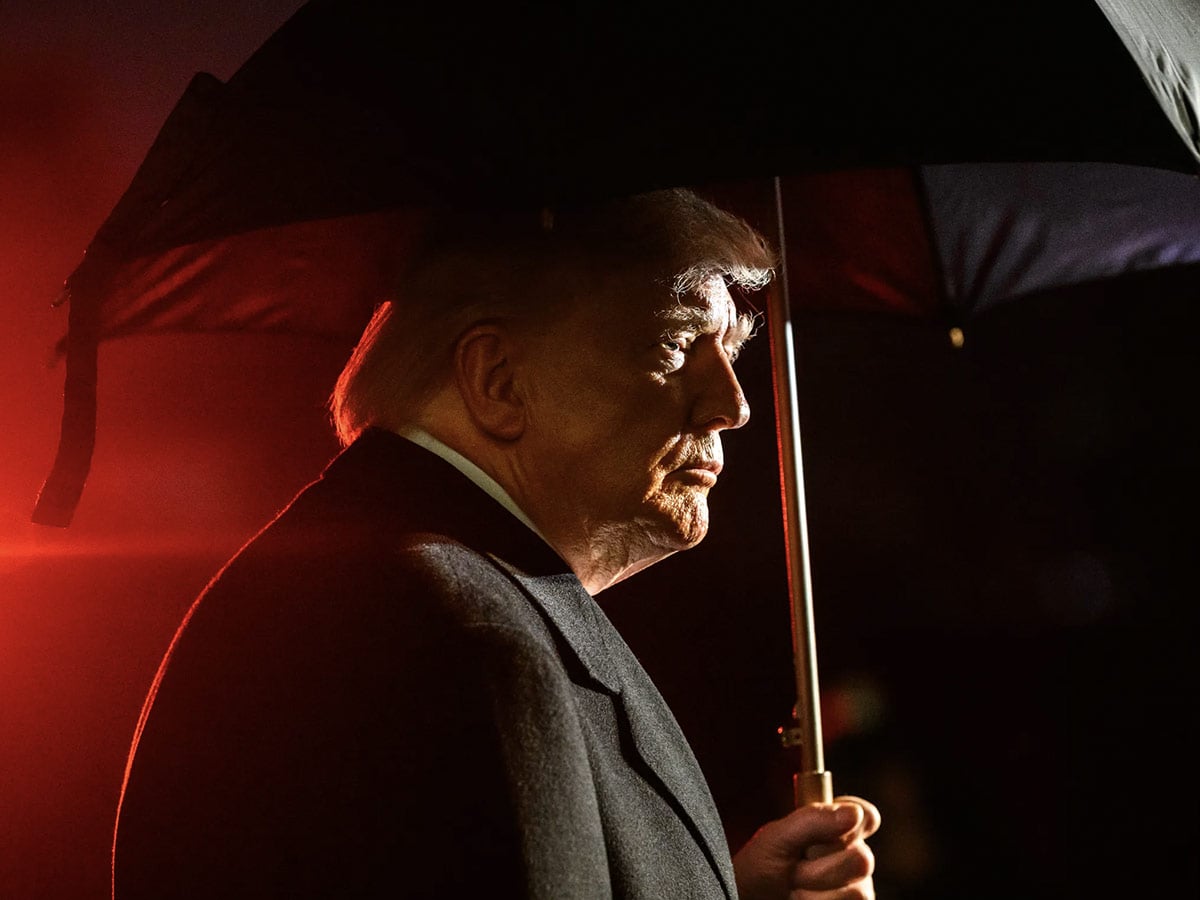
In a new interview that has already sparked headlines and strong reactions across social and political circles, President Donald Trump said that the only thing preventing him from exerting full global power is his “own morality.”
Speaking with the New York Times — a discussion also highlighted by People — Trump answered bluntly when asked what stands between him and total world dominance: “My own morality. My own mind. It’s the only thing that can stop me.”
The president went further, insisting he has no desire for harm or chaos, saying, “I don’t need international law. I’m not looking to hurt people.” While acknowledging that his administration is required to follow international law, Trump added, “It depends what your definition of international law is.”
The exchange quickly touched on a topic that resurfaced during his first term: Greenland. Trump once again reiterated his interest in the massive Arctic territory and the psychological value he places on the idea of “ownership.” When Times journalist David Sanger questioned why, if Trump was serious about the idea, progress had not been made, the president replied, “Because I want to do it properly.”
Sanger asked if ownership was the “proper” route to achieving that vision, prompting Trump to elaborate on why he believes ownership is essential to national success. “Ownership is very important, yeah,” Trump said, later explaining that owning territory provides intangible advantages beyond treaties or political arrangements. “It’s what I feel is psychologically needed for success. I think that ownership gives you a thing that you can’t do, whether you’re talking about a lease or a treaty. Ownership gives you things and elements that you can’t get from just signing a document, that you can have a base.”
The renewed chatter about Greenland comes as questions persist about whether the United States might attempt to purchase or negotiate partial control of the land once again. Although the idea was first met with disbelief by Danish officials years ago, it appears the president has not entirely dropped the matter.
For Christians, Trump’s remarks about morality as the final guardrail between power and abuse echo a recurring biblical theme: that unchecked power without restraint is dangerous. Scripture repeatedly warns that influence, authority, and dominion require character to match. Proverbs reminds believers that “righteousness exalts a nation” while tyranny leads to ruin. Even Jesus rejected earthly power when Satan offered Him “all the kingdoms of the world” in exchange for compromise (Matthew 4).
Whether Trump intended his comment as a display of self-awareness, bravado, or something in between, it raises deeper questions about the nature of leadership, the role of conscience, and the moral framework guiding those entrusted with authority. In an age when global influence is constantly being negotiated — through treaties, military presence, and political alliances — Christians continue to weigh not just policies but the character of those who shape global reality.
As Trump’s remarks continue to circulate, the conversation isn’t just about Greenland or geopolitics — it’s about who defines morality, who enforces it, and what happens when leaders believe only their own restraint stands between order and domination.
 Read Previous Post