
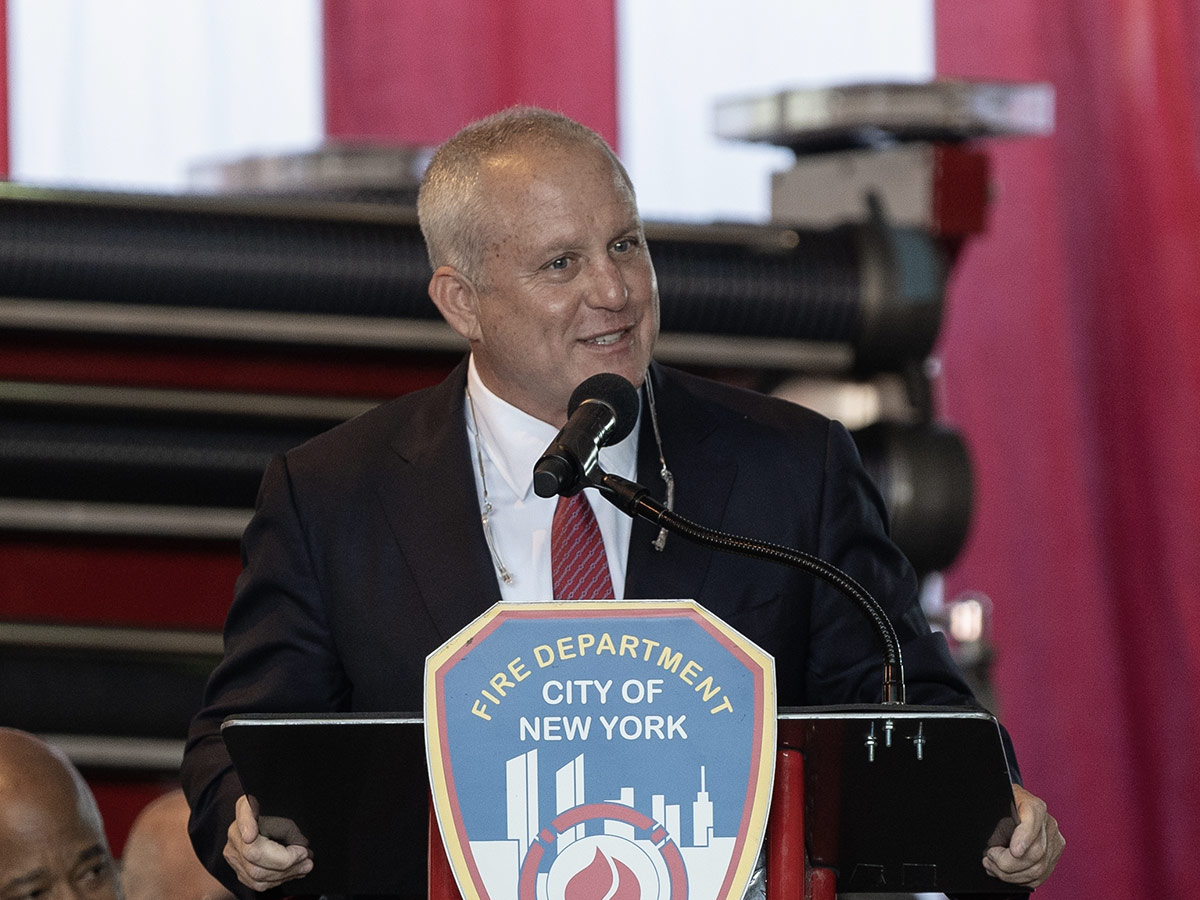
New York City Fire Commissioner Robert Tucker announced his resignation mere hours after Zohran Mamdani was elected mayor of New York City.
Mamdani, a democratic socialist, is known for his critical positions on Israel. Tucker is Jewish.
According to the New York Post, the 34-year-old Mamdani “defiantly stood by his stance on the campaign trail, despite the Big Apple being home to the largest Jewish diaspora outside of Israel.”
In early June, Mamdani ignited backlash from opponent Andrew Cuomo at a debate when he refused to state whether Israel had a right to exist as a Jewish state. Additionally, the mayor-elect criticized Israeli Prime Minister Benjamin Netanyahu, vowed his arrest should he ever set foot in New York City, and “accused the nation of committing a genocide in Gaza following the Oct. 7 Hamas terror attack.”
Although Tucker didn’t go into details as to the reason for his resignation, NBC New York states he “thanked Mayor Eric Adams’ administration for the opportunity to serve and called it ‘the honor of a lifetime.'”
Outside sources report Tucker’s concern over Mamdani’s anti-Israel hostility, “noting that Tucker’s support of the Jewish state ‘does not align with the new mayor.'”
Jewish faith leaders and organizations remain divided, with reactions ranging from warnings to hope.
ABC News 10 reports that within hours of the news, the Anti-Defamation League “launched an initiative to track policies and personnel appointments of the incoming administration.”
Likewise, The Jewish Voice depicted the city’s Jewish community as “fearfully bracing for an ‘exodus,'” with additional top leaders calling Mamdani’s election “a grim milestone.”
To Jonathan Greenblatt, national director at the ADL, the fact that Mamdani has “associated with individuals who have a history of antisemitism, and demonstrated intense animosity toward the Jewish state,” is enough to bring about deep concern.
Mamdani’s selection to serve America’s largest city comes at the intersection of religion, politics, and public service. Many Jewish leaders worry his principles will further perpetuate a surge of “harassment, vandalism and violence targeting Jewish residents and institutions.”
This was not the story for all Jewish faith leaders and organizations, however.
Amy Spitalnick, CEO of the Jewish Council for Public Affairs, states that “Jews became a political football” in the election, to the point that the election itself “was used to validate the worst instincts and fears on both extremes.”
Spitalnick urged the city’s Jewish leaders to work with Mamdani to find a common goal of “a strong, safe and inclusive city in which Jewish and all New Yorkers can thrive.”
Likewise, Jamie Beran, CEO of the progressive Jewish advocacy group, Bend the Arc, said his group “endorsed Zohran because we know a strong democracy is what keeps Jews the safest.”
For Zalman Friedman, a Hasidic Jewish leader, even though he remains cautious of the big-government solutions Mamdani promises, he remains hopeful that the new mayor will focus on “public safety, lowering housing costs and supporting government funding for Jewish religious schools.”
The Jewish diaspora remains divided following the appointment of Mamdani.
 Read Previous Post