
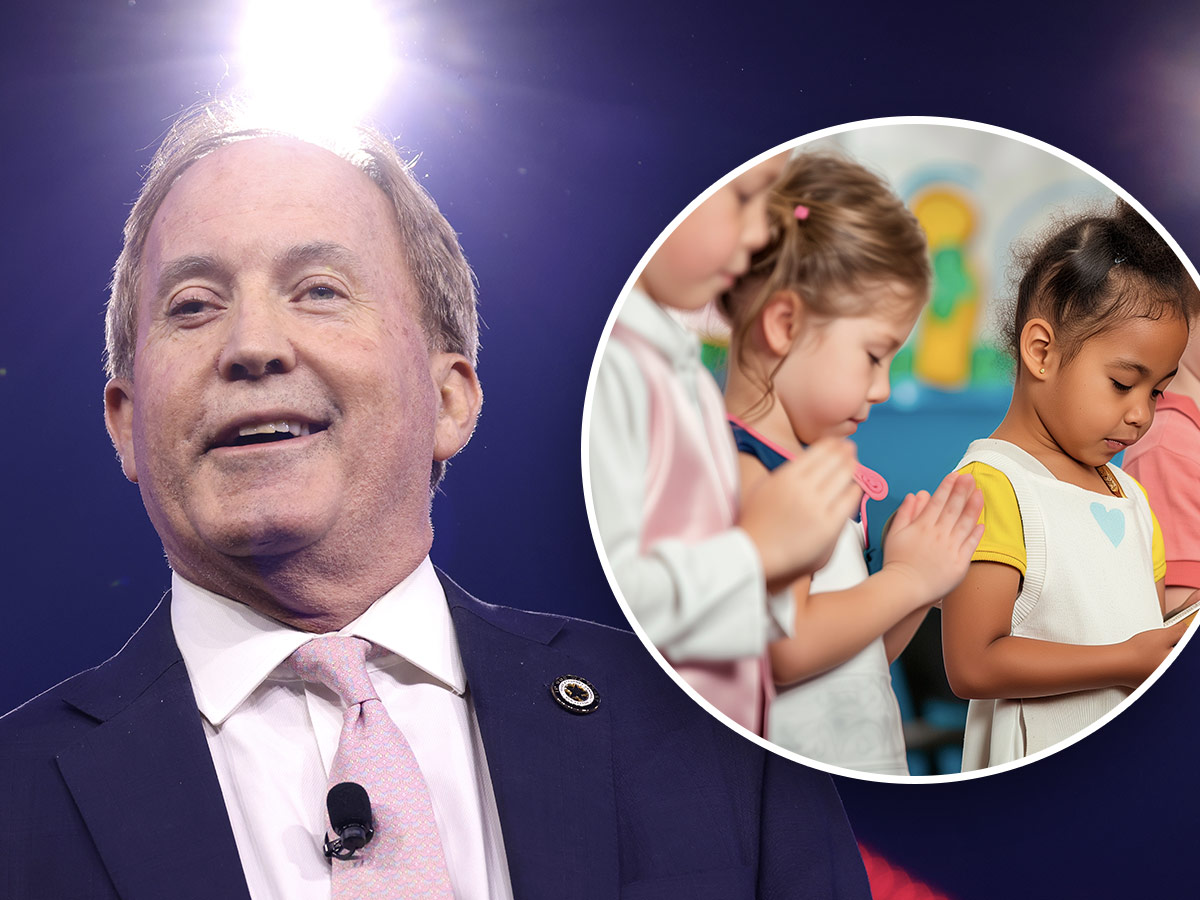
Texas Attorney General Ken Paxton is calling on public schools in his state to adopt dedicated time for prayer and Scripture reading. He specifically recommends the Lord’s Prayer as taught by Jesus Christ. His appeal follows the passage of Senate Bill 11 (SB 11), a new law that allows school boards to set aside time for voluntary prayer and reading of religious texts with parental consent.
In a news release, Paxton declared, “In Texas classrooms, we want the Word of God opened, the Ten Commandments displayed, and prayers lifted up.” He criticized opponents of SB 11 as “twisted, radical liberals” bent on erasing America’s biblical roots, saying the nation was “founded on the rock of Biblical Truth.”
“I will not stand by while the far-left attempts to push our country into the sinking sand,” Paxton added. A longtime member of Prestonwood Baptist Church in Plano, Paxton has made faith a central theme of his political vision.
Although SB 11 is currently under a temporary injunction, Paxton used his office to provide school boards with “best practices,” including his endorsement of the Lord’s Prayer. He cited the King James Version of Matthew 6:9–13:
“Our Father which art in heaven, Hallowed be thy name. Thy kingdom come. Thy will be done in earth, as it is in heaven. Give us this day our daily bread. And forgive us our debts, as we forgive our debtors. And lead us not into temptation, but deliver us from evil: For thine is the kingdom, and the power, and the glory, for ever. Amen.”
Paxton’s recommendation comes as he campaigns for the U.S. Senate seat currently held by John Cornyn, signaling that faith in public life will remain a cornerstone of his platform.
Not everyone welcomed the announcement. The Freedom From Religion Foundation (FFRF), a national group based in Madison, Wisconsin, condemned Paxton’s remarks and warned of constitutional violations.
“Texas public schools exist to educate, not indoctrinate,” wrote FFRF legal counsel Chris Line in a letter. “When you use your official position to instruct children to pray ‘as taught by Jesus Christ,’ you send a message … that the state favors Christianity over all other religions and over nonreligion. This is precisely what the Establishment Clause of the First Amendment forbids.”
The group pledged to monitor the implementation of SB 11 closely and assist families who feel their rights are infringed. Co-President Annie Laurie Gaylor accused Paxton of “trying to turn Texas classrooms into Sunday schools,” adding, “Children deserve an education free from religious coercion.”
Paxton’s recommendation follows recent court rulings against similar measures. Just weeks earlier, U.S. District Judge Fred Biery declared a Texas law requiring Ten Commandments displays in classrooms unconstitutional. The ruling temporarily blocked 11 school districts, including Houston, Austin, and Plano, from implementing the displays.
With SB 11 now under injunction, the battle over prayer and Scripture in public schools is far from settled. Supporters like Paxton frame the debate as a fight to restore moral foundations in education, while opponents see it as a threat to religious freedom and constitutional safeguards.
For Christians across Texas, Paxton’s words may serve as a reminder of Jesus’ teaching on prayer and the central role it plays in faith. Yet the controversy also highlights the tension between expressions of faith in public life and the constitutional framework that governs public schools.
Whether SB 11 withstands legal challenges or not, the discussion it has sparked may shape the future of religious liberty and education in Texas — and set a precedent for other states watching closely.
 Read Previous Post