
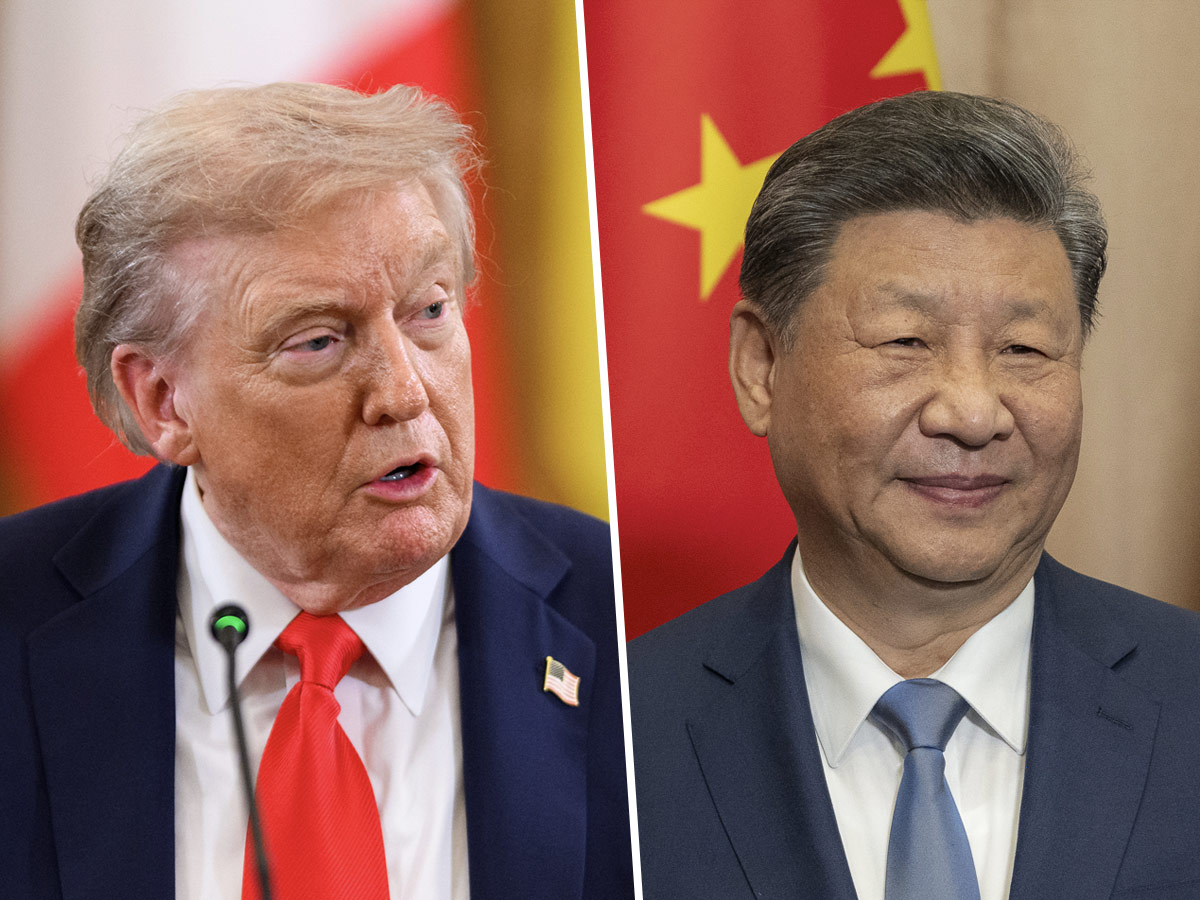
When Donald Trump returned to the White House in 2025, one of his first challenges looked all too familiar: China. The economic and geopolitical rivalry that defined much of his first presidency has only intensified. The U.S. trade deficit with Beijing swelled to nearly $300 billion, while China tightened its grip on semiconductors, rare earth minerals, and key global supply chains. For America, the stakes were no longer just economic—they were national security.
Yet amid these high-stakes battles, the Trump administration has emphasized a lesson not just of strategy, but of faith: stay the course, stand firm, and trust that obstacles can be overcome with courage and conviction.
A Two-Pronged Approach
The administration’s new playbook rests on two pillars: offense and defense.
On offense, Washington has kept maximum pressure on Beijing, refusing to give away leverage until genuine concessions are made. On defense, tariffs have been wielded not just as bargaining tools but as catalysts for industrial revival. Tariffs have fueled the reshoring of supply chains, spurred investment in domestic semiconductor and battery plants, and encouraged allies such as Japan, South Korea, and Australia to align their supply chains with America’s.
The strategy has not been without costs. Tariffs can raise consumer prices, and hardline negotiations sometimes unsettle markets or strain alliances. But supporters argue that such short-term discomfort is outweighed by long-term security. In a world where semiconductors and rare earths are the new oil, the administration insists America cannot afford to remain vulnerable.
Standing Strong in Negotiations
Veterans of past U.S.-China trade talks have described Beijing’s subtle tactics—delays, psychological ploys, and even small gestures meant to unsettle the U.S. side. American negotiators recall being handed last-minute Chinese drafts, often in Mandarin, designed to waste time and weaken resolve. In one incident, a chair was removed from the negotiating table to signal disrespect.
The Trump team’s response was consistent: do not flinch. When a faulty Chinese draft appeared, U.S. negotiators waved it away and insisted on proceeding from the American document. When a chair was pulled, it was calmly returned. Each time, the message was clear: America would not be unnerved or pushed into compromise by intimidation.
That same posture continues in Trump’s second term. Tariffs are sharper and more targeted. Trade deadlines are extended only when it suits American interests. And allied deals in Europe and Asia free up resources to focus squarely on Beijing.
Faith as a Source of Strength
What enables leaders to stay steady under relentless pressure? For some, it is a philosophy of realism or power politics. But for others, it is faith.
One negotiator recalls leaning on the writings of Rabbi Levi Yitzchok of Berditchev, the 18th-century author of Kedushas Levi. The work reminds readers that challenges—even those larger than life—are not insurmountable when met with simple faith. “If you encounter an obstacle that is bigger than you, do not be fearful or frightened. With simple faith, what you fear will not harm you,” Rabbi Levi wrote.
That truth, echoed in the Bible’s promise that God equips His people to face every trial, became a source of calm during tense moments. As one account recalls, when sprinting to translate a last-minute draft in Beijing or confronting stone-faced officials across the table, the reminder of God’s sovereignty and provision steadied the heart.
Faith also empowered negotiators to speak the truth plainly, even when inconvenient. At one point, when Chinese officials resisted opening their financial markets, an American representative pointed out the imbalance: Chinese banks in the U.S. were seeing double—and triple-digit growth, while U.S. banks in China barely moved. That honest contrast broke through in ways posturing never could.
Faith and Fortitude For the Future
Negotiations with China will not be resolved overnight. They are, at their core, a contest of wills as much as economics. And in such contests, faith matters. The Jewish and Christian traditions alike affirm that when facing giants, God’s people must not shrink back but lift their heads high, stand on truth, and trust that what seems impossible can indeed be achieved.
That posture of faith and fortitude guided America in Trump’s first term and is guiding America again in his second. As tariffs reshape supply chains, new alliances take root, and America signals it will not be coerced, one lesson resonates: true strength is not only found in hard numbers or negotiating tactics but in the courage that comes from faith.
As the United States faces down a powerful adversary, Christians are reminded of Psalm 27:1 — “The Lord is my light and my salvation—whom shall I fear? The Lord is the stronghold of my life—of whom shall I be afraid?”
That same spirit now undergirds America’s economic stand: steady, resolute, and grounded in faith.
 Read Previous Post