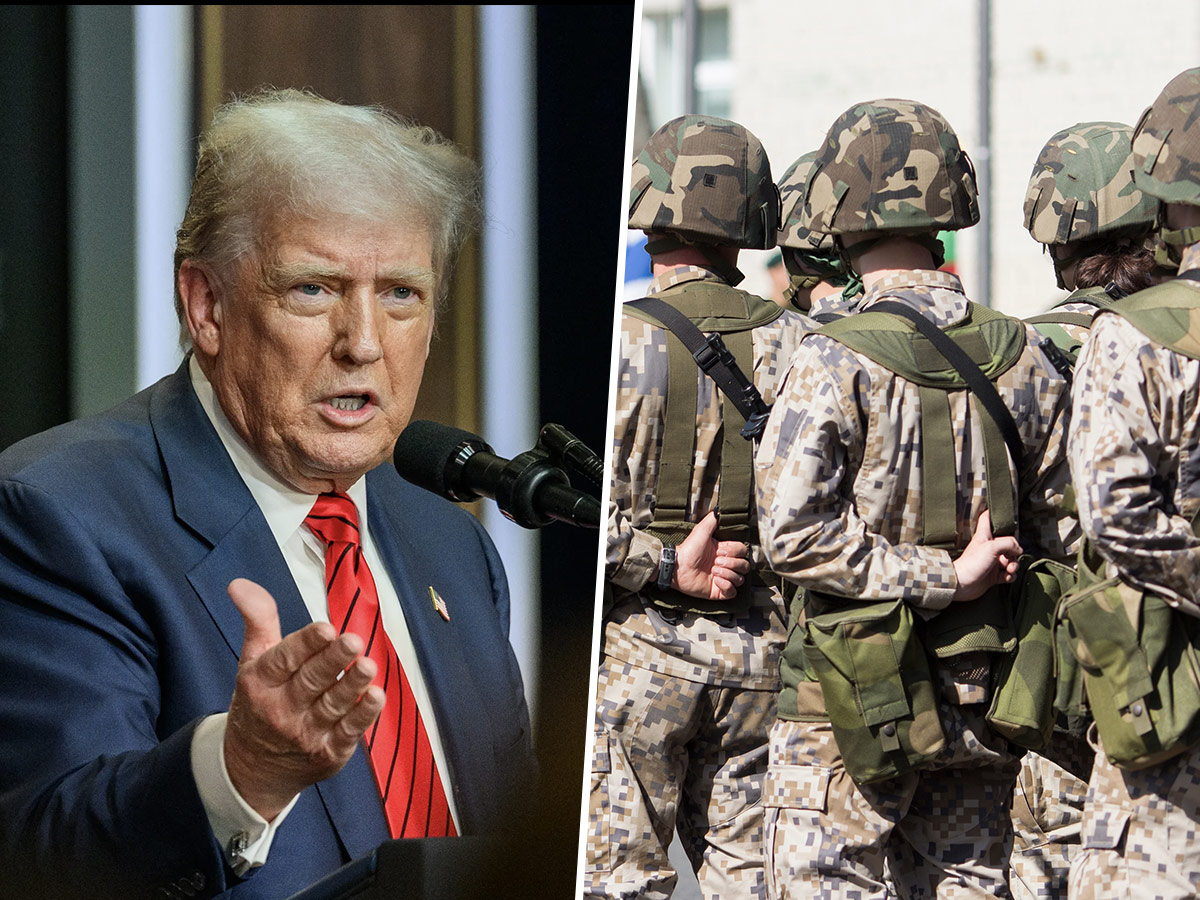
In a dramatic assertion of federal power, President Donald J. Trump deployed the National Guard and assumed direct control of Washington, D.C.’s police force on August 11, declaring a citywide crime emergency.
The move, unprecedented in recent memory, has alarmed some local leaders and faith coalitions who view it as a dangerous overreach.
In a press conference, Trump explained that he aims to “rescue our nation’s capital from crime, bloodshed, bedlam, and squalor, and worse.” The president’s executive order, which declared a crime emergency in the nation’s capital, cited section 740 of the Home Rule Act. This section requires the mayor of D.C. to lend the president the Metropolitan police force when an emergency is declared.
Trump’s executive order names crime as a core reason for federalizing Washington’s police force. However, the U.S. Attorney’s Office, District of Columbia reported in January that crime in D.C. had reached a thirty-year low. (This statistic is dubitable, as the Metropolitan police force has had issues in the past with doctoring violent crime statistics.)
D.C. Mayor Muriel Bowser expressed disapproval against the president’s move, calling it “unsettling and unprecedented.”
Nevertheless, she stated that D.C. will comply with the president, even as she cast doubt on the validity of there being an emergency in the city.
In his press conference, the president mentioned that his efforts will target “violent gangs and bloodthirsty criminals, roving mobs of wild youth, drugged out maniacs, and homeless people.” The presidential action will enforce laws that D.C. already has regarding the homeless population.
On Tuesday, August 12, White House press secretary Karoline Leavitt said that “homeless individuals will be given the option to leave their encampment, to be taken to a homeless shelter to be offered addiction or mental health services, and if they refuse, they will be susceptible to fines or to jail time again.”
These laws are not unique to D.C.
Other US cities have ordinances which require homeless individuals to be fined or incarcerated, such as Albuquerque, New Mexico or San Jose, California.
Faith leaders have responded to Trump’s actions in D.C.
Christian, Muslim, and Jewish leaders joined Philadelphia’s District Attorney Larry Krasner in a press event to denounce the Washington takeover.
Kenneth Nuriddin, a Vietnam veteran and imam at Philadelphia Masjid warned of a potential “invasion” of Philadelphia. The pastor of Mother Bethel AME church, Carolyn Cavaness, added, “We come to show that this is not and will not be allowed here.” And finally, Rabbi Mordechai Liebling said that Trump “is a sinner. That man is dividing us. That man is seeding hatred. That man doesn’t care about the welfare and well-being of the citizens and the residents of this country. We must resist his invasion of our cities and we must resist his attempt to overturn democracy.”
Key to understanding these faith leaders’ perspectives is the racial aspect of the situation. According to the US Census Bureau’s Population Estimates Program, Black Americans make up 41% of D.C.’s adult population. 51% of D.C. children are Black.
As DA Krasner said in the press event, “I just never thought that military invasion of America’s big cities, with a fear-based racist agenda in order to pave a path for military takeover is something that I would face.”
Krasner, faith leaders, and others argue that the president’s focus on “wild youth” and the homeless constitute racist moves against Black Americans. The majority of D.C. children are Black, as well as 81% of D.C.’s homeless population.
In addition to racial concerns, some Americans have called into question how long the president will keep the Metropolitan police federalized. The Home Rule Act limits presidential access to the D.C. police to 48 hours. Trump could extend this deadline up to 30 days by notifying the Senate and House Committees on D.C.
There are also concerns about whether the president will take advantage of emergency declarations to deploy law enforcement and armed forces to American cities, as he did in Los Angeles earlier this year.
Trump has mentioned taking control of D.C. before. He also mentioned other cities in his press conference, saying for example, “if we need to, we’re going to do the same thing in Chicago, which is a disaster.”
Some have pointed out that the president has unique emergency powers in D.C. that he does not possess in other cities. And while President Trump deployed the Marines and National Guard to Los Angeles to quell anti-ICE protests in June, the president’s use of the Armed Forces is being challenged in the courts.
 Read Previous Post