
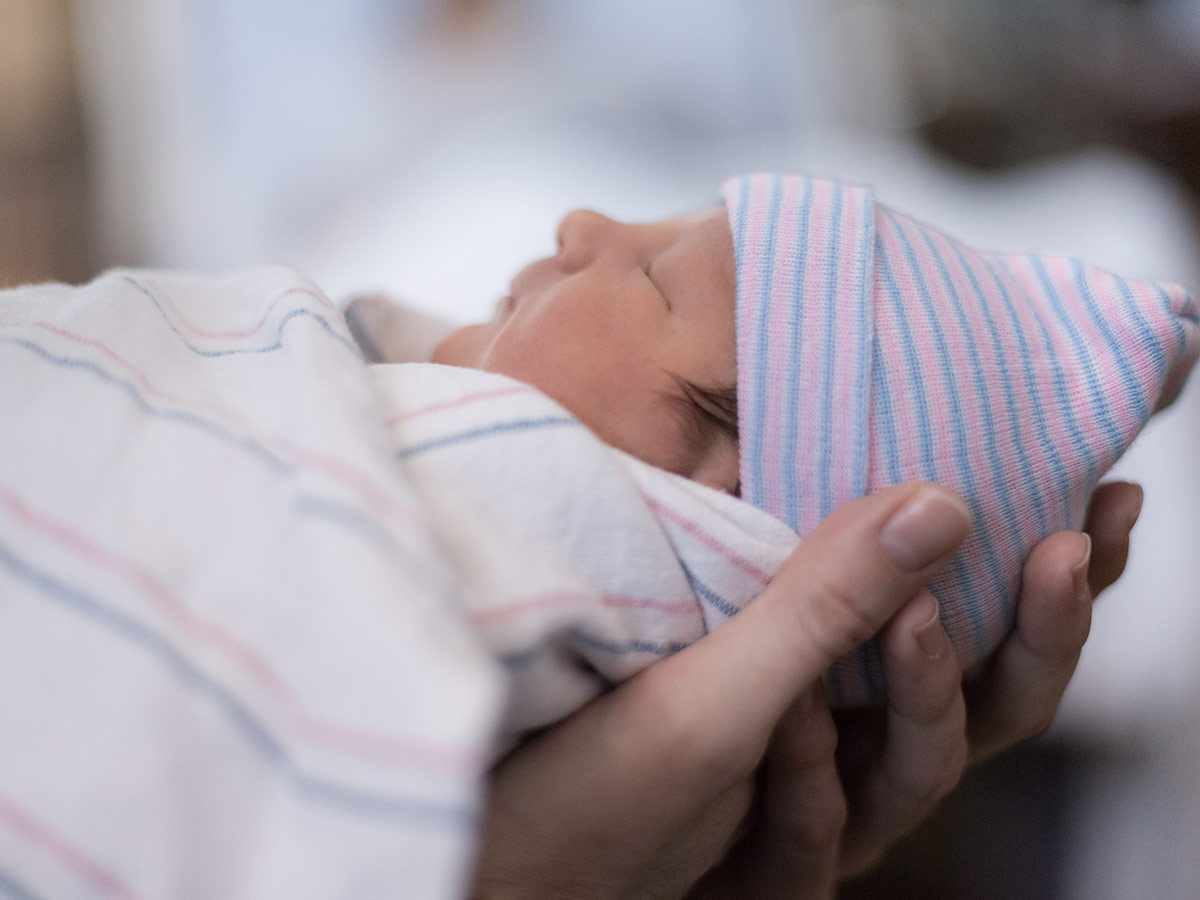
The CDC has released the latest information on the current US birth rate and it could have serious consequences for the future. According to the latest data, 1.6 children are being born to women, well below the necessary replacement rate of 2.1. The US had previously been one of the few developed nations to have kept on track with the replacement value while European nations have been on a decline for decades. But now the US finds itself facing a deficit, which could lead to some big problems in the future as an aging workforce doesn’t have enough young people to replace it.
One of the biggest factors that could be impacting the lower numbers is that women are delaying motherhood. A recent report showed that the birth rate had shrunk in all groups of women except for those who 40 years or older. A longer a woman waits to have children, the less children she is likely to have, if she has any at all. Karen Guzzo, director of the Carolina Population Center at the University of North Carolina, stated that economical worries are also a big factor. “Worry is not a good moment to have kids,” she said.
The number has gone down dramatically from the early 60s when the rate was 3.5 and still lower than the 1.7 rate in 1976 when the baby boom ended. Leslie Root, a University of Colorado Boulder researcher, however, stated that the number is not a concern as the population is still increasing. “We’re seeing this as part of an ongoing process of fertility delay. We know that the U.S. population is still growing, and we still have a natural increase – more births than deaths,” she said. According to the CDC data, there were 33,000 more babies born in 2024 than last year, a 1% increase.
Deseret News, however, presented the information in a much bleaker picture. Citing South Korea, where the rate is .75, Deseret demonstrated how quickly the population number could dwindle. “So if we start with 100 people in the first generation that means there will be 36 people in the next, 13 in the next, and about 5 in the next. “This bears repeating, in three generations 100 people will leave 13 descendants. That is 13 people supporting 100 grandparents.” Not only do lower birth rates pose serious economic issues, but they could spell the end of cultures like South Korea that could slowly disappear as its people become less and less. The Trump administration has tried to implement policies to encourage people to have more babies, such as an executive order that IVF treatment would be covered under insurance. But some believer his policies will not help in such things as better parental leave and lower childcare costs.
 Read Previous Post