
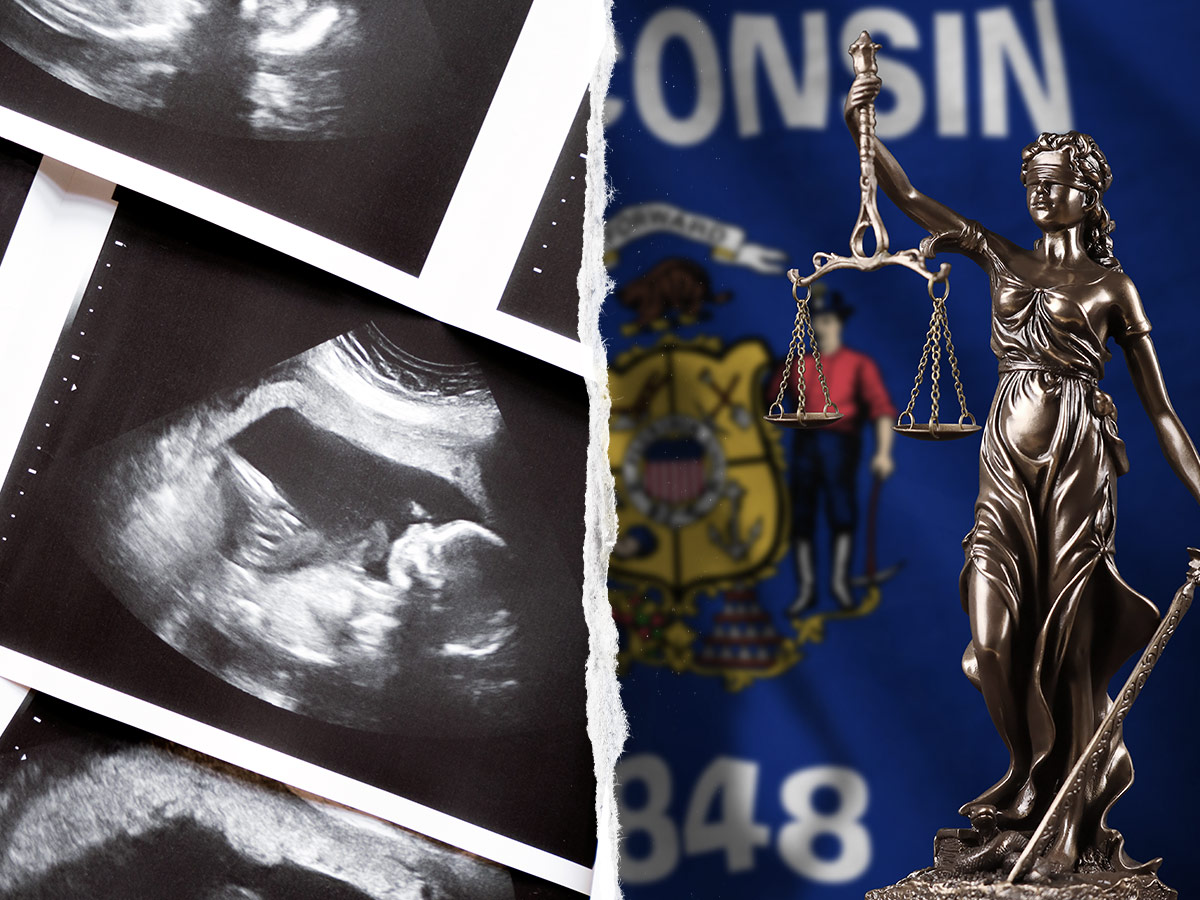
The Wisconsin Supreme Court has struck down the state’s 176-year-old abortion ban, ruling that newer state laws regulating abortion take precedence over the near-total ban enacted in 1849.
In a 4-3 decision on Wednesday, the court’s liberal majority determined that laws passed while Roe v. Wade was in effect, including a 1985 law allowing abortions until fetal viability, have effectively replaced the older ban. The decision ends a legal battle that has caused uncertainty for providers and patients across the state since the U.S. Supreme Court overturned Roe v. Wade in 2022.
The 1849 ban, passed before the Civil War, made it a felony for anyone other than the mother to “intentionally destroy the life of an unborn child.” Although Roe v. Wade nullified the law, it was never officially repealed. After Roe fell, conservatives argued that the 1849 ban once again became enforceable.
Wisconsin Attorney General Josh Kaul, a Democrat, filed a lawsuit arguing that the old ban was trumped by newer abortion regulations, including the 1985 law, which permits abortions up to the point of viability, typically around 21 weeks of gestation.
Justice Rebecca Dallet, writing for the majority, stated that the Wisconsin legislature “impliedly repealed” the 1849 ban when it passed comprehensive abortion regulations governing where, when, and how abortions could be performed. “That comprehensive legislation so thoroughly covers the entire subject of abortion that it was clearly meant as a substitute for the 19th-century near-total ban on abortion,” Dallet wrote.
The decision follows a 2023 ruling from Dane County Circuit Judge Diane Schlipper, who ruled that the 1849 law applied to feticide — killing a fetus without the mother’s consent — but not to consensual abortions. Abortions resumed in the state following that ruling, but Wednesday’s decision provides more legal certainty for patients and providers.
In a sharp dissent, Justice Annette Ziegler criticized the ruling as “a jaw-dropping exercise of judicial will,” claiming that the court’s liberal justices were letting personal preferences drive their decision to allow abortions.
The case was brought before the high court after Republican Sheboygan County District Attorney Joel Urmanski argued that the 1849 ban could coexist with the state’s newer abortion restrictions. Urmanski asked the Supreme Court to overturn Schlipper’s decision directly, bypassing the appeals court.
Wednesday’s ruling was anticipated given the court’s current makeup. The liberal majority has a 4-3 edge, bolstered by the election of Justice Janet Protasiewicz in 2023, who openly supported abortion rights during her campaign. Another liberal, Susan Crawford, won an open seat in April, ensuring the liberal majority will remain until at least 2028, though Crawford was not sworn in and did not participate in Wednesday’s decision.
Crawford is expected to play a significant role in an upcoming case brought by Planned Parenthood of Wisconsin challenging the constitutionality of the 1849 ban, which the state Supreme Court has agreed to hear.
As the legal and political battles over abortion continue in the state and nationwide, Wednesday’s decision marks a pivotal moment for Wisconsin, ensuring that abortion remains legal up to the point of viability and providing clarity for women and healthcare providers navigating the post-Roe legal landscape.
For Christians and pro-life advocates, the ruling is a reminder to remain prayerful and engaged in advocating for the protection of life, even as state courts continue to reshape the legal terrain left by the fall of Roe v. Wade.
 Read Previous Post