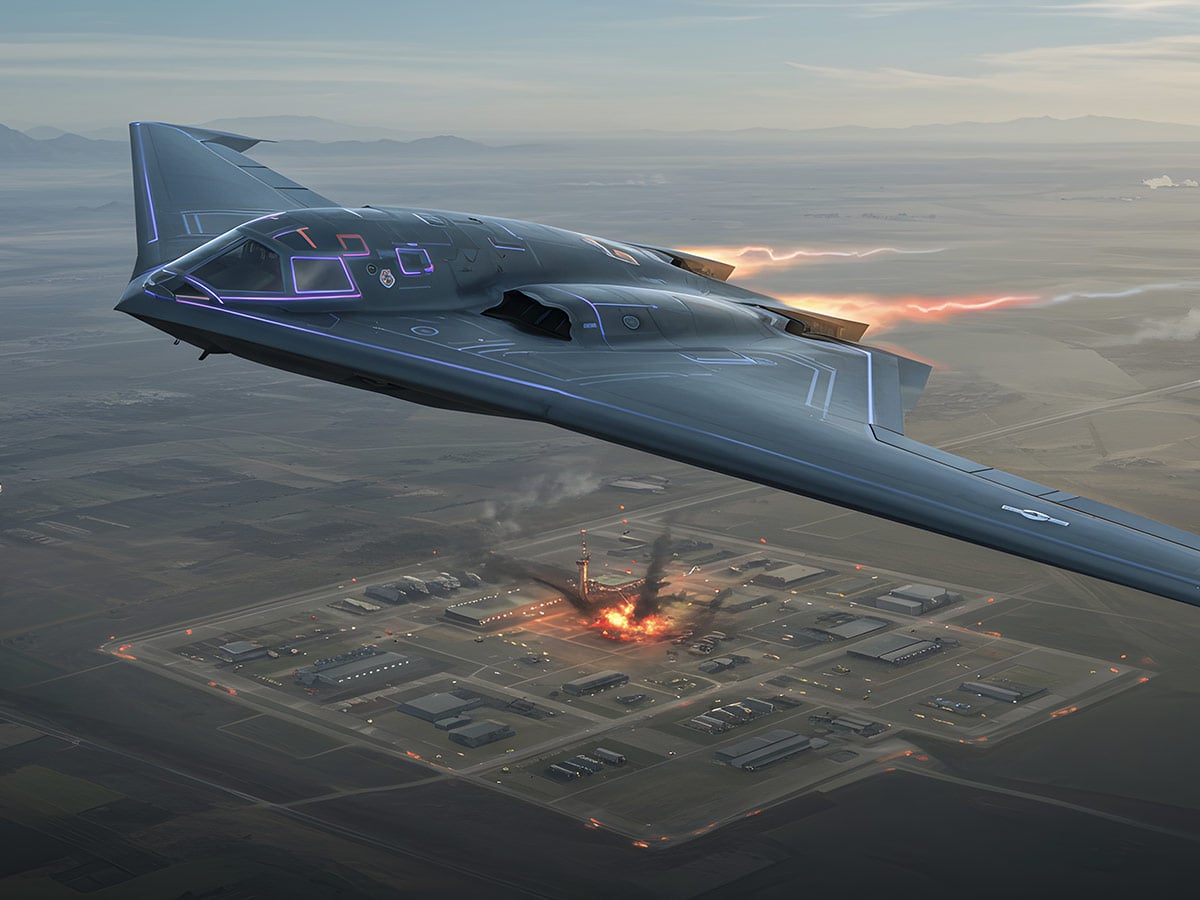
Christians in the United States and abroad are divided over the U.S. air strikes against three Iranian nuclear facilities last weekend.
Was it moral to bomb Iran?
Some people are breathing a sigh of relief following the air strikes and hope the U.S. crippled Iran’s nuclear program. Other Christians condemn the attack as reckless, dangerous, unjustified and immoral.
The World Communion of Reformed Churches, which is the world’s largest association of Calvinist churches and others, has urged Christians to pray for peace. Meanwhile, the World Council of Churches and faith groups affiliated with the Presbyterian Church (U.S.A.) have pointed out that the U.S. attacks are unlawful and a violation of international law.
The Unitarian Universalist Association called the attacks a moral failure and suggested that those involved address the conflict’s root causes. The National Catholic Reporter said, “The assault represents a dangerous and morally reckless misstep—a betrayal of both Catholic teaching and global conscience.”
Many Protestants may also feel their Christian values have been betrayed.
But the Southern Baptist Convention has thanked Trump for his decision to order the attack and said they are praying for the men and women in the U.S. military. The SBC also said they want peace rather than war with Iran. But peace in the Middle East may be more difficult to achieve with the United States entering the Israeli-Iranian conflict.
Aside from the SBC, some evangelical leaders see war as a last resort and stress the need for diplomacy and de-escalation of conflict. These leaders urged caution, with some pointing out that Christians in Iran would be vulnerable in the event of war.
The situation is complicated, as are many situations in the Middle East. Certain aspects of the attack point to the fact that the U.S. air strikes were clearly unjustified and immoral:
- America’s military strike was not an act of self-defense. Israel could cite self-defense had it been responsible for the attack. Israel and Iran have been launching missiles at each other for some time. However, the U.S. cannot use the self-defense argument because Iran had not attacked the U.S.
- The U.S. attack cannot be justified under international law. The United Nations prohibits the use of force by one nation against another with two exceptions: the Security Council has authorized the action, or the action is an obvious case of self-defense. Neither exception applied to the U.S.
- Iran did not pose an imminent danger to the U.S. despite Trump’s attempted justification for military action – e.g., that Iran’s nuclear facilities threatened U.S. security. Trump’s own director of national intelligence, Tulsi Gabbard, took away Trump’s argument when she testified before Congress in March. She said that the U.S. assessment of Iran’s nuclear program indicated the country was not building a nuclear weapon. She also said Iran’s leader, Ali Khamenei, had not authorized the resumption of Iran’s nuclear weapons program, which he suspended in 2003. Trump dismissed Gabbard’s testimony, saying that he thought Iran was very close to having a nuclear weapon. However, there is no evidence to support Trump’s statement.
- The decision to bomb Iran has weakened and may end the already shaky global order that has existed since the end of World War II. Is that moral? After two world wars in the 20th century, few nations wanted more wars. Most wanted peace, and chief among those nations was the United States. The peace-loving countries did not want nations attacking other nations without good reason, such as self-defense. The great powers and emerging nations addressed issues such as the distribution of power, human rights, conflict resolution and security. From those efforts, they created a framework intended to guide nations’ behavior. Now, some countries believe the long-standing global order is under attack. The consequences could be chaos, violence and more war. Such an outcome speaks to the immorality of the unnecessary U.S. attack on Iran.
As Christianity Today wrote on June 23, the U.S. air strikes are “unlawful, unnecessary, unpopular, risky and of dubious strategic value…. For those of us eager for the freedom and safety of Christians and other oppressed people in Iran, this is a moment to pray for wisdom and peace.”
Should the oppressive Iranian regime decide it needs nuclear weapons because of the U.S. intervention, Israel and the world will face an even greater threat than it already faces. The situation in the Middle East could easily escalate.
Support for Israel also remains strong among Trump’s base of evangelical voters, and Trump may want to keep their support at any cost.
Let’s pray that this mindset doesn’t lead the U.S. into deeper involvement in the Middle East. Dear God!
 Read Previous Post