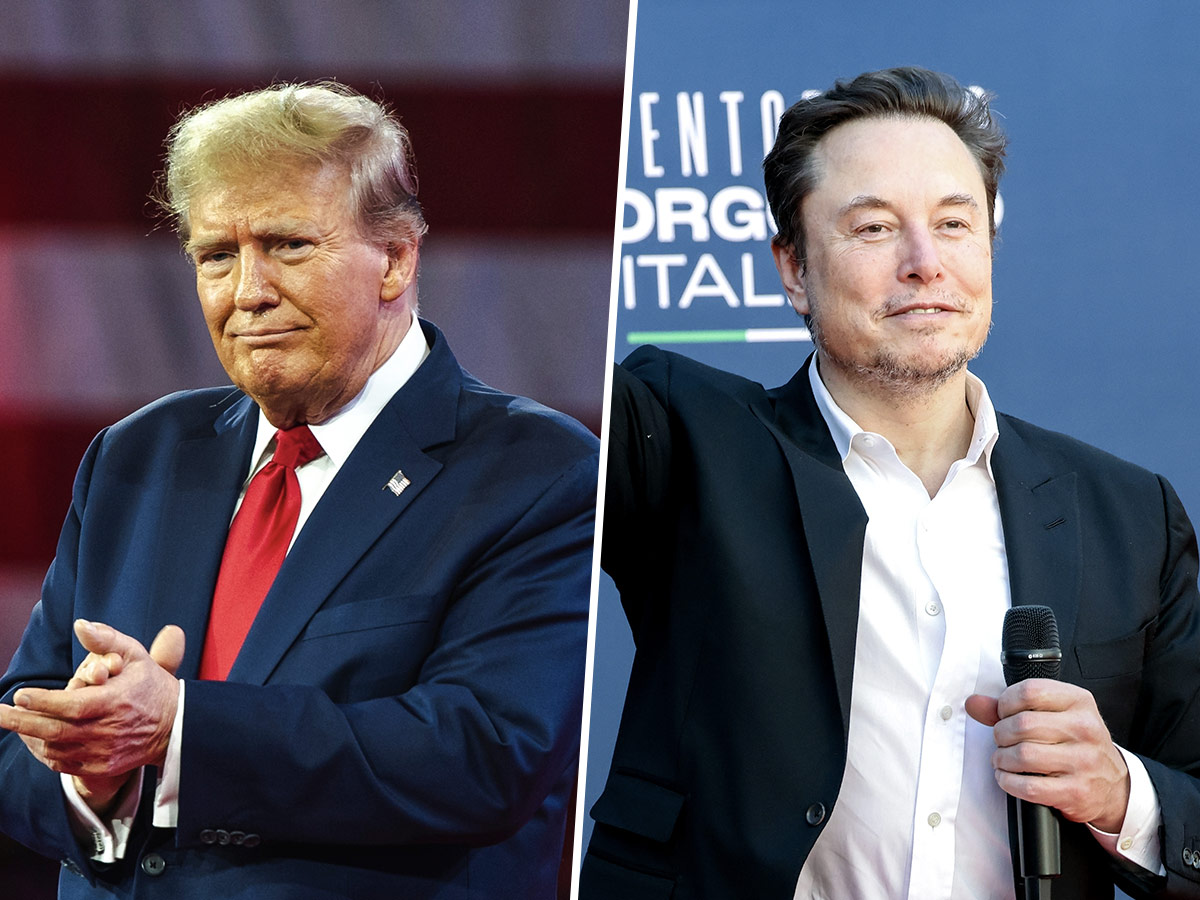
A new poll is showing just how divided, and violent, the political divide has become. The Network Contagion Research Institute and Rutgers University’s Social Perception Lab conducted a study entitled “Assassination Culture: How Burning Teslas and Killing Billionaires Became a Meme Aesthetic for Political Violence,” interviewing 1,264 US adults about their perceptions of political violence. The study’s title comes from the increased property damage against Teslas and Tesla dealerships. Recently, a dealership in Rome caught fire, destroying 17 cars. Elon Musk insisted that “terrorism” was behind the fire.
According to the survey, 39.8 percent of respondents thought the destruction of Tesla dealerships as a form of protest was at least somewhat acceptable or more. That number increased amongst self-identified left of center respondents, with 57.6 percent calling the destruction justified. Respondents were also asked about the justifiability of assassinating either Musk or President Trump. Overall, 31.6 percent thought murdering Musk would be somewhat justified, while 38.5 percent said the same for the president. Those numbers also increased amongst liberal respondents, with 48.6 percent approving Musk’s murder and 55.2 percent at least somewhat approving Trump’s.
“This report points to disturbingly high levels of support for political violence, particularly targeting President Donald Trump and Elon Musk. Across survey responses, nearly one-third of respondents — and a significantly higher share of left-leaning respondents — expressed some degree of justification for acts of lethal violence,” the report stated. The data corresponds with a 2024 study that analyzed how social media promoted political violence. The study also found a higher correlation with those who supported the alleged murder of United Healthcare CEO Brian Thompson by Luigi Mangione.
The report noted the results highlighted the trend of a growing “assassination culture,” spurred on by social media. “Unless political and cultural leadership explicitly confronts and condemns this trend, [a] growing probability of real-world escalation exists. Given the current economic volatility and institutional distrust, the online normalization of political violence may increasingly translate into offline action,” the report warned. “Taken together, the findings underscore the erosion of democratic norms and the growing acceptability of political violence in American discourse, particularly among ideologically extreme communities online. Continued monitoring and broader measurement efforts are urgently needed.”
 Read Previous Post