
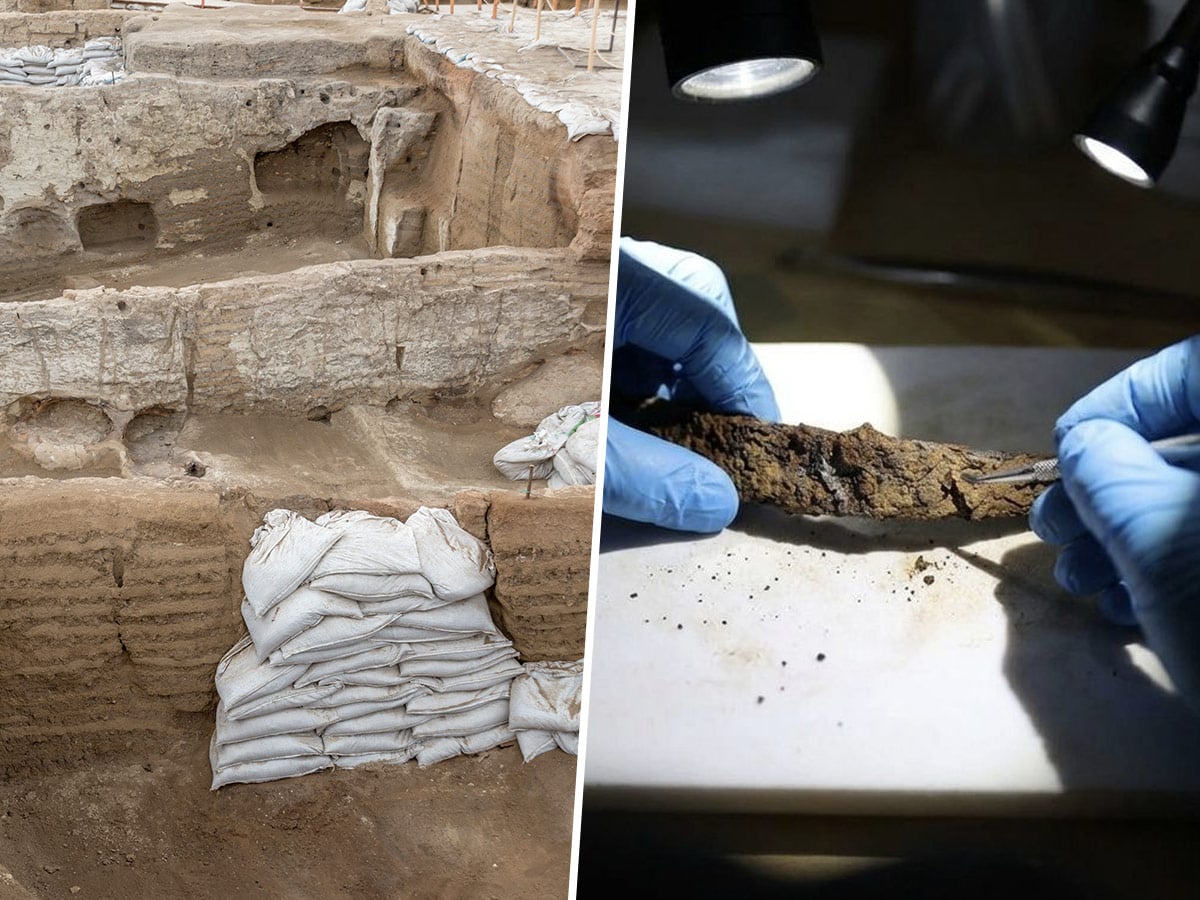
A 1,500-year-old amulet discovered in Turkey contained a thin piece of gold that could be a biblical passage according to researchers. The amulet was discovered in Türkmen Karahöyük, near Konya. This is the third season of excavations for the site after 6 years of surveying the area. The amulet was made of copper, which had been corroded through the years. Researchers date the amulet around the 4th or 5th century AD. Inside the amulet was a paper-thin gold sheet with an inscription on it. Although the inscription has yet to be translated, researchers believe it is of Christian origin.
Associate Professor Dr. Michele Rüzgar Massa, who serves as co-director of the excavation, spoke with the Turkish Andalou Agency about the discovery. “We found a Christian amulet dating back to the 4th or 5th century AD. Inside a copper box, there is a very thin, 0.1 millimeter gold plate with what is most likely a passage from the Bible written on it. It belonged to a small child,” he said. “So we can think of it as an evil eye amulet. These kinds of amulets are not very common. As far as we know, one similar example was found in Germany.” The “evil eye” refers to a malevolent gaze, usually brought on by envy, that falls upon the victim. Amulets like the one discovered were believed to offer protection from such looks. The inclusion of the gold sheet, which is believed to hold a Bible passage, could indicate a sense of comfort the wearer gained in a time when printed Bibles were unavailable.
The region where the amulet was found is also significant in biblical history. The area of central Anatolia is the area where the apostle Paul took his missionary journeys through Asia Minor. It offers insight into the ancient lives of various cultures. Associate Professor Dr. Hüseyin Erpehlivan, the Deputy Head of the excavation, shared more about the region’s significance. “Türkmen Karahöyük holds a significant position in terms of Anatolian archaeology. Konya is located in the heart of Anatolia, a region where cultures intersect,” said Erpehlivan. “Türkmen Karahöyük is not an excavation focused on a single period. We are investigating a multi-layered settlement extending from the Late Hellenistic period through the Iron Age, Bronze Age, and even earlier periods.”
 Read Previous Post