
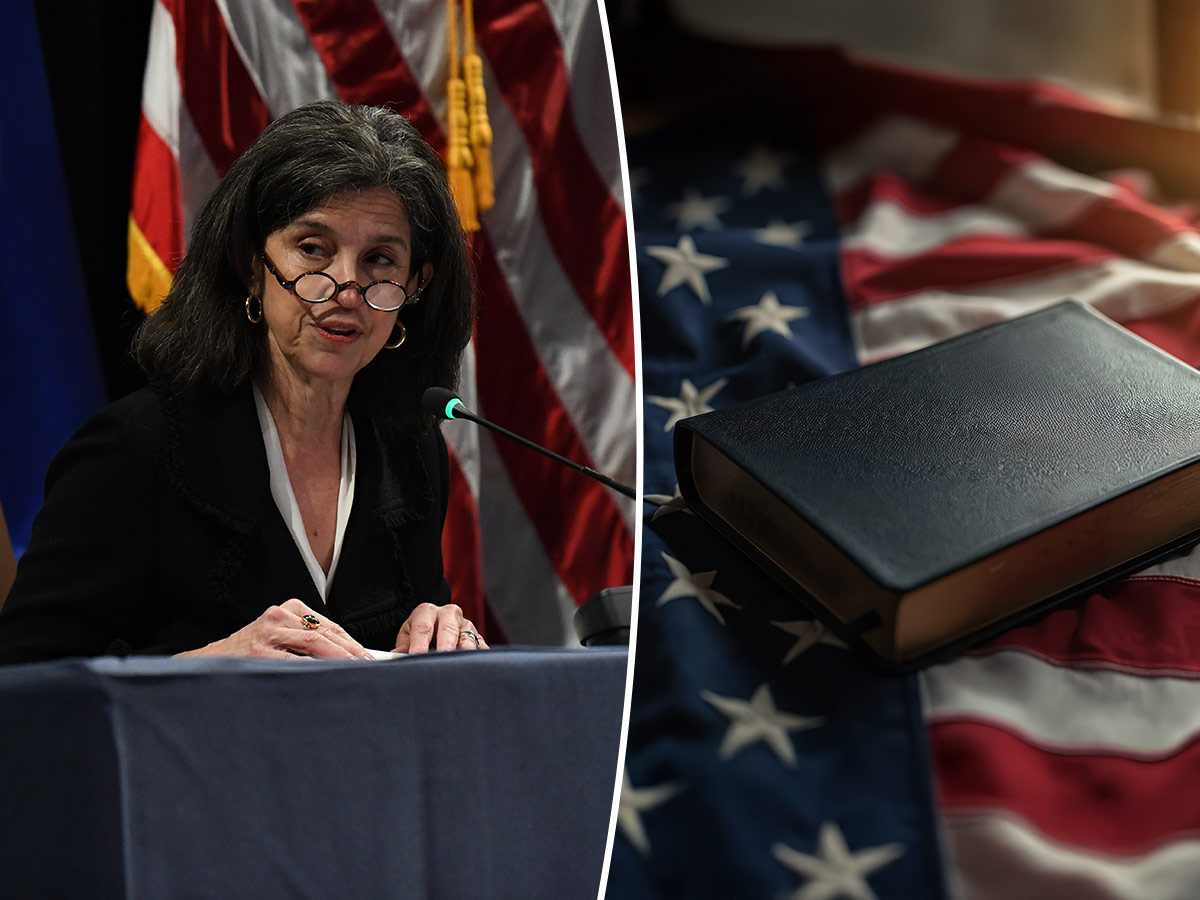
As America continues to wrestle with the role of faith in public life, the final hearing of President Donald Trump’s Religious Liberty Commission delivered a clear and controversial message: religious freedom is under threat—and the nation may have misunderstood one of its most widely cited principles.
Held at the Museum of the Bible, the commission’s seventh and concluding session brought together religious leaders, legal experts, and cultural commentators for a five-hour discussion on the past, present, and future of religious liberty in the United States. But it was a repeated claim from chair Dan Patrick, Texas’ lieutenant governor, that drew some of the strongest reactions.
“It is time to set the record straight: there is no such thing as ‘separation of church and state’ in the Constitution,” Patrick said. He argued that the phrase—often attributed to an 1802 letter by Thomas Jefferson—has been “politically weaponized” to suppress expressions of faith in the public square.
Throughout the hearing, multiple speakers echoed that concern, suggesting that a misunderstanding of religious liberty has led to real-world consequences for people of faith. Law professor Helen Alvaré described religious liberty as an “objective good” and warned that government overreach, not interfaith conflict, has increasingly become the central challenge.
“Quite often,” she said, religious freedom conflicts arise from “a misunderstanding of that unfortunate, historically and culturally inaccurate…phrase, ‘separation of church and state.'”
Personal stories underscored those concerns. Sister Mary Elizabeth, representing the Sisters of Life, detailed an ongoing legal battle in New York, where she said a law has targeted their ministry to pregnant women. According to her testimony, the law has allowed officials to demand internal documents from pro-life pregnancy centers—raising alarms about privacy and religious rights.
“It allowed government officials to force pregnancy centers…to turn over internal documents, including sensitive information about the women we serve,” she said.
The hearing also took a broader cultural turn, with speakers warning that the erosion of religious liberty is tied to deeper philosophical shifts in society. Bishop Robert Barron described what he called a growing “ideology of self-invention,” which he believes is replacing objective moral truth with personal preference.
“This dictatorship of relativism has taken hold in many of our institutions,” Barron said, arguing that traditional religious beliefs are increasingly viewed as obstacles rather than contributors to the common good.
Barron warned that this shift is not just theological—it has real implications for American democracy. As fewer Americans engage with Scripture or religious teachings, he said, the moral framework that has historically shaped the nation begins to erode.
“That’s dangerous for our democracy,” he said. “People start forgetting…they don’t hear about the Good Samaritan, the Ten Commandments, the Beatitudes.”
Christian author and commentator Eric Metaxas reinforced that message, urging Americans to reconnect with the nation’s spiritual roots. Drawing from his own family history in communist East Germany and his research on the American Revolution, Metaxas emphasized that religious liberty is both rare and fragile.
“We must know our story,” he said. “We have to be able to articulate what liberty is and why it matters.”
Metaxas argued that the very idea of inalienable rights—central to America’s founding—is rooted in a biblical understanding of humanity. “At the heart of American liberty…is faith in the God of the Bible,” he said, adding that a decline in that foundation has contributed to today’s cultural tensions.
While the commission’s members expressed urgency about protecting religious freedom, the group itself has not been without controversy. Legal challenges from organizations such as the Interfaith Alliance have accused the commission of favoring Christianity over other faiths, while internal disagreements have led to resignations and public disputes.
Patrick addressed those criticisms directly, suggesting that opposition to the commission reflects fear of its findings. “Someone doesn’t want us to even turn in our report,” he said. “That means they’re really afraid.”
Despite the tension, the commission’s leaders signaled a desire to continue their work beyond its scheduled conclusion. The group is set to deliver its final report to the president next month, but both Patrick and Barron expressed hope that its mission will extend further.
“Threats to religious freedom…are not disappearing anytime soon,” Barron said. “It’s very much in the national interest to keep watching.”
As the hearing concluded, one theme stood out above the rest: the debate over religious liberty in America is far from settled. For many believers, the question is no longer just about legal definitions or historical phrases—but about whether faith will continue to have a place in the nation’s public life.
 Read Previous Post