A decision by Israeli authorities to block Catholic leaders from entering one of Christianity’s most sacred sites on Palm Sunday has sparked international outrage and raised concerns about religious access during a time of war.
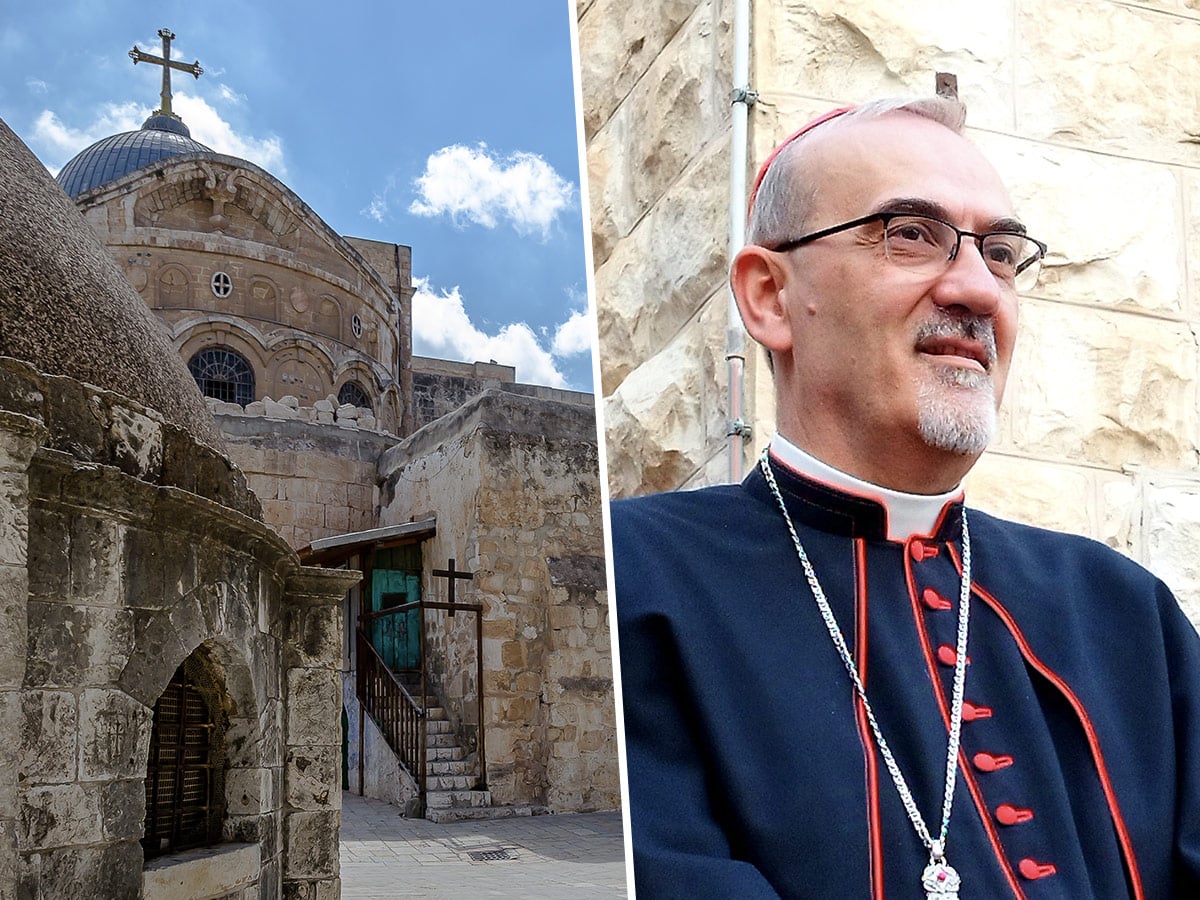
The incident took place at the Church of the Holy Sepulchre, widely believed by Christians to be the location of Jesus Christ’s crucifixion, burial, and resurrection. For centuries, the site has stood as a central place of worship—especially during Holy Week, one of the most significant times on the Christian calendar.
This year, however, access was sharply restricted.
According to Catholic officials, Cardinal Pierbattista Pizzaballa, along with several priests, was stopped by Israeli police while attempting to enter the church for private prayer on Palm Sunday. The group had already been informed that public Mass would not be permitted due to heightened security concerns tied to the ongoing regional conflict.
Still, the denial of even a small, private visit marked an unprecedented moment. Church leaders noted it was the first time in centuries that senior Catholic clergy were prevented from marking Palm Sunday at the historic site.
The move quickly drew criticism, including from U.S. Ambassador to Israel Mike Huckabee, who called the decision an “unfortunate overreach.”
While acknowledging the reality of security risks amid escalating tensions—including recent missile threats—Huckabee questioned the reasoning behind barring a small group of clergy from entering the church.
“For the Patriarch to be barred from entry to the Church on Palm Sunday for a private ceremony is difficult to understand or justify,” he said, noting that restrictions on large gatherings did not appear to apply in this case.
Israeli officials defended their actions, pointing to safety concerns in Jerusalem’s Old City. Authorities said the area’s narrow streets and limited emergency access make it especially vulnerable in the event of an attack or mass casualty incident. In recent days, missile fragments linked to regional hostilities have reportedly landed near the area, heightening tensions.
The office of Prime Minister Benjamin Netanyahu emphasized there was “no malicious intent whatsoever,” framing the decision as a precautionary measure during an active security threat.
Meanwhile, Israeli President Isaac Herzog personally reached out to Pizzaballa to express regret over the situation, describing it as a consequence of ongoing missile dangers rather than a deliberate attempt to restrict religious practice.
Despite those reassurances, the backlash has continued to grow.
The Catholic Patriarchate of Jerusalem and the Franciscan Custody of the Holy Land issued a joint statement condemning the decision as a “grave precedent,” arguing that it disregards the spiritual significance of Jerusalem for billions of Christians worldwide—especially during Holy Week.
“This incident… disregards the sensibilities of billions of people around the world who, during this week, look to Jerusalem,” the statement read.
The controversy has also reached the international stage, with Italy summoning Israel’s ambassador to discuss the matter, underscoring the decision’s global implications.
For many believers, the incident highlights the fragile balance between security and sacred tradition in one of the world’s most contested and spiritually significant regions. As Holy Week continues, questions remain about how access to holy sites will be managed—and how faith communities can worship freely amid ongoing conflict.
 Read Previous Post