A prayer delivered inside the Pentagon on Wednesday is drawing intense scrutiny, raising fresh questions about how faith, leadership, and military power intersect at one of the most consequential moments in global conflict.
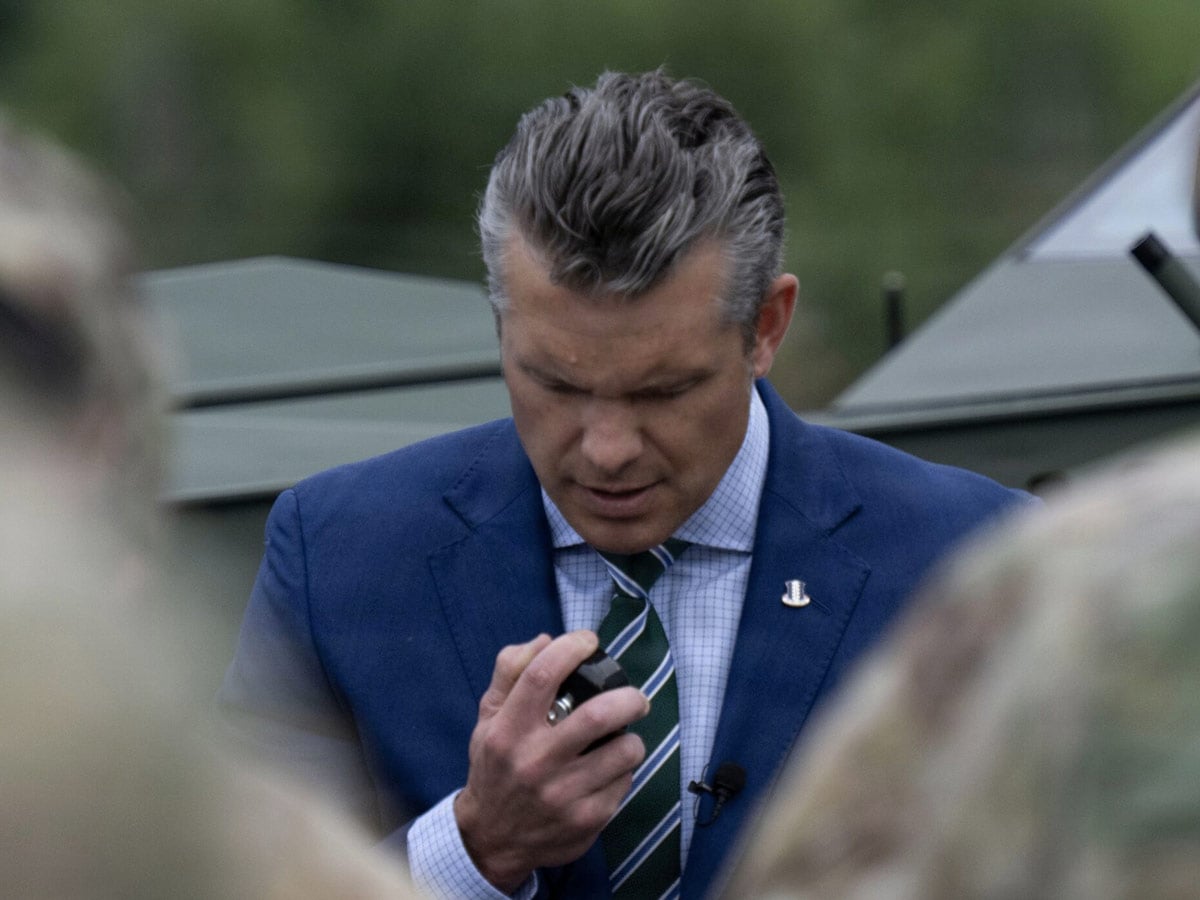
During a monthly Christian worship service held at the Pentagon, Defense Secretary Pete Hegseth prayed for U.S. troops engaged in ongoing conflicts, asking that “every round find its mark” and calling for “overwhelming violence of action against those who deserve no mercy.” The prayer, delivered in Jesus’ name during a livestreamed gathering of civilian employees and uniformed personnel, has quickly become a flashpoint in a broader national conversation.
Hegseth framed the moment as both spiritual and historic, noting the scale of military operations currently underway. “All the more fitting this month, at this moment, given what tens of thousands of Americans are doing right now,” he said, emphasizing the weight of decisions facing service members in active combat zones.
The prayer itself, which Hegseth said was originally given by a military chaplain in a past operation, included language asking God to guide troops with wisdom and unity while ensuring decisive action against enemies. He also referenced Scripture, quoting from the Psalms: “I pursued my enemies and overtook them, and did not turn back till they were consumed.”
While expressions of faith are not new in American public life—particularly in times of war—the tone and specificity of Hegseth’s remarks have prompted debate. Critics point to the combination of explicitly Christian language and calls for military force as a concerning fusion, especially given the Pentagon’s role as a government institution serving a religiously diverse population.
Ronit Stahl, a historian who studies religion in the military, noted that references to God in general terms have long been part of public service. However, she said the use of explicitly Christian language—particularly invoking Jesus Christ—marks a shift. “In a nation with no establishment of religion per the Constitution, what does it mean to have a leader being not just broadly religious, but religious in a very particular sense?” she asked.
That question is now at the center of a legal challenge. Americans United for Separation of Church and State has filed a lawsuit seeking transparency around the Pentagon’s worship services, including internal communications, costs, and whether employees feel pressured to attend.
Rachel Laser, the group’s president, argued that even voluntary religious gatherings can create implicit pressure in a workplace hierarchy. “There is pressure on federal employees to attend in order to appease their bosses,” she said in a statement, accusing officials of using taxpayer-funded resources to promote a specific religious viewpoint.
Hegseth’s defenders, however, point to the long-standing presence of faith in American military tradition. From George Washington’s support for chaplains to Franklin D. Roosevelt’s distribution of Bibles to troops during World War II, religious expression has often accompanied national service. Supporters argue that prayer can offer comfort, clarity, and moral grounding in the chaos of war.
Still, Hegseth’s approach appears to go beyond tradition in both tone and policy. In recent days, he has introduced changes aimed at reshaping the military chaplain corps, encouraging chaplains to focus more on spiritual formation rather than what he described as therapeutic “self-help.” He also announced plans to reduce the number of recognized religious affiliations within the military from more than 200 to just 31—a move that could affect how service members identify their beliefs.
The U.S. military remains religiously diverse, even as Christianity represents the majority faith among troops. A 2019 congressional report found that nearly 70% of service members identify as Christian, while a significant portion identify with other religions or no faith at all.
The worship service itself featured Doug Collins, an Air Force chaplain and Southern Baptist pastor, who delivered a message about overcoming fear and following Jesus. The gathering reflects a pattern in which evangelical leaders have taken prominent roles in Pentagon services under Hegseth’s leadership.
Hegseth has been open about his faith journey, describing a 2018 turning point that led him to become more deeply engaged in evangelical Christianity. Speaking earlier this year, he acknowledged a personal need for the services he now hosts. “We mostly do it because I need it more than anybody else,” he said.
At the same time, he has dismissed criticism from secular groups, suggesting that backlash is evidence he is “over the target.” That response has only added to the intensity of the debate, particularly as global tensions rise and decisions made in Washington carry life-and-death consequences overseas.
For many Christians, the moment presents a difficult tension: how to reconcile prayers for protection and justice with Jesus’s teachings on mercy, humility, and love for one’s enemies. While Scripture contains examples of both divine justice and calls to peace, believers continue to wrestle with how those truths apply in the modern world—especially in the context of war.
As the conversation unfolds, one thing is clear: the intersection of faith and power remains as complex—and consequential—as ever.
 Read Previous Post