
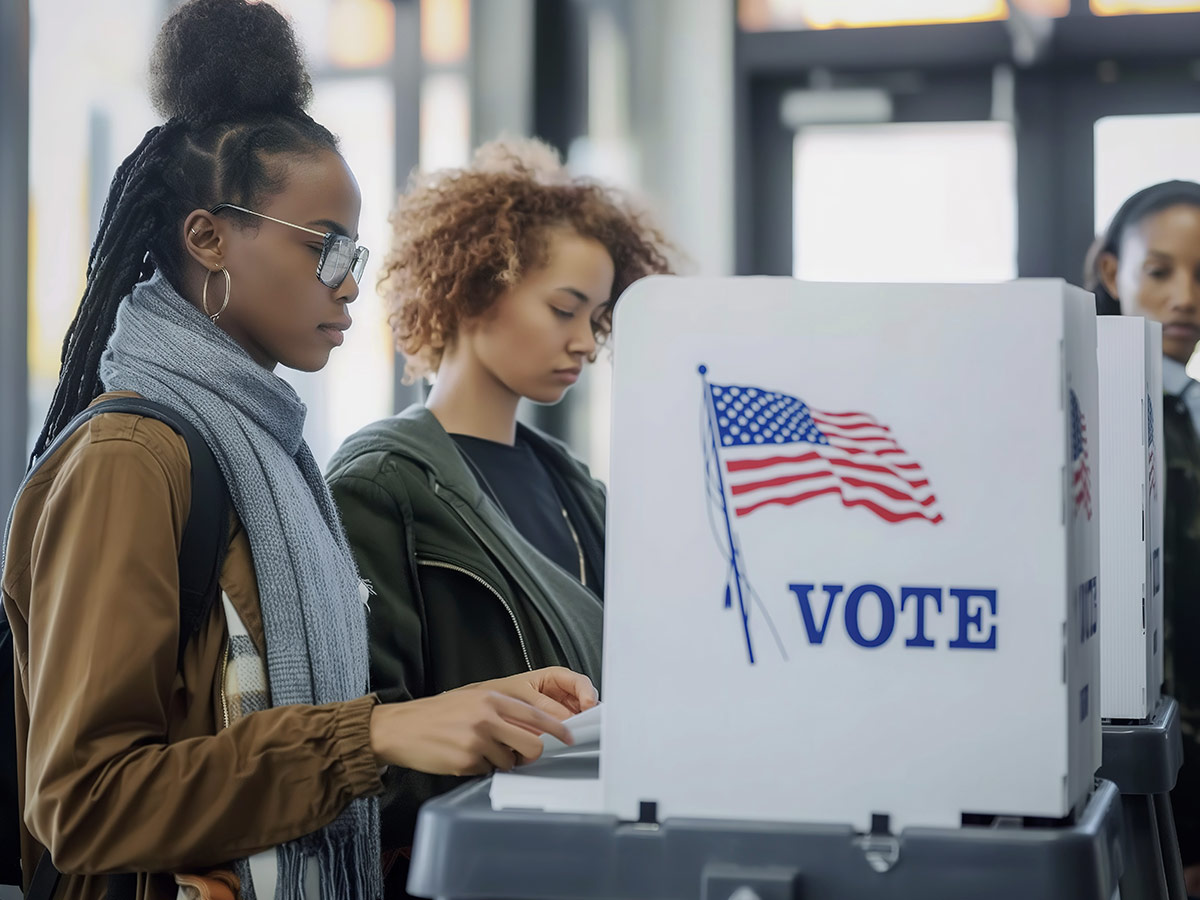
The Republican-controlled U.S. House of Representatives passed the SAVE America Act in a 218-213 vote on Feb. 11. The vote fell largely along party lines, with all but one Republican voting in favor of the bill and all Democrats voting against it.
The legislation, which would amend federal law to require “documentary proof of citizenship” to vote, now awaits a vote in the Republican-controlled Senate.
Although the bill’s sponsor, Sen. Mike Lee, R-Utah, said the legislation has secured the support of 50 senators, its passage remains uncertain as Senate rules require most legislation to receive 60 votes to pass, and reports are emerging that Sen. Mitch McConnell, R-Ky., has worked to procedurally block the legislation from coming up for a vote.
Here are five things to know about the SAVE America Act.
1. Voter ID Laws Vary By State
The effort to implement the SAVE America Act comes as a wide variety of laws govern voting requirements across the U.S.
According to the National Conference of State Legislatures, as of July 2025, 14 states don’t require voters to provide any documentation when showing up to vote: California, Hawaii, Illinois, Maine, Maryland, Massachusetts, Minnesota, Nevada, New Jersey, New Mexico, New York, Oregon, Pennsylvania and Vermont.
Meanwhile, 10 states require voters to show identification before voting and to sign a statement verifying their identity if they don’t have it: Alaska, Colorado, Connecticut, Delaware, Iowa, Oklahoma, South Carolina, Utah, Virginia and Washington.
Thirteen states ask voters to show photo IDs, with voters who don’t have photo IDs having options that vary by state, including filling out a provisional ballot and enabling election officials to engage in signature matching, signing an affidavit or providing proof of identity such as a Social Security Card or debit or credit card: Alabama, Florida, Idaho, Kentucky, Louisiana, Michigan, Missouri, Montana, Nebraska, Rhode Island, South Dakota, Texas and West Virginia.
Arizona, North Dakota and Wyoming don’t require voters to show photo IDs but do require voters who fail to present an identification to vote on a provisional ballot and provide the required identification within a certain time period in order for their vote to be counted.
Voters in Arkansas, Georgia, Indiana, Kansas, Mississippi, New Hampshire, North Carolina, Ohio, Tennessee and Wisconsin must show a photo ID to vote. If they don’t, they must vote on a provisional ballot and present a photo ID within a specified time for their vote to count.
2. Requirements For Voting
The SAVE America Act amends the National Voter Registration Act of 1993 to require those seeking to vote in federal elections to provide “documentary proof of citizenship.” Examples of “documentary proof of citizenship” include “a form of identification issued consistent with the requirements of the REAL ID Act of 2005 that indicates the applicant is a citizen of the United States” and “a valid United States passport.”
An “official United States military identification card, together with a United States military record of service showing that the applicant’s place of birth was in the United States” as well as a “valid government-issued photo identification card issued by a Federal, State, or Tribal government showing that the applicant’s place of birth was in the United States” also meet the requirements of the SAVE America Act.
Additional forms of photo identification issued by a federal, state or tribal government are also accepted as long as they are accompanied by a complete birth certificate that includes the full name, date of birth and place of birth of the applicant as well as the name of at least one of the applicant’s parents or a “hospital Record of Birth” showing that the applicant was born in the U.S. or “a final adoption decree showing the applicant’s name and that the applicant’s place of birth was in the United States.”
Photo identifications that don’t explicitly include a documentary proof of citizenship can also be accompanied by a “consular report of birth abroad of a citizen of the United States or a certification of the applicant’s Report of Birth of a United States citizen issued by the Secretary of State” or a naturalization certificate or a certificate of citizenship presented by the U.S. Department of Homeland Security or an American Indian Card issued by the DHS with the classification “KIC.”
3. What Happens to Those Without Required Documentation?
The legislation authorizes states to allow those who do not provide documentary proof of citizenship to sign an attestation under the penalty of perjury that they are a U.S. citizen and submit “other evidence” to a state or local official demonstrating that the applicant is a U.S. citizen.
The state or local official is given the authority to determine whether the “other evidence” is sufficient to identify proof of citizenship as required by federal law, and must sign an affidavit swearing or affirming that the applicant met the requirements of the law.
The law would task the Election Assistance Commission with creating a “uniform affidavit” that would “include an explanation of the minimum standards required for a State or local official to register an applicant who cannot provide documentary proof of United States citizenship to vote in elections for Federal office in the State” and ‘‘require the official to explain the basis for registering such applicant to vote in such elections.”
4. Additional Requirements Imposed on States
In addition to requiring “documentary proof of citizenship” for voting, the legislation would prohibit states from accepting voter registration applications unless the applicant provides “documentary proof of citizenship.” The bill also requires applicants who fill out the mail voter registration application form to present “documentary proof of United States citizenship in person” to the appropriate election official.
To ensure that only citizens are registered to vote in federal elections, states are required to identify non-citizens on their voter rolls by using one or more sources including the U.S. Department of Homeland Security’s Systematic Alien Verification for Entitlements, the Social Security Administration’s Social Security Number Verification Service or “state agencies that supply State identification cards or driver’s licenses where the agency confirms the United States citizenship status of applicants.”
States would have 30 days after enactment of the legislation to establish a program to ensure that only U.S. citizens are registered to vote. States are also required to remove individuals from voter rolls if they receive information that they are not citizens.
5. Consequences For Failure to Abide By the Law
The legislation would amend the National Voter Registration Act of 1993 to provide a private right of action against “an election official who registers an applicant to vote in an election for Federal office who fails to present documentary proof of United States citizenship.”
Anyone alleging a violation of the new law must provide “written notice of the violation to the chief election official of the State involved.”
The legislation would impose criminal penalties on any officer of the executive branch who provides “material assistance to a noncitizen in attempting to register to vote or vote in an election for Federal office” or anyone who registers “an applicant to vote in an election for Federal office who fails to present documentary proof of United States citizenship” in the form of fines and/or a prison term of five years or less.
As for noncitizens who register to vote, the legislation would authorize the U.S. Secretary of Homeland Security to conduct an investigation to determine whether to initiate removal proceedings against illegal immigrants who are illegally registered to vote.
This article was written by Ryan Foley and originally appeared on The Christian Post.
 Read Previous Post