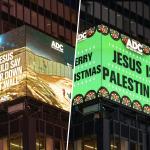

King Charles III and the incoming archbishop of Canterbury sparked fresh debate across the United Kingdom this Christmas after delivering messages that emphasized diversity, immigration, and interfaith unity—topics that continue to divide the nation both culturally and spiritually.
In his Christmas address, King Charles reflected on a recent and historic visit to the Vatican, where he and Queen Camilla joined Pope Leo XIV for an ecumenical worship service. The moment marked the first time a reigning British monarch participated in such a service since the English Reformation nearly 500 years ago. While some celebrated the moment as a symbol of reconciliation, others viewed it as another sign of the king’s growing theological syncretism.
“A few weeks ago, the queen and I were delighted to make a state visit to the Vatican, where we prayed with Pope Leo in a historic moment of spiritual unity,” the king said, referencing what he described as a meaningful expression of shared faith.
Drawing from the Vatican’s 2025 Jubilee theme, “Pilgrims of Hope,” King Charles framed the Christmas story through the lens of journey and migration. He pointed to the Holy Family’s journey to Bethlehem, describing them as arriving “homeless, without proper shelter,” and emphasized how Scripture reflects movement, sacrifice, and reliance on the kindness of others.
“Journeying is a constant theme of the Christmas story,” the king said, adding that such journeys call people toward compassion, reconciliation, and respect. He later praised what he called the shared values of the world’s religions, saying they foster peace and hope in a troubled world.
While some welcomed the message as a call to unity, others criticized the king for blurring theological lines and using Christmas to promote political and social messaging. Critics argued that emphasizing “diversity” and interfaith commonality risks sidelining the uniquely Christian foundation of the holiday.
Public frustration was amplified amid ongoing tensions surrounding mass immigration in the U.K., which critics say has strained public services and fueled social unrest. Several commentators accused the monarch of ignoring those concerns while appealing to abstract ideals. Political commentator Connor Tomlinson criticized the message as dismissive of traditional Christian values, saying Christmas should center on Christ rather than “liberal platitudes.”
The controversy deepened when the incoming archbishop of Canterbury, the Most Rev. Sarah Mullally, delivered a Christmas sermon at St. Paul’s Cathedral that echoed similar themes. Mullally, who will soon become the first female archbishop of Canterbury, warned that debates over immigration have grown too divisive and urged the nation to “make room” for others, drawing parallels to the Holy Family’s rejection in Bethlehem.
“Joy is born exactly where despair expects to triumph,” she said, adding that Christians are called to allow their lives to be interrupted by the needs of others.
Her remarks, however, were met with sharp criticism from orthodox Anglicans, especially in light of her public support for abortion and homosexuality. The Global Anglican Future Conference (GAFCON) has already announced it will sever ties with the archbishop’s leadership, accusing the Church of England of abandoning biblical authority.
 Read Previous Post