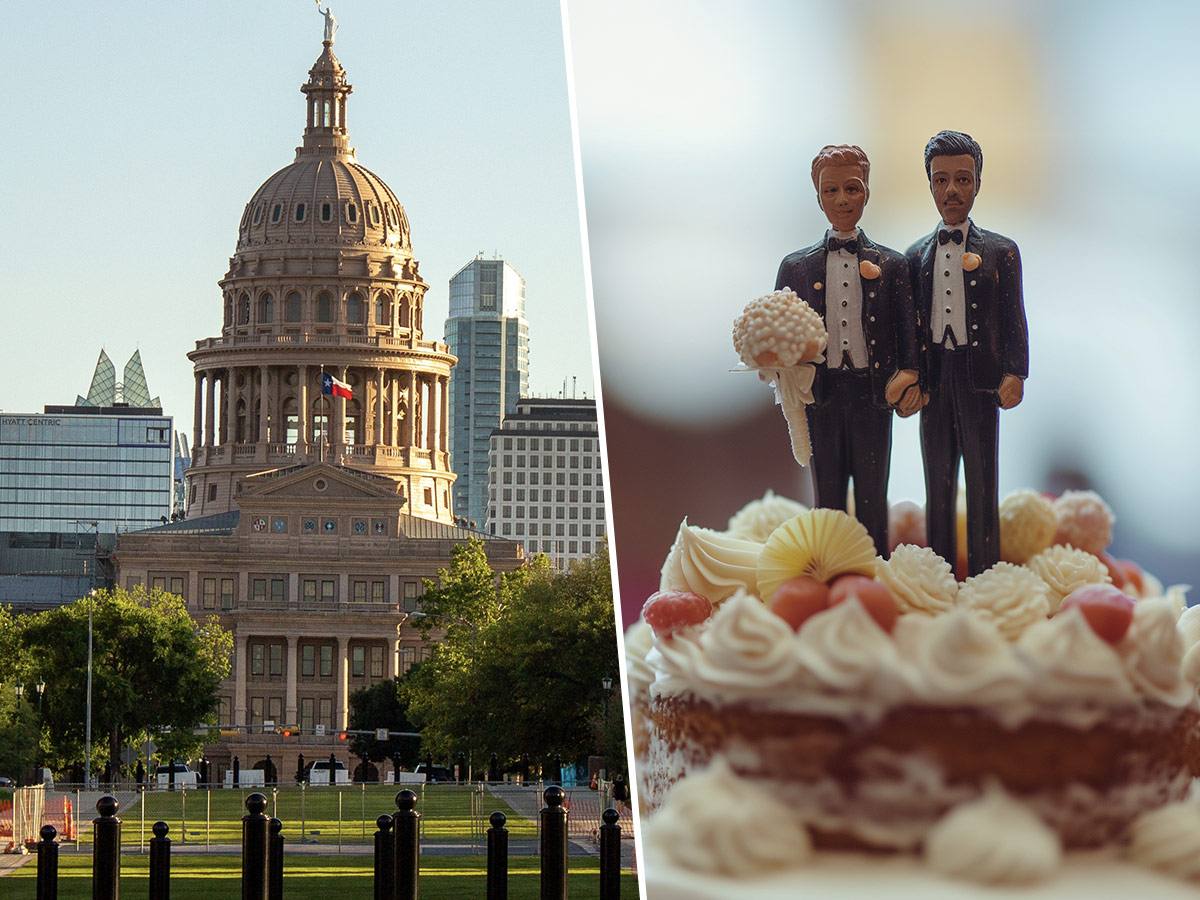
Judges in Texas who refuse to perform same-sex weddings because of their sincerely held religious beliefs will now be protected from disciplinary action. The Texas Supreme Court has amended its judicial code of conduct to affirm that such refusals do not violate professional standards—marking a major win for religious liberty advocates across the state.
The decision stems from the case of McLennan County Justice of the Peace Dianne Hensley, who in 2019 declined to officiate same-sex weddings, saying it would be “inconsistent with her religious faith.” Following her refusal, the State Commission on Judicial Conduct issued a public warning, claiming her actions cast doubt on her impartiality as a judge. Hensley, in response, stopped performing all weddings and filed a lawsuit under the Texas Religious Freedom Restoration Act (TRFRA).
Hensley’s case argued that the state’s action “substantially burdened” her right to exercise her faith freely. Although lower courts dismissed her suit in 2021, the Texas Supreme Court revived it in July 2024, ruling that her religious freedom claims were “clearly sufficient” to move forward.
On October 24, the Texas Supreme Court took a decisive step by adding a new comment to Canon 4 of the state’s Code of Judicial Conduct: “It is not a violation of these canons for a judge to publicly refrain from performing a wedding ceremony based upon a sincerely held religious belief.” The change took effect immediately and effectively removes the sanction against Hensley while shielding other judges from similar punishment.
Jonathan Saenz, president and attorney for Texas Values, which supported Hensley’s case, called the move a “victory for religious freedom.”
“The Texas Supreme Court got it right with this important victory for religious freedom,” Saenz said. “In a state where religious freedom is widely supported, it’s common sense that a judge should not be punished for sincerely held religious beliefs. A judge should not have to choose between their conscience and their career.”
Under Texas law, judges and justices of the peace are not obligated to perform weddings. However, since the 2015 Obergefell v. Hodges ruling that legalized same-sex marriage nationwide, officials who chose to officiate weddings were expected to perform them for both same-sex and opposite-sex couples—or for neither. The new amendment clarifies that judges can decline to perform weddings on a case-by-case basis if doing so would conflict with their personal faith.
The timing of the court’s action coincides with a renewed national focus on the issue of same-sex marriage and religious liberty. The U.S. Supreme Court is scheduled to meet on November 7 to consider a challenge brought by Kim Davis, the former Kentucky clerk who famously refused to issue marriage licenses to same-sex couples after Obergefell.
For now, Texas stands out as one of the first states to formally codify protections for judges seeking to uphold their religious convictions—signaling a broader national conversation about where the line between public service and personal faith should be drawn.
 Read Previous Post