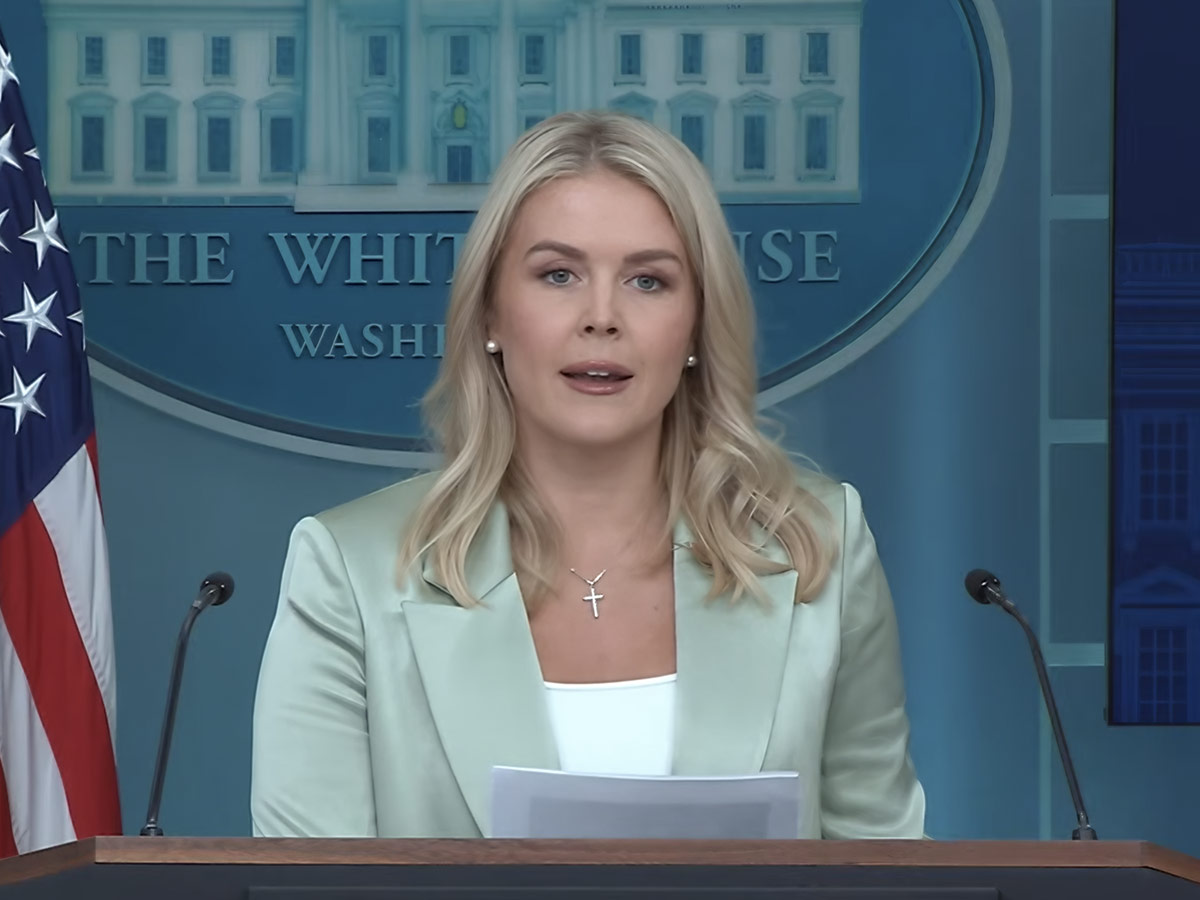
Recently, the White House launched “America Prays,” a call for people to gather for an hour of prayer each week leading up to the 250th anniversary of the founding of the United States.
The stated goal was for one million Americans to pray together—in groups of at least ten people—for one hour each week.
The White House website for this effort lists a number of resources and suggestions for those who will pray together:
- Historic prayers, sermons, and presidential proclamations
- Follow the common ACTS model (Adoration, Contrition/Confession, Thanksgiving, Supplication)
- Open with Scripture readings affirming God’s sovereignty, such as 2 Chronicles 7:14, Psalm 32:12, and 1 Timothy 2:1-4
- Organize the prayer time around specific subjects, such as government leaders, cultural renewal, protection of freedom, families, and individuals
- Commit to pray for specific people or issues each day
- Pray for individuals in your community by name
- Join online prayer communities, such as Hallow, Pray.com, or others
As might be expected, some people welcomed this initiative, while others worried about the political aspects of such a call to prayer. Several issues or questions might be raised.
First, is it legal? Second, is it politically motivated?
In other words, is the prayer intended to support America, or a particular party or administration? And finally, does such a call enhance religious belief and practice, or does it risk reducing prayer to a political strategy?
On the legal front, there does not seem to be any constitutional impediment to a president calling for people to pray. Nor is it a new practice; many presidents have done so throughout the nation’s history. Additionally, branches of the military have established chaplains to minister to service men and women.
At various times, the houses of Congress have opened their sessions with prayer and have also had chaplains and Bible studies for members and staff. Finally, since 1952, presidents have issued proclamations declaring a National Day of Prayer on the first Thursday in May. Clearly, the federal government has encouraged and facilitated prayer among the American people throughout its history.
The long, bipartisan history of the National Day of Prayer and other religious emphases should demonstrate that a call for people to pray together for an hour each week is not necessarily political in nature. However, given the highly polarized state of American society at this point, everything tends to be viewed through a political lens. That polarization would lead a large segment of society to view this call to prayer as a good thing, and another large segment to denounce it as politically motivated.
However, an examination of the White House website and the prayer focuses referenced above provides significant support that the prayer effort is not primarily political. Can individuals focus their prayers on political, rather than national, concerns? Certainly, but in fairness, the White House website does not promote such a focus.
The final consideration is whether this call to prayer – or any government-encouraged religious activity – serves to enhance religious faith or to reduce it to political advocacy. Again, the answer is “in the eye of the beholder.” Suppose someone views everything that this president or administration does cynically, “America Prays” will likely be seen as detrimental to faith. On the other hand, those who support the administration, and particularly its efforts to support Christian faith and practice, will probably accept “America Prays” as simply an encouragement for people to pray.
One factor complicating this matter is that the people and groups supporting it are almost exclusively Christian, as are the members of the president’s Religious Liberty Commission. In contrast, National Day of Prayer observances and declarations have included leaders of many different faith traditions. Does “America Prays” support religion, or does it support a particular religion?
Once again, the answer will probably be influenced by one’s political and religious orientation.
Thankfully, the initial response of people across the spectrum seems to be at least somewhat balanced.
For example, Michael Wear, who served President Obama in the White House’s faith-based office, noted: “Anyone with any experience in our politics knows that it would be foolish to claim the problem is that we are praying too much about our nation and the problems we face. We need prayer…[but] the kind of prayer politicians request is not always the kind of prayer they need.”
Mika Edmonson, a pastor from Nashville, noted the difference between “patriotic prayers” and “nationalistic prayers.” Patriotic prayers focus on what is good for the nation and its people, while nationalistic prayers often seek to justify what the nation and its leaders do.
At the most basic level, Christians ought to support a call for people to pray. Scripture calls believers to pray for those in authority, but it also reminds them that God’s Kingdom is greater than the kingdoms of this world.
Followers of Jesus should pray as Jesus taught us – for God’s Kingdom to come and His will to be done on earth as in heaven. Genuine prayer for our country and its leaders should focus on doing God’s will, rather than asking God to support our will, or to favor the United States over other nations. After all, God’s Kingdom has citizens in every nation around the world, not just the United States!
 Read Previous Post