
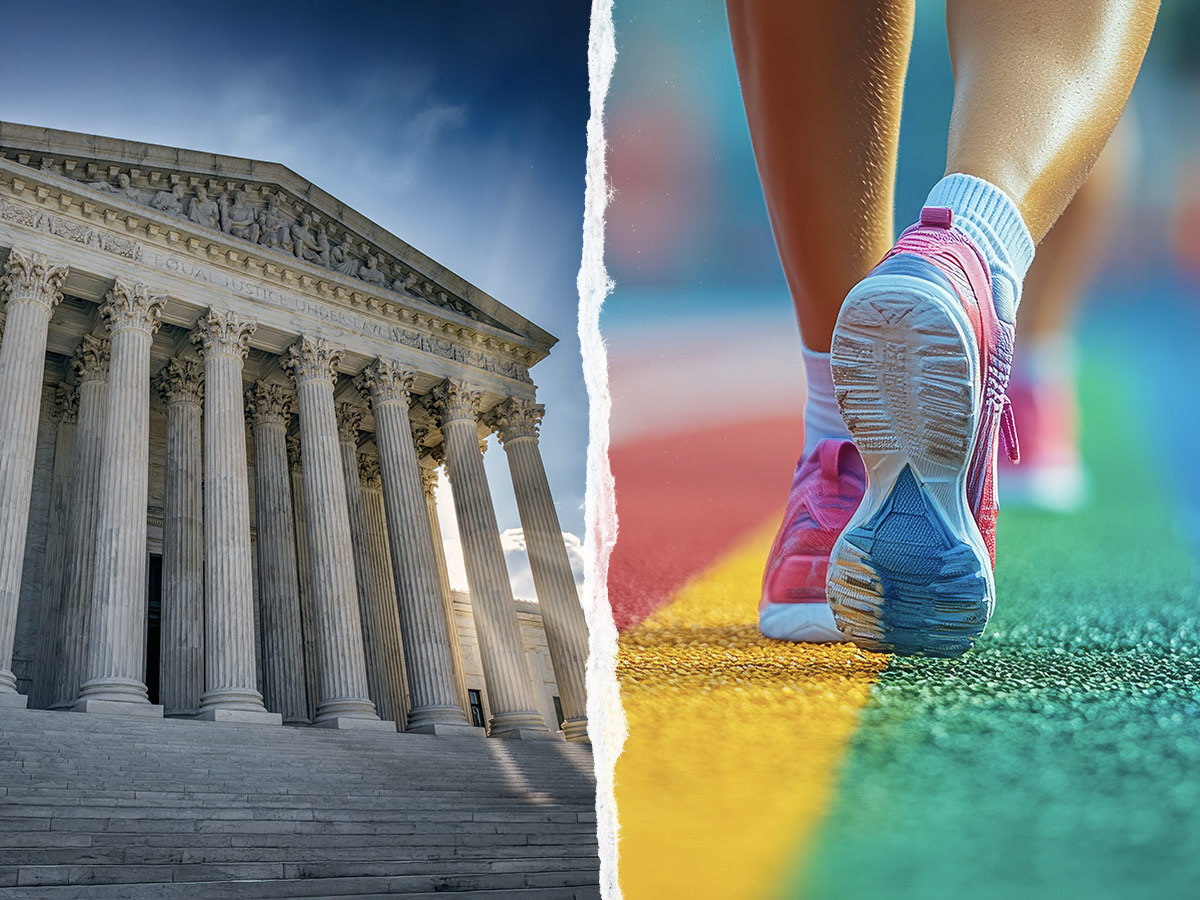
After delivering the Trump administration a number of judicial victories, including banning national injunctions and allowing parents to opt out of LGBTQ+ education, the Supreme Court has agreed to hear two cases involving transgender athletes that could determine US policies on one of the most hotly debated policies in current culture. The two cases involve laws from Idaho and West Virginia that ban transgender females, biological men living as women, from playing women’s sports. Lindsay Hecox, a transgender athlete, sued the state of Idaho for discrimination. An appeals court ruled that Idaho’s Fairness in Women’s Sports Act violated the Constitution’s equal protection clause.
Becky Pepper-Jackson, a 13-year-old transgender athlete, sued West Virginia. A district court decided the law was constitutional, but the Fourth Circuit Court of Appeals reversed that decision, bringing it to the higher court. The cases will be heard during the Court’s next session, meaning decisions could be reached by June 2026.
Sarah Parshall Perry, vice president of Defending Education, lauded the Supreme Court’s decision to take up the cases. “To those of us who have been advocating for common sense athletic policies separating boys and girls based on notions of fairness, safety, equality, and the black letter text of Title IX – we are, today, breathing a sigh of relief. It appears the grownups are finally in the room, and the Court is likely to – based on its recent jurisprudence – overturn the decisions of the 4th and 9th Circuits striking down women’s sports protection laws,” said Perry. “We look forward to continuing to vigorously defend the cause of educational equality in the coming months until all women and girls can reclaim their rightful spots on athletic fields across the nation,” she added.
While the Supreme Court upheld a ban against puberty blockers and hormone therapies for minors, how the Court would rule on the issue of trans athletes in female sports remains unclear. Chief Justice Roberts, who wrote the majority opinion for the case declined to address whether such laws actually discriminated against trans youth and focused more on the medical side of the issue. Some analysts believe that Justices Roberts and Gorsuch, the only two justices to have written decisions on transgender issues, could be the key players in how the Court will rule. Suzanne Goldberg, a Columbia Law School professor and an expert on gender and sexuality law, said it will be much harder for the justices to avoid the question of discrimination. “It is notable that the court seemed to go out of its way to avoid endorsing the idea that the law discriminated against transgender people and instead found that the Tennessee law had drawn lines based on age and medical diagnoses,” she said. “The new cases squarely present the discrimination questions in ways that will be hard to avoid.”
 Read Previous Post