
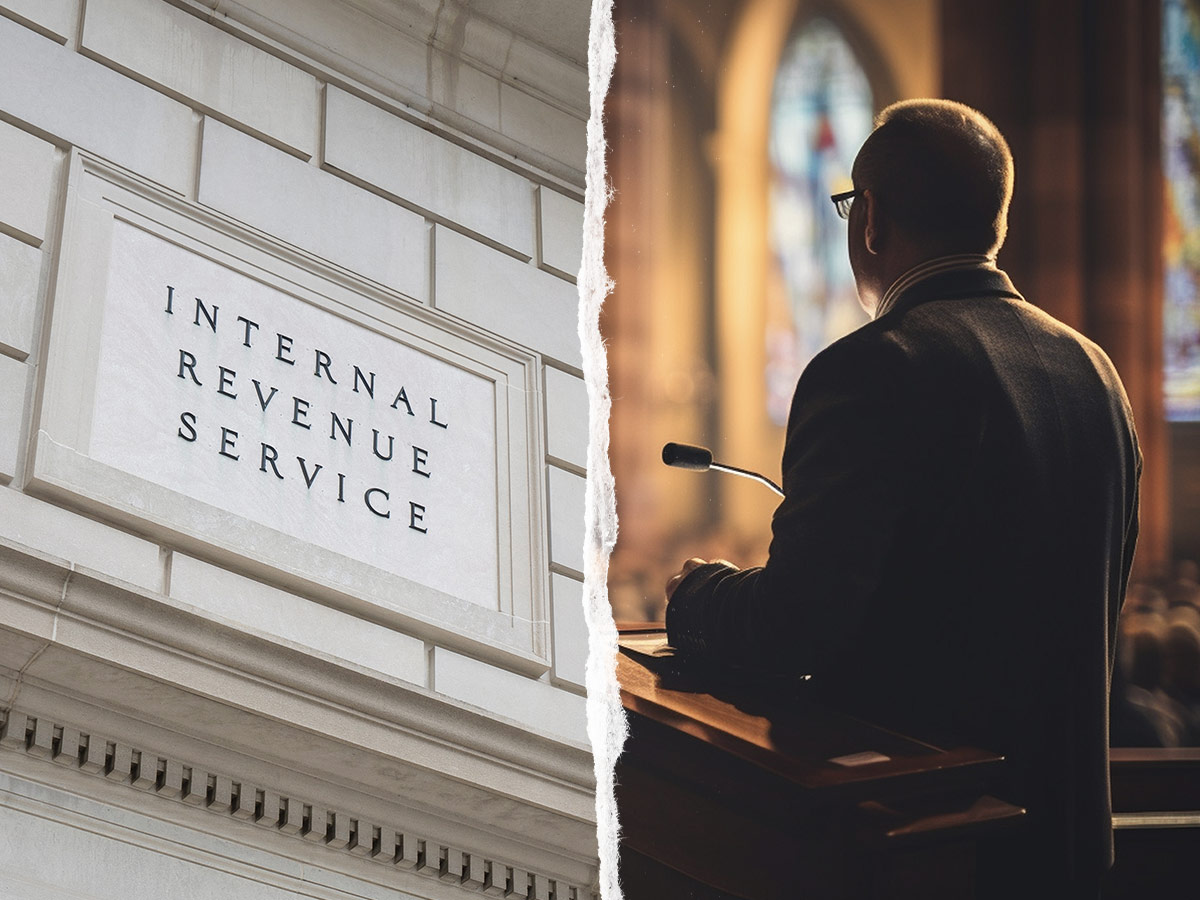
The Internal Revenue Service recently indicated that churches and pastors may endorse political candidates during religious services without jeopardizing their tax-exempt status.
This development follows a recent court filing involving the IRS, the National Religious Broadcasters Association (NRB), and two churches. The parties argued that the Johnson Amendment—a 1954 law restricting tax-exempt organizations from engaging in political campaigning—violated their First Amendment rights.
In the joint filing, the IRS stated that when a church communicates with its congregation during religious services about electoral politics, provided this is “viewed through the lens of religious faith” and done “in good faith,” it should not be categorized as political activity.
The Johnson Amendment, named after then-Senator Lyndon Johnson, historically limited nonprofit organizations, including churches, from endorsing or opposing political candidates. While enforcement has been infrequent, the law has acted as a boundary between religious activities and political campaigning.
Opponents of the Johnson Amendment have called for its repeal, asserting that it restricts religious leaders’ speech. In 2017, then-President Donald Trump directed the Treasury Department to ease enforcement of these rules via executive order.
The IRS’s approach appears to reflect this directive.
Some advocacy groups see this as a change supporting speech rights, while others express concern that it could lead to increased political activity within religious contexts.
A 2017 Lifeway Research poll reported that nearly 80 percent of Americans do not support pastors endorsing political candidates from the pulpit, though more than half also disagreed with revoking a church’s tax-exempt status for such endorsements.
Supporters of the change argue that the government should not regulate speech during sermons if it reflects religious beliefs.
The related court case is still pending in federal court in Texas, and the settlement awaits approval. Currently, the IRS website maintains that 501(c)(3) organizations are prohibited from engaging in political campaign activity.
 Read Previous Post