
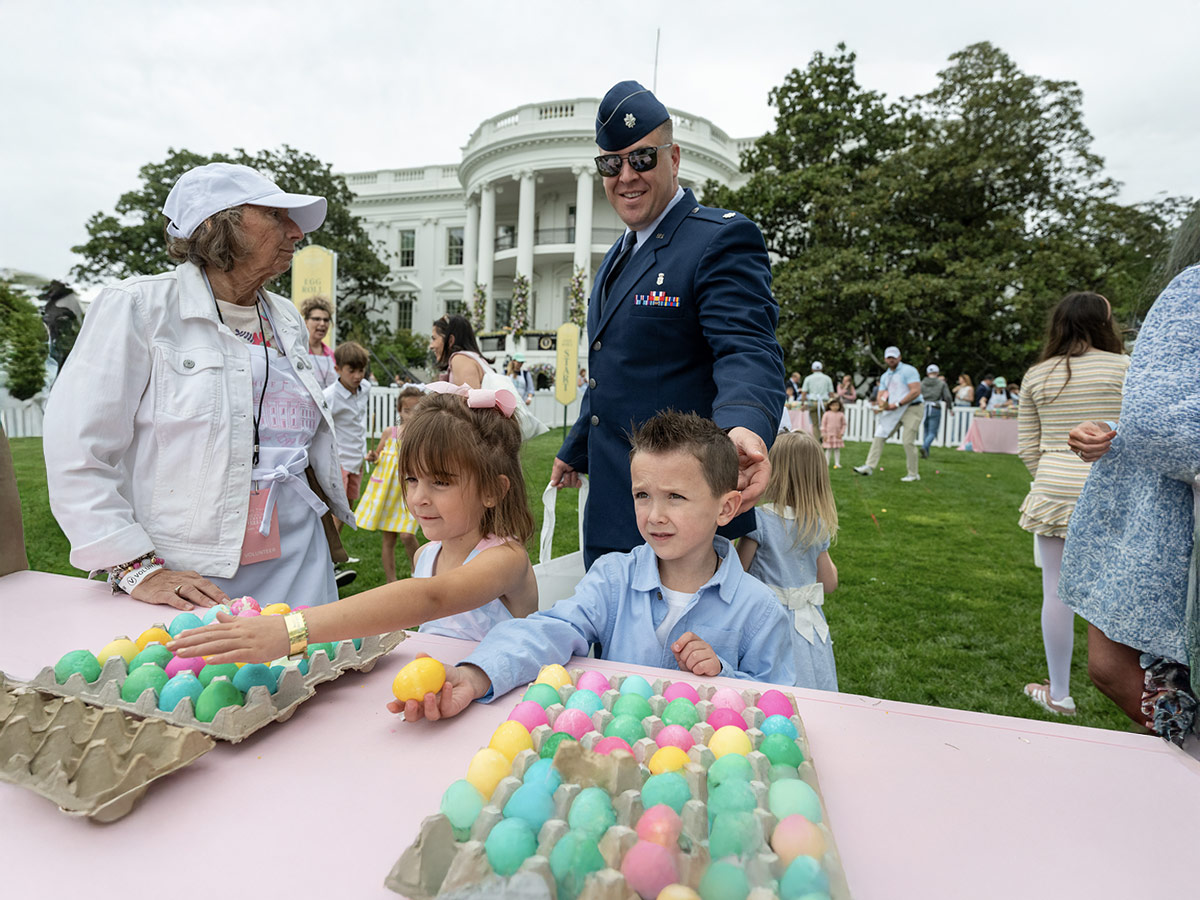
The annual White House Easter Egg Roll has been a tradition since 1878 and the Rutherford B. Hayes administration. The number of eggs sprawled across the pristine South Lawn has grown from a few dozen egg cartons to this year’s count 30,000. The eggs have increased as the demand has increased.
For decades, images from the global press have flooded broadcast, print and now social media, featuring adorable children playing games and filling their baskets with gifts from the Easter Bunny, Peter Cottontail, Thumper, or whatever name is attributed to those fluffy animals.
This year is different, so those pictures have created angst and outcry about present-day strife instead of warm feelings of yesteryear. At the center of this rich tradition is not President Trump but the American Egg Board.
Since 2023, access to eggs and the prices of those eggs have been the center of scrutiny. The general conversation focused on supply versus demand, with the latter far outweighing the former.
The consumer price index (CPI) on the wholesale egg market has sharply increased. The United States Department of Agriculture (USDA) shares in the summer of 2023, an average carton of eggs cost slightly above $2 per carton. In April 2025, that number is above $6, an 186.7 percent increase.
In addition to the age-old discussion about egg demand, that drastic spike in egg prices to the point of “crisis,” has been mitigated by a “pathogenic avian influenza,” otherwise known as “Bird Flu.”
This dire strain of influenza is H5N1, which has been spreading across Europe and Africa since late 2022, when it was declared the largest avian flu epidemic in European history. Now that it has spread into the states, there have been 66 confirmed human cases since 2024. Globally, this strand has resulted in over 950 deaths.
Despite the massive shortage in eggs, the American Egg Board donated 2,500 dozen cartons for the annual White House Easter Egg roll.
Emily Metz, president and CEO of the American Egg Board, said in an official statement, “The heart of this event is about bringing joy to children and families, and in these difficult times for egg farmers, it’s important to celebrate wherever we can. Eggs are central to cherished Easter and Passover traditions and memories, and this year is no different.”
“This year is no different” is the part of her quote that brings many Americans pause. Statistics show the year has indeed been different.
There is no denying the importance of eggs outside of general consumption. Vitamin proliferation and religious tradition are only two reasons why eggs matter.
Although she mentions that the donation “will not create additional strain,” the perception of the event in lieu of what’s happening in national grocery stores has created strain.
In decades past, this cherished event has been delayed by World Wars I and II, the Great Depression, and COVID-19’s national pandemic. Wouldn’t a crisis in egg availability be a good reason? Would the perception of this event be different if it waited a year? That would be a hard egg to crack.
 Read Previous Post