
The outpouring at Asbury University in February 2023 isn’t the first move of God to rush over U.S. Christians, but it could have been the first to set off another Great Spiritual Awakening in America. Since the 1700s, specific and strategic manifestations of the Holy Spirit in this country have shaken people to their core.
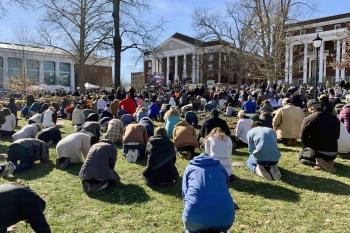
What is now known as “The Asbury Outpouring” is no different. It began as a typical Bible study and worship service on the quaint campus in central Kentucky. It ended up as a global phenomenon and the largest U.S. revival in the past 50 years. People of all ages from distant countries like Russia, Japan, and over 40 states swarmed to Wilmore, Kentucky, for 16 majestic days.
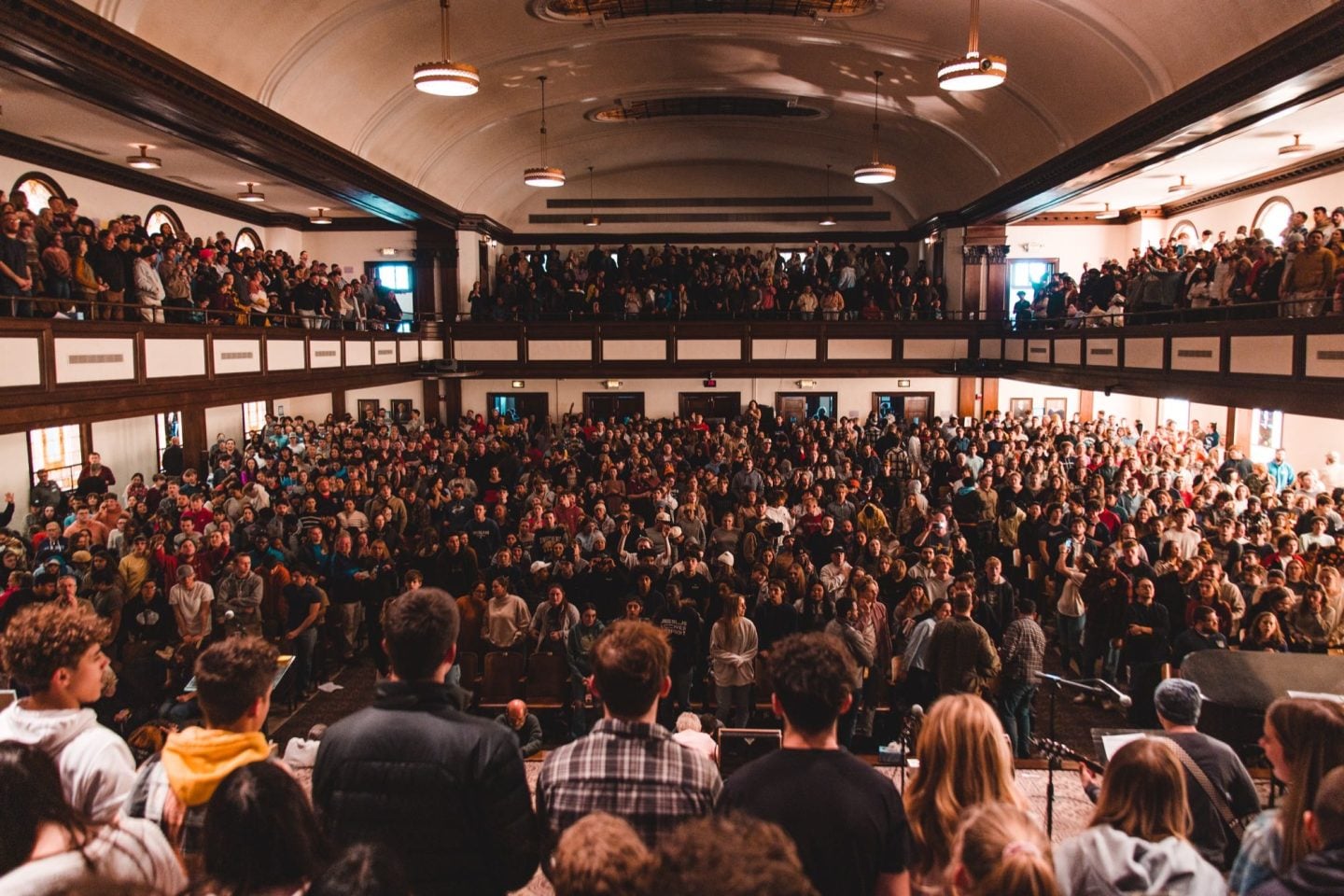
It was said to have ignited when about 100 people broke form, approached the altar, fell to their knees, and worshipped God. From that moment, a burning fire of revival spread in every direction. Although the Outpouring ended, the fire kept blazing on college campuses since last February. The last was a gathering called Unite US that attracted over 10,000 students to Reed Arena on the Texas A&M University campus.
That was October 29, 2024.
For 20 months, college campuses across America have experienced these moves of God. If one or two happen, that’s a coincidence. If three to five happen, that’s a trend. Enough to fill 20 months? That could be a movement that equals another Great Spiritual Awakening.
What Defines a Great Awakening?
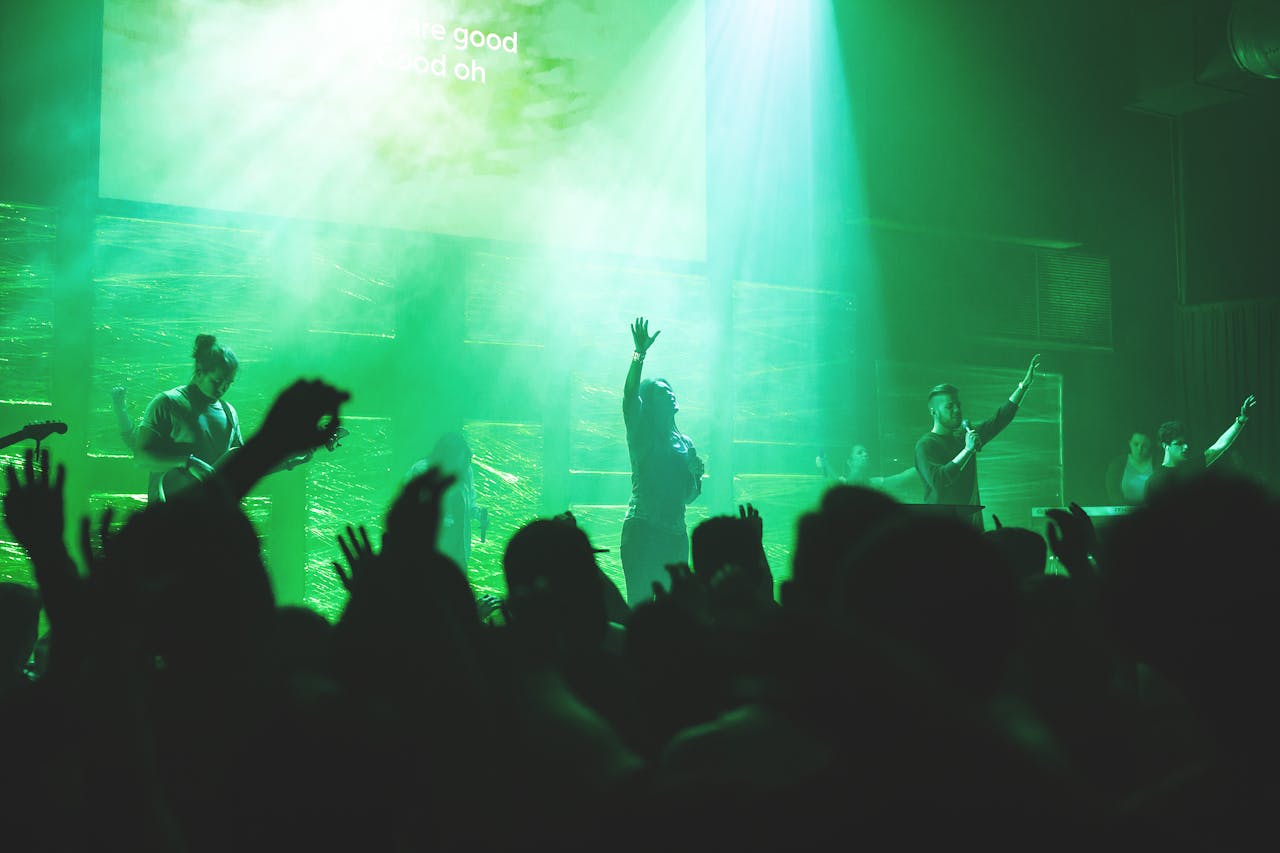
The first time the term “Great Awakening” was used to describe a divine move of the Holy Spirit in America was during the early 1700s. It took place in the first American colonies and was led by British protestant stalwarts of early U.S. evangelism, George Whitfield, Jonathan Edwards, and Gilbert Tennent. The definition is in the coined term, which implies something was asleep.
Worship in the New World was led by Reformists, Congregationalists, and Puritans, who borrowed from the tradition and ceremony of the British Anglican Church. When Whitfield, Edwards, and Tennent came to America, revival followed them. Religion was stale. God was anonymous. From the 1730s to the 1760s, these traveling evangelists reintroduced the person of Jesus Christ to entire towns and led them in a spirit of renewal.
Even Benjamin Franklin noticed as he was recorded speaking about Whitfield’s preaching:
It was wonderful to see the change soon made in the manners of our inhabitants. From being thoughtless or indifferent about religion, it seemed as if all the world were growing religious, so that one could not walk through the town in an evening without hearing psalms sung in different families of every street.
Armed with the love of God, an idea of Calvinism (founded by Protestant Reformist John Calvin to create Church government and divine sovereignty), and denial that only a Monarch or appointed clergy could understand God’s Word and Will, this was the First Great Awakening. That pattern of religion catching fire across America and burning inside the hearts of God’s people has been dubbed as a Great Awakening only two (or three, depending on the theologian you ask) other times in U.S. history.
Second Great Awakening
For half a century—1790 to 1840–a national revival involved the middle class, but its key moments were among the free Black churches across the Midwest and Northeast. The Second Great Awakening, led primarily by the ministry of Charles G. Finney, known as the “Father of Old Revivalism,” helped spark critical moments in U.S. history. Abolition, Civil Rights, Prohibition, and Women’s Suffrage all found their roots in Americans opening their hearts to the call of God.
Third Great Awakening
Only a decade later, through the Civil War, and into the eras of Reconstruction, Industrialization, and Progression, America needed a rekindling. From 1850 to 1920, a movement of Holiness and true Pentecostalism spread across the country. Coincidentally connected to what we see today on college campuses, the Third Great Awakening was the mammoth growth of biblical higher education.
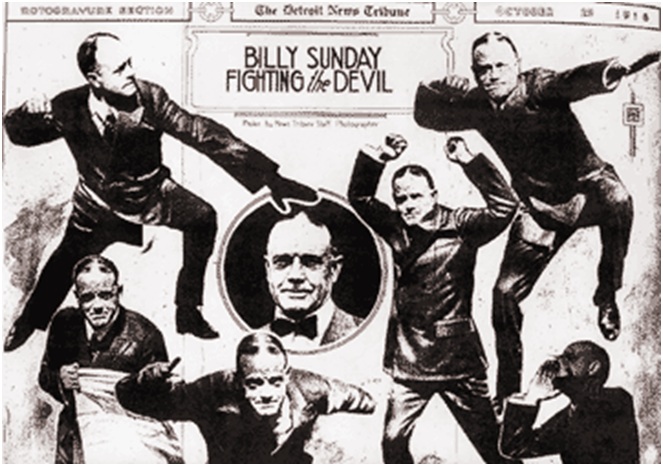
Revivals led by American evangelists Billy Sunday, D.L. Moody, and William J. Seymour (who led the famed Azuza Street Revival of 1906), challenged Christians to dig deeper and know more. During this time, the Moody Bible Institute, Bob Jones College, Southwestern Baptist Theological Seminary, and the YMCA all opened their doors.
Fourth Great Awakening
While not as cemented in modern American history as the first three Great Awakenings, many theologians believe the “Jesus Revolution” (as Time magazine famously labeled it) of the 1960s and 1970s in Southern California meets all the same markers. Led by Pastor Chuck Smith and noted evangelist Lonnie Frisbee, and later continued by Greg Laurie, the debated Fourth Great Awakening was sparked by a current movement–the anti-war, pro-love “Hippie Movement.” The freedom of the Holy Spirit was seen by massive baptisms led by a Christian counterculture. This opened minds and hearts to the love and grace of God.
But, What About Now?
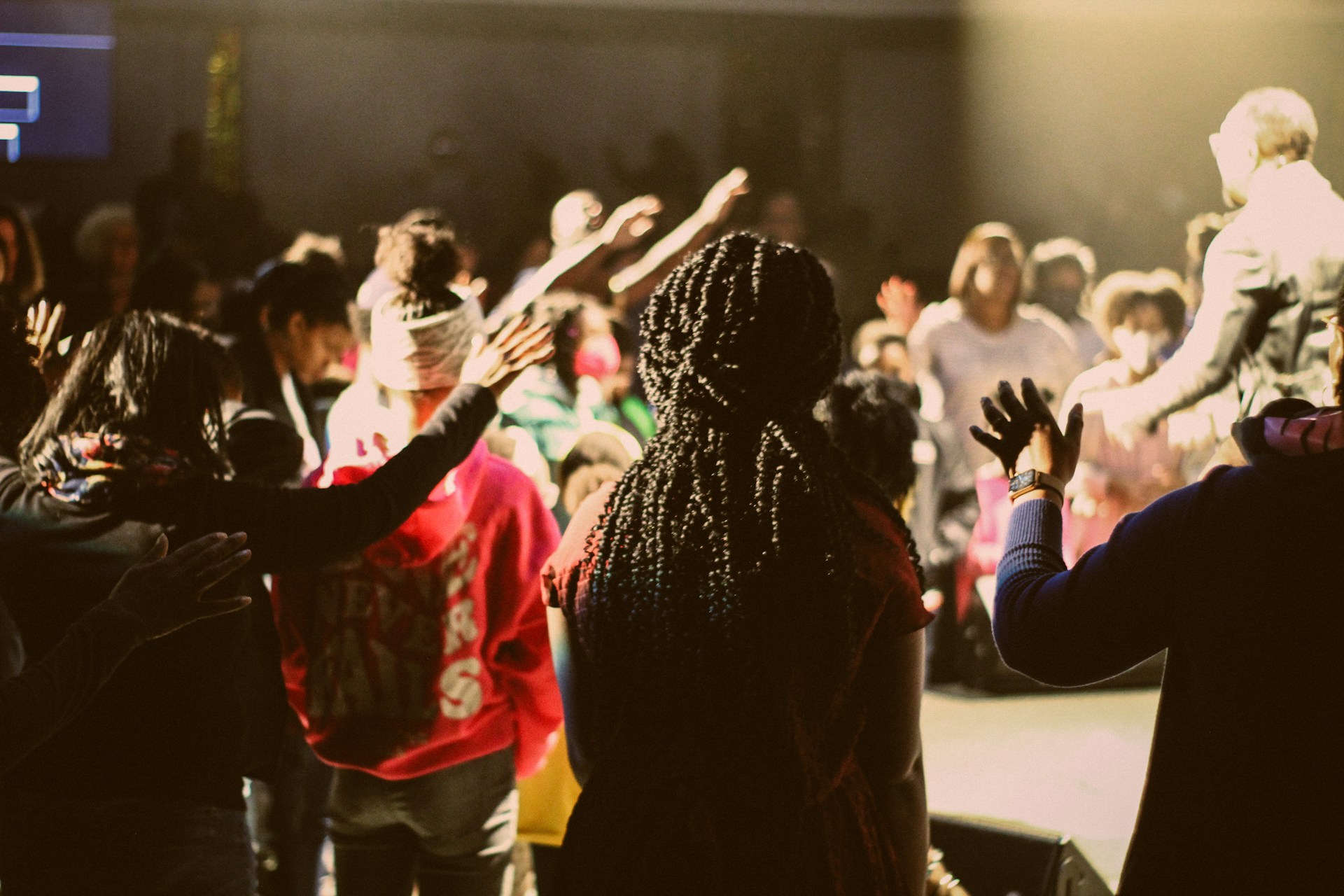
By examining the roots, signs, and widespread effects of each Great Awakening, the checklists for historians align to mass cry for repentance and a return to the Lord on each campus in many points:
- Large-scale impact: Some reports estimate that, in the past 20 months, there have been approximately 30 to 40 college campus revivals.
- Societal change: Many of these campuses are in “college towns” like Cedarville, OH (Cedarville University), College Station, TX (Texas A&M), Homewood, AL (Samford), Auburn, AL (Auburn), Corpus Christi, TX (Texas A&M CC), Fayetteville, AR (Arkansas) and Cleveland, TN (Lee University).
- No regard to location: Aside from many smaller cities and towns, there have been other reports from medium to large media markets experiencing moves of God as well, as seen in Athens, GA (Georgia), Tallahassee (Florida State), Columbia, SC (South Carolina), Waco, TX (Baylor), and Columbus, OH (Ohio State).
- Revival: Countless stories of changed lives and a rededication to God (i.e., water baptism, repentance, mass prayer).
There is only one core difference between each Great Awakening and what is happening today on college campuses–the presence of a
charismatic preacher. Each era in America’s religious history centered on a firebrand of faith. These days, the Spirit of God is moving through nameless students, and it’s beautiful.
Whether the history books chronicle this special time as the Fifth (or Fourth) Great Awakening, God is truly up to something. This “thing” will come to pass just as it was prophesied and written.
And it shall come to pass afterward, that I will pour out my spirit upon all flesh; and your sons and your daughters shall prophesy, your old men shall dream dreams, your young men shall see visions: And also upon the servants and upon the handmaid in those days will I pour out my spirit.
 Read Previous Post