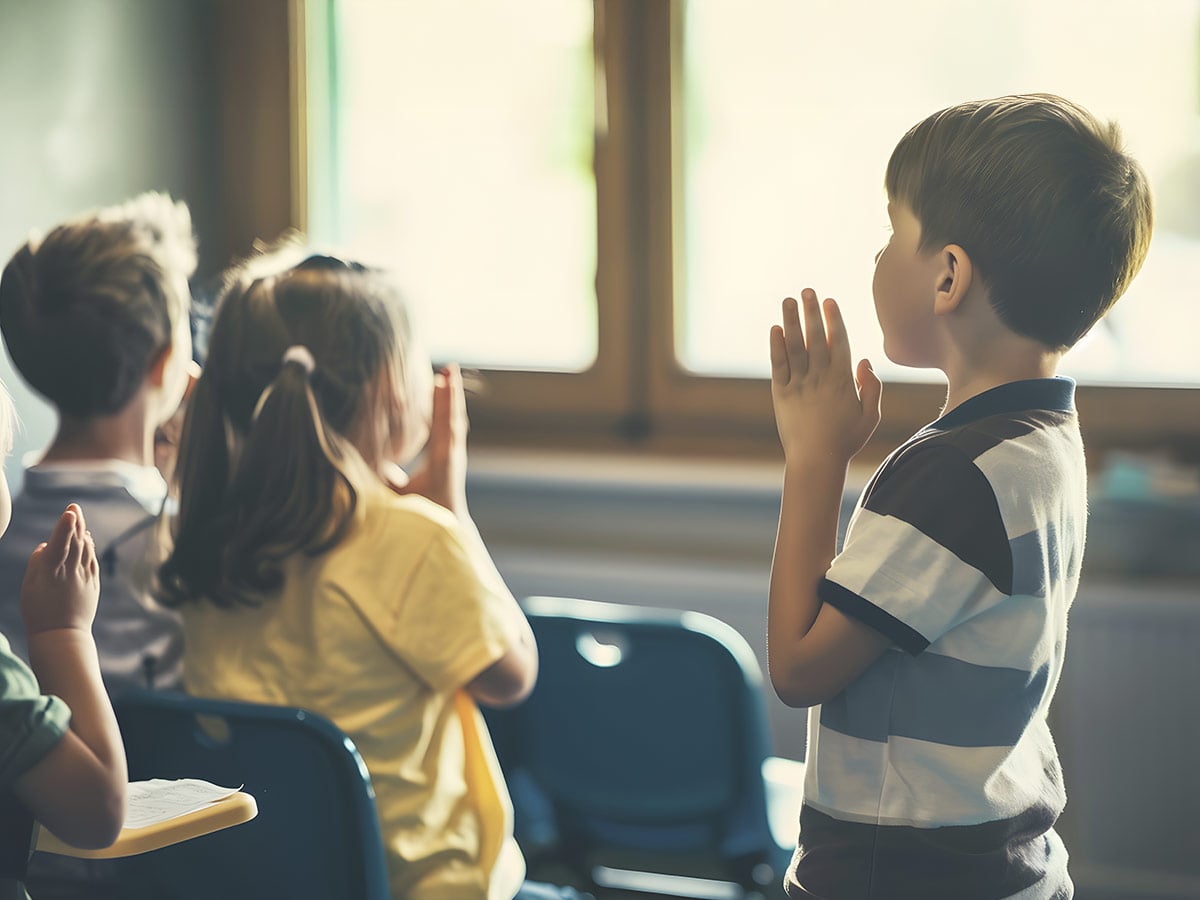
A new report is adding fresh momentum to an ongoing conversation about faith and education, suggesting that religious participation may play a meaningful role in helping students succeed academically—especially those facing social and economic challenges.
The report, titled “Faith in Educational Renewal: Religion as a Resource to Transform Learning Opportunities,” was authored by Brigham Young University professor Bryant Jensen and Harvard education scholar Irvin L. Scott. Drawing on a wide range of existing research, the study explores how faith practices among students, families, and even teachers can contribute to stronger academic outcomes.
One key finding stands out: students who are actively engaged in religious practices tend to perform better in school—according to one study cited in the report, middle- and high-school students with the highest levels of religious participation had GPAs that were 0.144 points higher than their peers who never participated in religious activities. The impact appears especially significant for students from working-class families, though the benefits were less consistent among students from the lowest-income households.
“After nearly two centuries, the promise of U.S. public schools to foster effective and meaningful learning opportunities for all children across race and social class remains unfulfilled,” Jensen said. “We believe religious faith can help bridge these gaps.”
The report points to several reasons why faith may positively influence student success. For one, religious teachings often promote moral frameworks that discourage behaviors like substance abuse, violence, and truancy—factors that can derail academic progress. Students involved in faith communities also tend to develop valuable life skills, including discipline, service, and accountability.
In addition, participation in religious activities can strengthen what researchers call “social capital.” Relationships formed within faith communities—whether with mentors, peers, or family members—can provide students with support systems, encouragement, and access to resources they might not otherwise have.
The academic benefits may extend into the classroom in practical ways as well. The report notes that reading religious texts can improve literacy skills, while listening to sermons may help students learn how to identify and summarize key ideas—skills essential for academic success.
Faith’s influence isn’t limited to students. The report also highlights that teachers who view their profession as a calling—often rooted in spiritual beliefs—tend to be more motivated and engaged in their work.
While the authors stop short of advocating for religious instruction in public schools, they do suggest that partnerships between schools and faith-based organizations could offer meaningful support, particularly in underserved communities. “Partnerships with faith communities can offer untapped resources to enrich student learning opportunities,” Scott said.
Though the research is still developing, the findings point to a hopeful possibility: that faith, when thoughtfully integrated into community life, can be a powerful force for both personal growth and academic achievement.
As we reflect on the role faith can play in shaping young lives, we pause to pray for students, families, and educators navigating today’s challenges:
Lord, we thank You for the gift of learning and the communities that shape young minds. Guide students, families, and educators with wisdom, discipline, and purpose. May faith be a light that leads to growth, opportunity, and hope for every child. Amen.
 Read Previous Post