

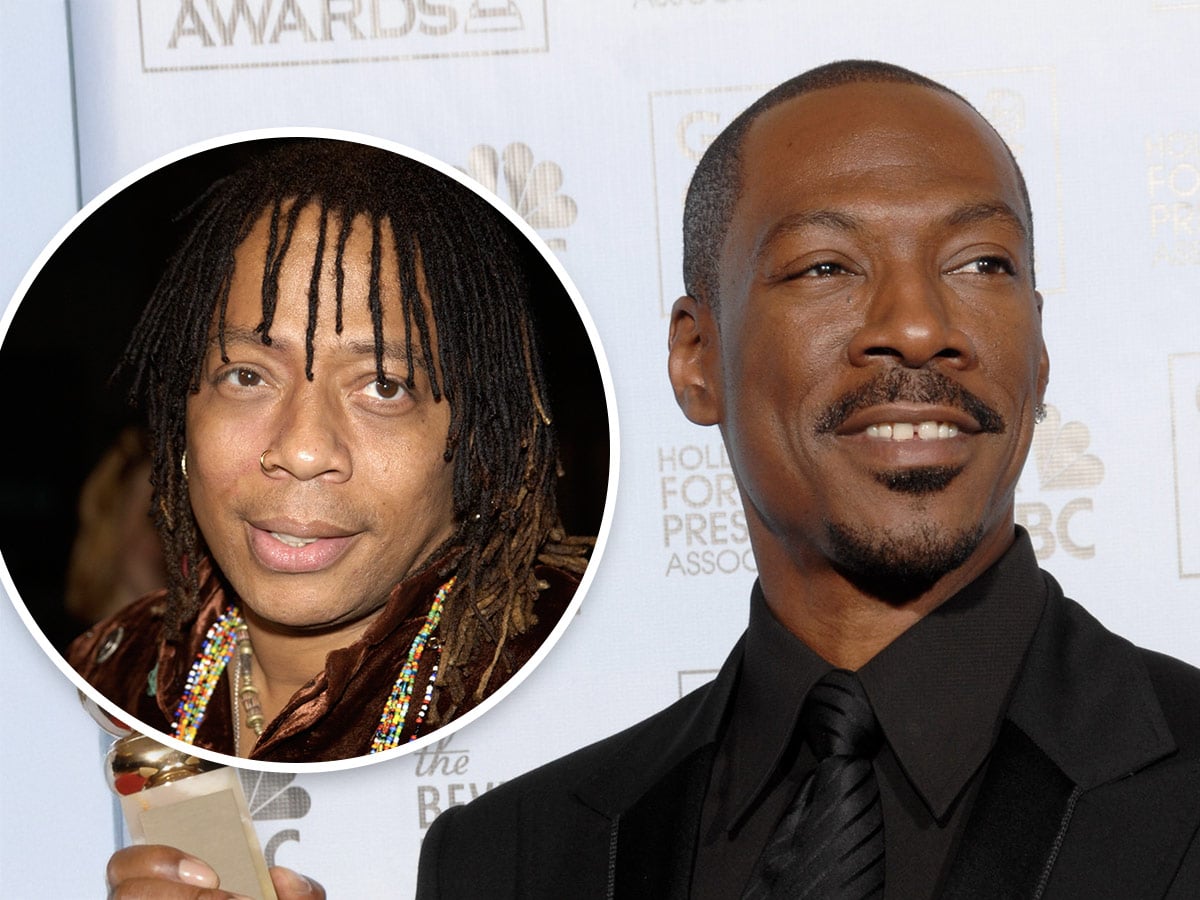
Eddie Murphy is known for making the world laugh, but behind the scenes, the comedy legend has also quietly carried the burden of saying goodbye to some of his closest friends. In Netflix’s new documentary, Being Eddie, the 64-year-old actor opened up about paying for the funerals and even one tombstone for several beloved stars who died without enough money to cover their own burial expenses.
“When Redd kicked out, I had to bury Redd. I had to bury Redd. I had to bury Rick. I bought Buckwheat a tombstone. Buckwheat didn’t have no tombstone,” Murphy revealed in the film. “I’m always burying these people.”
Murphy was referring to comedian Redd Foxx, musician Rick James, and actor William Thomas Jr., best known for playing Buckwheat in The Little Rascals films. Each was a cultural icon in their own right, but Murphy said what shocked him most wasn’t just their deaths—it was how quickly they were forgotten financially.
“It tripped me out, these people you… show business and all that, and then when they pass away, there’s not even the money to bury these people?” he said. “Where are their families? Where are these people? It’s a lot of people like that.”
Foxx, the groundbreaking comedian who brought Fred Sanford to life on Sanford and Son, died of a heart attack in 1991 at 68. Murphy, who had idolized Foxx for years, finally got the chance to work with him in the 1989 hit Harlem Nights. “Redd was just funny effortlessly. I love Redd,” Murphy recalled. “To work with somebody you idolize… On the outside, I’m unflappable. On the inside, I was like… ‘Ahh!’ When we were doing Harlem Nights, I wanted to do a movie with some of my old heroes.”
Rick James, Murphy’s friend and collaborator on the 1985 hit “Party All the Time,” died of heart failure in 2004. William Thomas Jr., who brought joy to audiences as Buckwheat, passed away much earlier in 1980 from a heart attack.
Over the years, Murphy says he’s “paid for a lot of funerals,” but admitted to USA Today that he doesn’t attend them. The only funerals he’s ever been to, he said, were for his biological father, Charles Edward Murphy, and his stepfather, Vernon Lynch.
“When I kick out, I’m not having no funeral and be laying up there and people coming and looking at me, lowering me in the ground,” he said. “I am to be cremated immediately. And there’s no funeral, and there’s no memorial or none of that s—. Just keep it rolling. None of that trauma. … It’s way too f—— much, a funeral.”
“I don’t give a f— what they do with [my ashes],” he continued. “Just as long as you don’t have people standing around with my ashes. … I’m not trying to be in the urn while everybody’s crying. I don’t want to have that moment.”
Murphy added that he doesn’t mind if people cry for him — he just doesn’t want the spectacle that often comes with celebrity funerals. “Crying is allowed,” he said. “I’m just talking about the whole ritual of a funeral is just too much for me.”
For Murphy, laughter has always been his way of dealing with life’s toughest moments. And even in death, he wants to keep things simple — no spotlight, no ceremony, just peace.