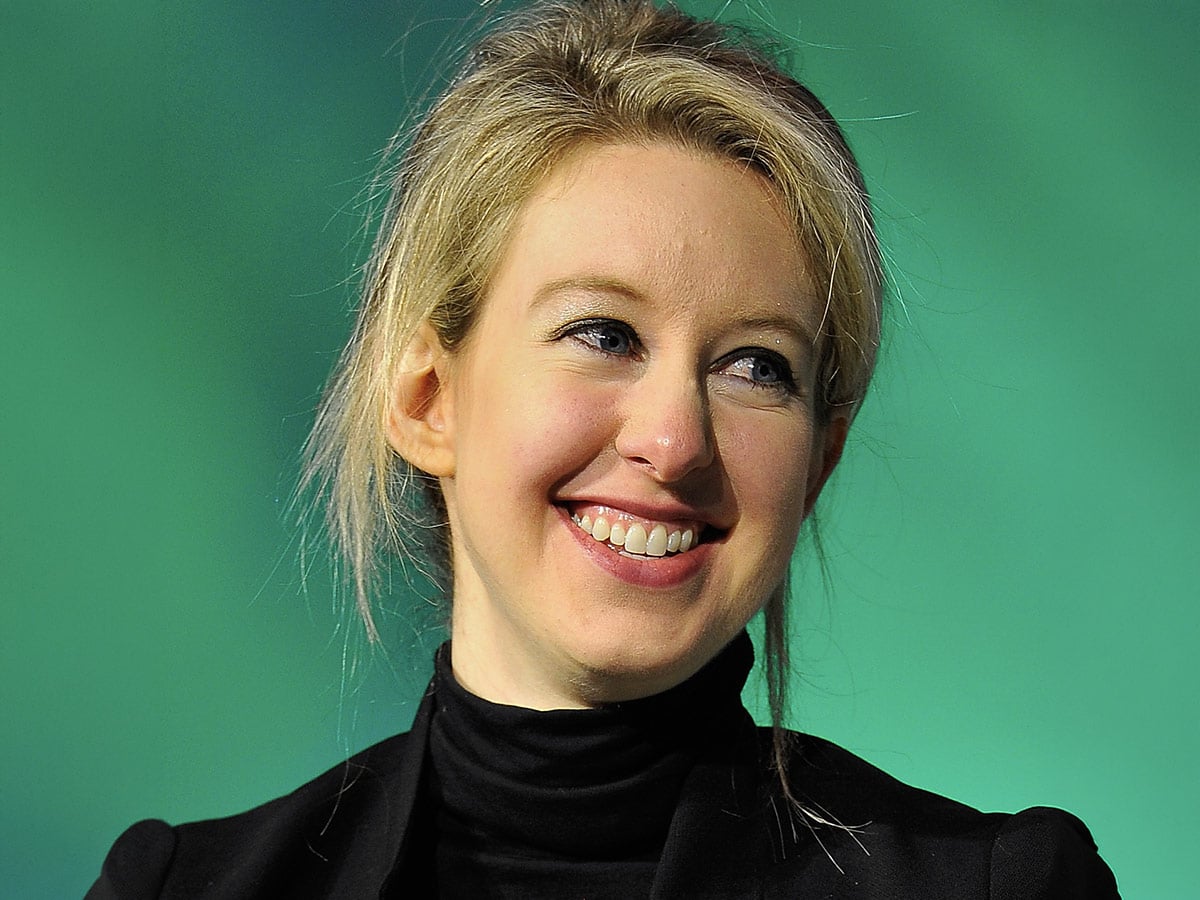
Is Elizabeth Holmes turning to God behind bars, or is her newfound display of faith part of a carefully crafted image?
That question has gained attention after the release of You Can See Everything, a new documentary about the disgraced Theranos founder. It reveals a surprising detail from her life before entering federal prison: a small gold cross necklace.
Holmes, once celebrated as the world’s youngest self-made female billionaire, became one of Silicon Valley’s most notorious figures after her blood-testing company, Theranos, collapsed amid revelations that its technology did not work as promised.
Convicted of defrauding investors, Holmes began serving an 11-year prison sentence in 2023, leaving behind her fiancé, Billy Evans, and their two young children.
But a scene in the documentary, directed by Nathan Fielder and Lance Oppenheim, has raised questions about whether the former tech executive has experienced a spiritual transformation.
As Holmes prepares to leave her family for prison, she appears wearing a delicate gold cross necklace, an accessory noticeably absent from much of her earlier public life.
Even more intriguing, photographs taken during her incarceration at a federal prison in Texas show Holmes wearing the necklace.
Could the cross reflect a newfound relationship with Jesus Christ?
Throughout her years in the spotlight, Holmes rarely discussed Christianity or her personal religious beliefs. When she did reference God, her comments were generally tied to ambition, success and personal destiny.
In handwritten notes introduced during her criminal trial, Holmes included reminders to “rise and thank God” and “pray” as part of her morning routine.
During a 2015 commencement speech, she also spoke about making “manifest the glory of God that is within us,” quoting a passage by author Marianne Williamson that she mistakenly attributed to Nelson Mandela.
More recently, however, references to God and faith have become increasingly common on Holmes’ X account, which is managed by Evans while she remains incarcerated.
Since August 2025, the account has shared religious messages, reflections on motherhood and quotes from Christian and political figures.
According to Fielder, Holmes has also described God in terms of the love she shares with her fiancé.
The apparent shift has prompted questions about whether Holmes has embraced Christianity during one of the most difficult chapters of her life.
Stories of people finding faith after imprisonment or personal failure are hardly unusual.
One notable example is Charles Colson, a former aide to President Richard Nixon who was imprisoned for his involvement in the Watergate scandal.
Colson became a Christian during the fallout from Watergate and later founded Prison Fellowship, a ministry dedicated to serving incarcerated individuals and their families.
His story became a widely recognized example of how faith can transform a person’s life after serious wrongdoing.
For Christians, the possibility that Holmes might experience a similar spiritual awakening reflects a central message of the gospel: No one is beyond God’s forgiveness.
In 2 Corinthians 5:17, the Apostle Paul teaches that anyone who belongs to Christ becomes a new creation, leaving their old life behind.
But the Bible also emphasizes that genuine faith involves more than outward appearances.
In Matthew 7:16, Jesus tells His followers, “By their fruit you will recognize them,” underscoring the importance of actions that reflect a person’s beliefs.
A cross necklace, religious statements or public expressions of faith cannot establish what someone truly believes.
And while Holmes’ continued use of the necklace may suggest that faith has become more meaningful in her life, she has not publicly offered a clear account of a Christian conversion.
For now, the meaning behind the small gold cross remains a mystery.
Whether it represents a growing relationship with Jesus, a source of comfort during imprisonment, or something else entirely, only Holmes can explain its significance.
Her story raises a question that reaches far beyond one former Silicon Valley executive: Is faith something we simply display, or something that genuinely changes how we live?
 Read Previous Post