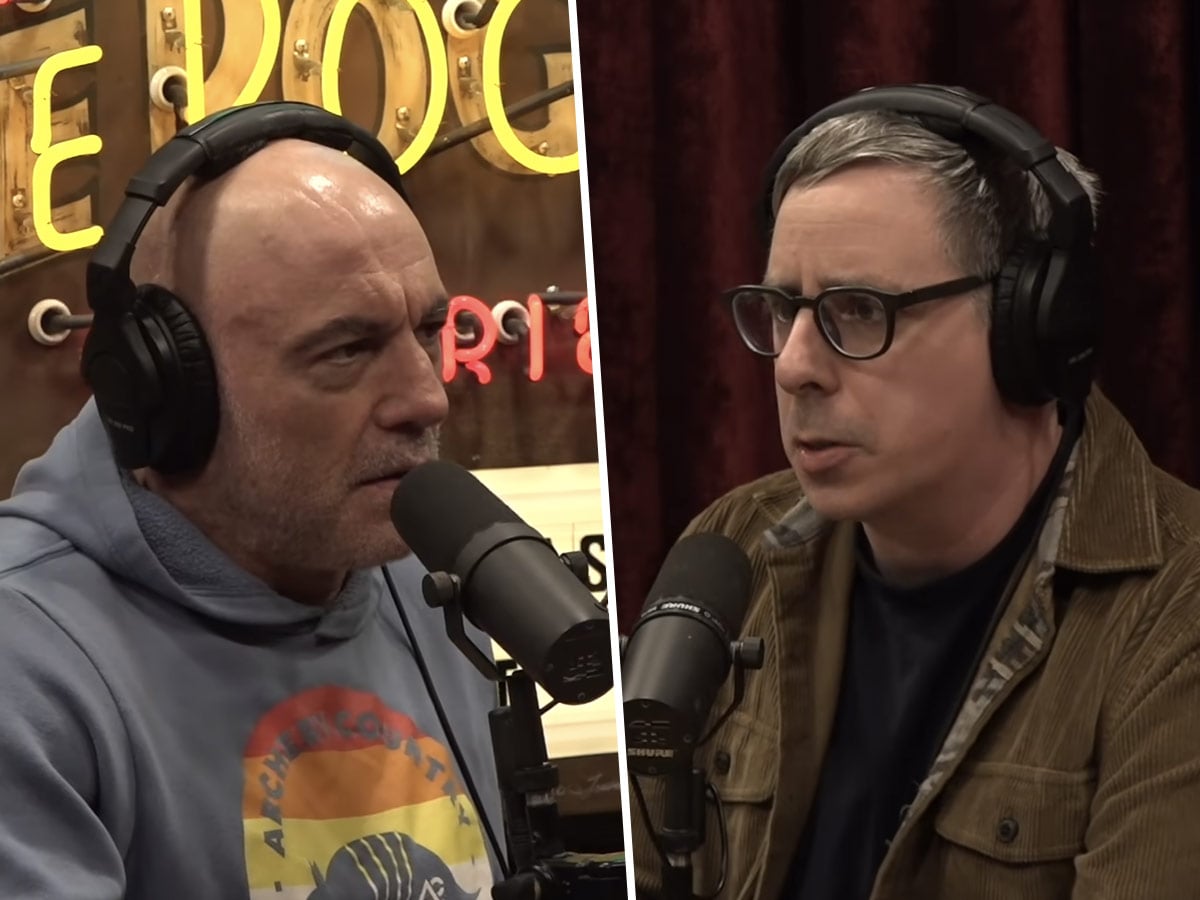
Podcast host Joe Rogan is raising concerns about the growing influence of progressive politics on Christianity, arguing that some Americans have replaced traditional religious beliefs with political ideology.
During a recent episode of “The Joe Rogan Experience,” the popular podcaster suggested that many people on the political left have abandoned religion, leaving them without a shared moral foundation.
“When you think about the left, you generally don’t think about like Christianity or any religion really,” Rogan said during the conversation with Francis Foster, co-host of the “Triggernometry” podcast.
“It’s more of like a science-based, like, ‘We’re too smart for that thing.’ And I think they’re just lost,” he continued. “There’s no moral scaffolding to hold on to.”
Rogan argued that religious teachings, including the Ten Commandments, provide an important moral framework for society. He also emphasized the value of humility and recognizing a higher power.
However, he suggested that progressive political beliefs have become a substitute for religion among some Americans, with those ideas increasingly influencing Christian churches.
“Another thing that’s interesting with the religious thing when it comes to the left is there’s been this larger than normal presence of these, like, LGBT pastors and these people that are promoting a very different Christianity,” Rogan said.
He questioned how some progressive Christian leaders interpret biblical teachings on controversial social issues, including abortion and gender identity.
“Where does it say abortion’s OK? Like, how are you getting to that? Where does it say God’s non-binary?” Rogan asked.
The podcaster described the trend as an example of what he called “woke weirdness” entering religious institutions.
“Some pastors are doing it. And you go, ‘OK, is that good?’ I don’t know if that’s good,” he said. “Because you’re not following the original stuff.”
Rogan also acknowledged that certain biblical passages, particularly those involving slavery and warfare, raise difficult questions that deserve serious examination.
Foster, who grew up Catholic, agreed that religious traditions should maintain their core beliefs rather than continually adapt to modern cultural expectations.
He contrasted his childhood experiences with more contemporary church services, arguing that religion should preserve its sense of reverence, tradition and moral accountability.
Catholic Bishop Robert Barron, founder of Word on Fire and bishop of the Diocese of Winona-Rochester in Minnesota, also weighed in on Rogan’s comments.
Speaking to Fox News Digital, Barron agreed with much of Rogan’s criticism, warning that some forms of progressive Christianity have moved away from foundational Christian doctrines.
“For the past several decades, various forms of liberal Christianity have compromised the doctrinal content of the faith,” Barron said, arguing that traditional beliefs have sometimes been replaced by progressive political priorities.
Barron suggested that the Apostles’ Creed offers a meaningful test of whether a church or religious leader remains committed to historic Christian teachings.
“Does he believe in God, in the divinity of Jesus, in the power of the Holy Spirit, in the objective truth of the Resurrection?” Barron asked.
The discussion reflects a broader debate within Christianity over how churches should respond to changing cultural attitudes while remaining faithful to Scripture.
While progressive Christians often argue that their positions reflect biblical teachings on love, justice and inclusion, traditionalists warn that adapting religious doctrine to political movements risks weakening Christianity’s central message.
For Rogan, the concern is whether faith continues to shape people’s values or whether political beliefs are increasingly shaping their understanding of faith.
 Read Previous Post