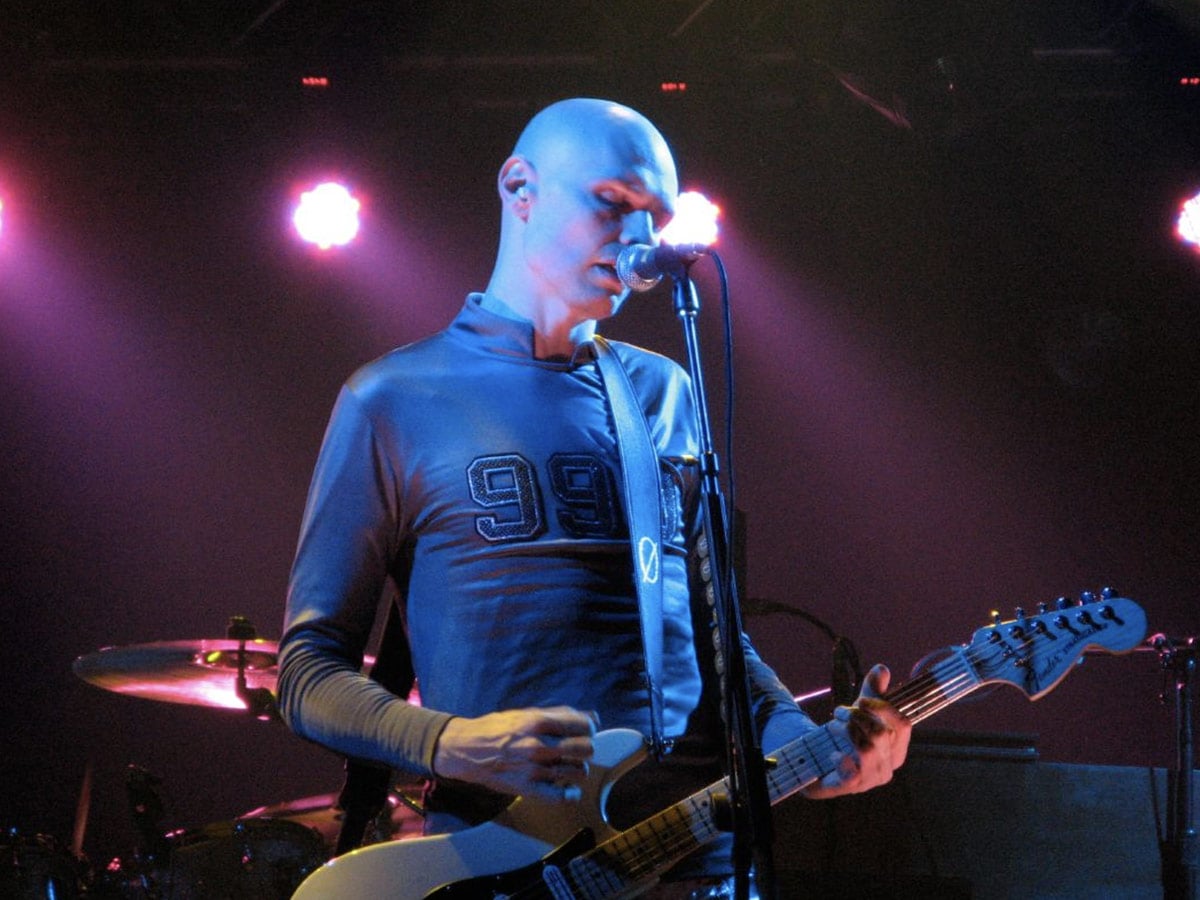
Smashing Pumpkins frontman Billy Corgan is speaking openly about his Christian faith, saying he chose years ago to discuss his belief in God honestly, even if it could hurt his career. In a recent episode of his podcast, “The Magnificent Others,” he revisited that decision while speaking with longtime Stryper frontman Michael Sweet about Christianity, rock music, and the pressures musicians face when talking publicly about their beliefs.
Corgan discussed his faith during a recent episode of his podcast, “The Magnificent Others,” while speaking with longtime Stryper frontman Michael Sweet about Christianity, rock music, and the pressures musicians face when talking publicly about their beliefs.
“I’m a Christian as well,” Corgan said. “At some point, I made my own personal decision that I was going to be willing to talk about God in a way that I know most people in my generation do not talk about God in music.”
Corgan, 59, rose to fame as the singer, guitarist and primary songwriter for the Smashing Pumpkins, whose 1990s hits included “1979,” “Tonight, Tonight,” and “Bullet with Butterfly Wings.” As his career progressed, he said he became increasingly willing to discuss faith, a subject he believes many musicians avoid. He recalled once telling Rolling Stone that “God is the third rail of rock and roll,” arguing that artists can risk alienating audiences by openly discussing their faith.
He recalled once telling Rolling Stone that “God is the third rail of rock and roll,” arguing that artists can risk alienating audiences by openly discussing their faith.
“If you talk about God, you know, you might as well throw your career down the hole,” Corgan said.
Even so, that possibility did not stop him.
“I made the decision that I was going to talk about God honestly, at least God in my life or believing in Jesus as my Lord and Savior,” he said. “And if it was going to hurt me, I didn’t care.”
For Corgan, being open about his beliefs was ultimately a matter of authenticity and faith.
“If I can’t be willing to be honest with who I am, well, what am I asking a fan to believe in?” he asked.
Sweet, whose band Stryper became one of the best-known Christian metal groups of the 1980s, said fear may explain why some musicians who identify as Christians rarely discuss their beliefs publicly. He said artists have privately expressed admiration for Stryper while remaining reluctant to be equally vocal about their own faith.
Sweet also explained how Stryper’s approach to sharing Christianity has changed over the years. While the band once preached between songs and after concerts, he said its members now largely let their music convey their message. The discussion then turned to why Corgan believes in God, and he acknowledged that faith does not mean possessing absolute proof of God’s existence.
The discussion eventually turned to why Corgan believes in God, and he acknowledged that faith does not mean possessing absolute proof of God’s existence.
“It makes more sense to me that there’s a just universe,” Corgan said, adding that humanity has historically organized itself around the belief “that it’s better to be good than to be bad.”
Corgan also questioned why faith remains uncomfortable territory in entertainment, even though belief in God remains common among Americans.
“Why is everybody comfortable talking about everything else?” he asked. “If you believe in God, why is God antithetical to the part of marketing who you are?”
Corgan’s comments continue his public faith journey, which he has discussed for years. In a 2013 interview, he said he had spent much of his musical career exploring suffering but wanted to turn his attention toward God, calling faith “the great unexplored territory in rock ‘n’ roll music.” More than a decade later, Corgan appears determined to keep exploring that territory and to make clear that his belief in Jesus is part of who he is.
More than a decade later, Corgan appears determined to keep exploring that territory and to make clear that his belief in Jesus is part of who he is.
 Read Previous Post