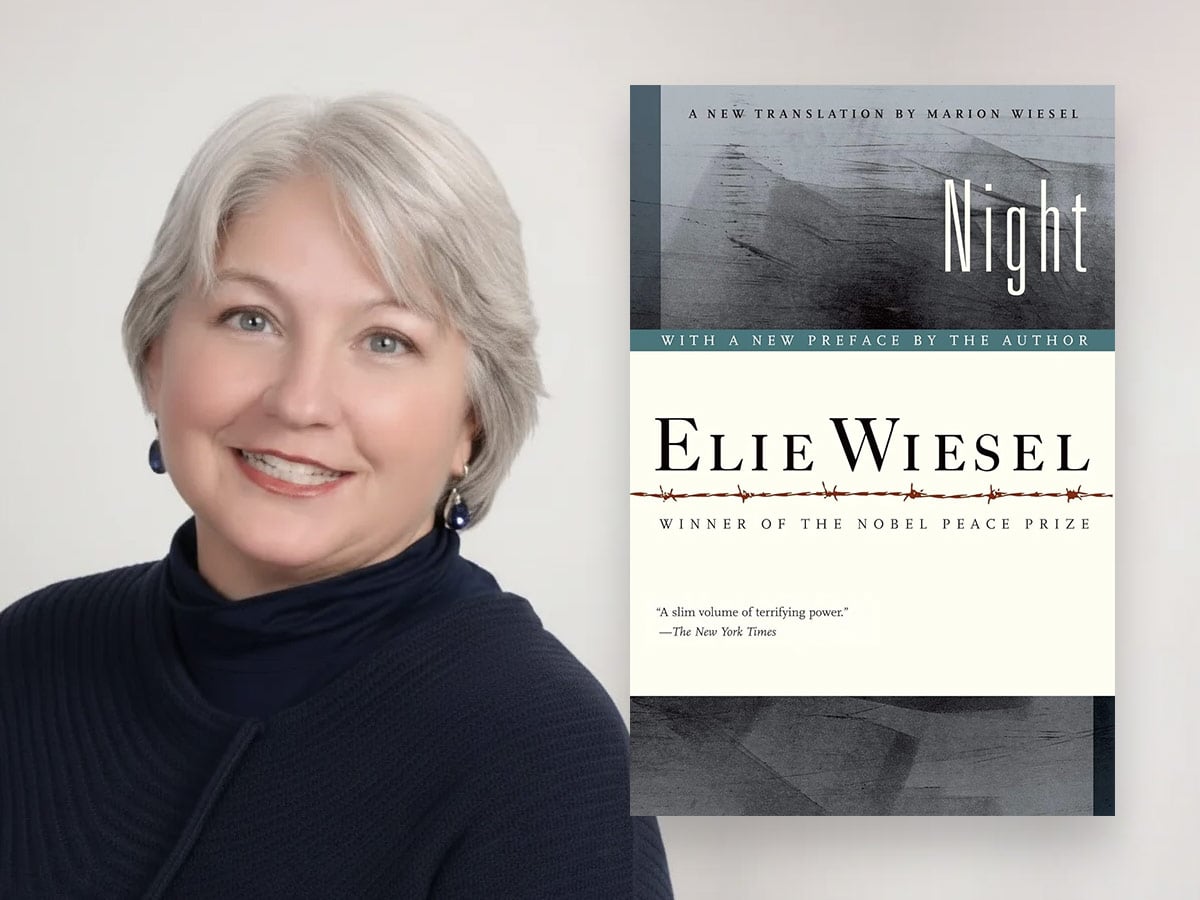
A Christian activist is defending the inclusion of Holocaust survivor Elie Wiesel’s acclaimed memoir Night on a list of nearly 2,200 books deemed potentially inappropriate for Texas public schools, arguing that its graphic depiction of violence against children warrants caution.
The Christian advocacy group compiled the list Recover America and cited by Texas Lt. Gov. Dan Patrick during an August news conference announcing plans to support legislation to address books considered unsuitable for school libraries.
Among the titles are well-known works, including Stephen Chbosky’s The Perks of Being a Wallflower, Kurt Vonnegut’s Slaughterhouse-Five and Maya Angelou’s I Know Why the Caged Bird Sings.
But the inclusion of Night, Wiesel’s 1956 account of surviving the Nazi concentration camps Auschwitz and Buchenwald with his father, has drawn particular attention.
Recover America gave the memoir a 3 on its 1-to-5 rating scale, where 5 represents books considered the most “sexually explicit and pervasively vulgar.” Night does not contain sexually explicit material.
Bonnie Wallace of Recover America, who appeared alongside Patrick at the news conference, said the memoir was included because of its disturbing descriptions of Nazi atrocities involving children.
“I included Night on my list because of the scene where the Nazi soldiers take the Jewish infants from their parents, toss them high into the air to use as target practice with their machine guns,” Wallace told The Christian Post.
“This imagery is stunning for the undeveloped brain of a child,” she continued. “I am not against this book and do encourage every adult in America to read this book, but I prefer to err on the side of caution.”
Wallace also defended including the graphic novel adaptation of Lois Lowry’s The Giver, pointing to an illustration depicting the killing of an infant. She suggested criticism surrounding both books reflects a broader cultural divide over abortion.
The controversy comes as Night remains an approved resource for Texas high school students through the Texas Holocaust, Genocide, and Antisemitism Advisory Commission. Wiesel, who died in 2016, became one of the world’s most prominent witnesses to the horrors of the Holocaust and was awarded the Nobel Peace Prize in 1986.
The debate also comes amid a broader battle over religion and literature in Texas classrooms.
Rabbi David Segal, policy counsel for the Baptist Joint Committee for Religious Liberty, criticized Texas education officials earlier this year after the State Board of Education approved more than a dozen Bible passages for a statewide list of required literary works.
Segal specifically questioned the translations and contexts used in biblical instruction, including the pairing of a passage from Lamentations with Holocaust literature. He argued the combination could wrongly suggest students should consider whether the Holocaust represented divine punishment of the Jewish people.
Wallace, however, said critics are overlooking what she believes is the larger concern: protecting children from inappropriate material.
“The only way someone could make this statement is if they’ve never read the extreme sexually explicit books which pervade our schools,” she said.
The dispute over Night highlights the complicated questions facing parents and educators as they determine not only which books students should encounter, but also when young readers are prepared to confront some of history’s darkest realities.
 Read Previous Post