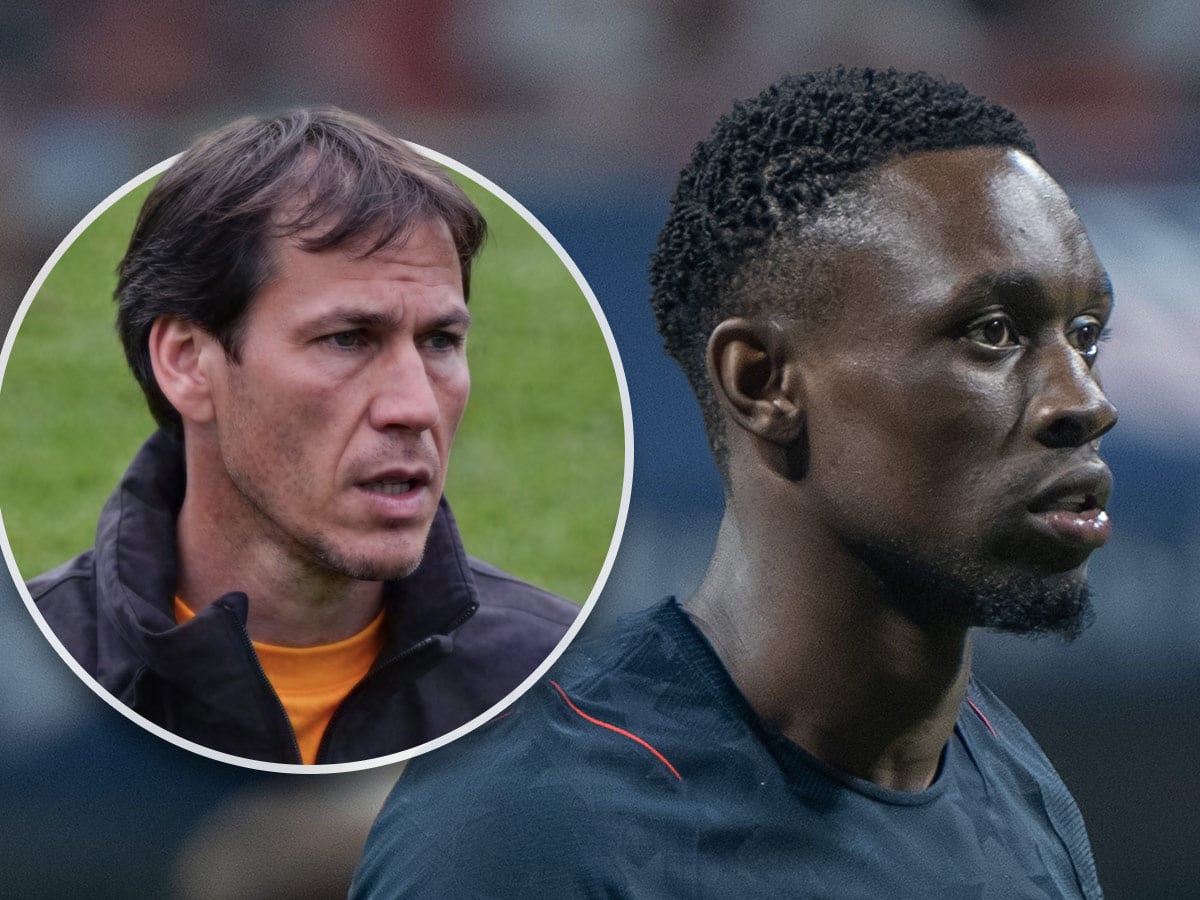
Even after a difficult end to the U.S. Men’s National Team’s World Cup run, Catholic forward Folarin Balogun earned praise for something that happened after the final whistle rather than during the match.
The United States was eliminated from the tournament with a 4-1 loss to Belgium in the Round of 16, but Belgium manager Rudi Garcia singled out Balogun for a display of humility and sportsmanship following one of the tournament’s biggest controversies.
Balogun was originally expected to miss the knockout match after receiving a red card in the previous game. However, just one day before the matchup, FIFA ruled that the suspension would be lifted, allowing him to play. The decision sparked criticism from Belgium, with many believing the reversal gave the United States an unfair advantage.
Despite the controversy surrounding his eligibility, Garcia made it clear that he never blamed Balogun personally.
After the match, the U.S. striker sought out the Belgian coach to speak with him, a gesture Garcia said left a lasting impression.
“He came to talk to me. I really liked that,” Garcia told reporters. “It is not his fault; he is not the one to blame, and that’s what I told him. I really appreciate the intention that he came to see me. I appreciate this player.”
The moment stood out because Balogun had little control over the decision that placed him back on the field. FIFA’s disciplinary code allows its judicial body to suspend certain disciplinary measures while a case is reviewed. According to The Athletic, the rules state that “the judicial body may decide to fully or partially suspend the implementation of a disciplinary measure.”
Although the decision was controversial, Balogun simply played after FIFA ruled he was eligible. His willingness to approach Garcia afterward reflected a spirit of respect that transcended the heated debate.
The controversy even reached the White House.
President Donald Trump revealed that he personally contacted FIFA President Gianni Infantino to request a review of the red card, saying he believed officials had made the wrong call.
“All I did was, I asked for a review, because I didn’t think it was a foul,” Trump said. “I thought it was two great athletes who crashed into each other and got entangled.”
Trump added that preventing one of the team’s top players from participating would have been “a big stain” on the tournament and emphasized that he did not pressure FIFA to reach a specific outcome.
“I relayed it. I didn’t tell him what to do,” Trump said. “I think it was a committee that made the decision, and they made the right decision because, No. 1, it wasn’t a foul, and you want to see a game with your best players.”
While the United States’ World Cup journey came to a disappointing close, Balogun’s quiet act of humility offered a reminder that character is often revealed in defeat. For Christians, his decision to personally acknowledge the opposing manager reflects the kind of grace, respect, and peacemaking that Scripture encourages—even amid disappointment and controversy.
 Read Previous Post