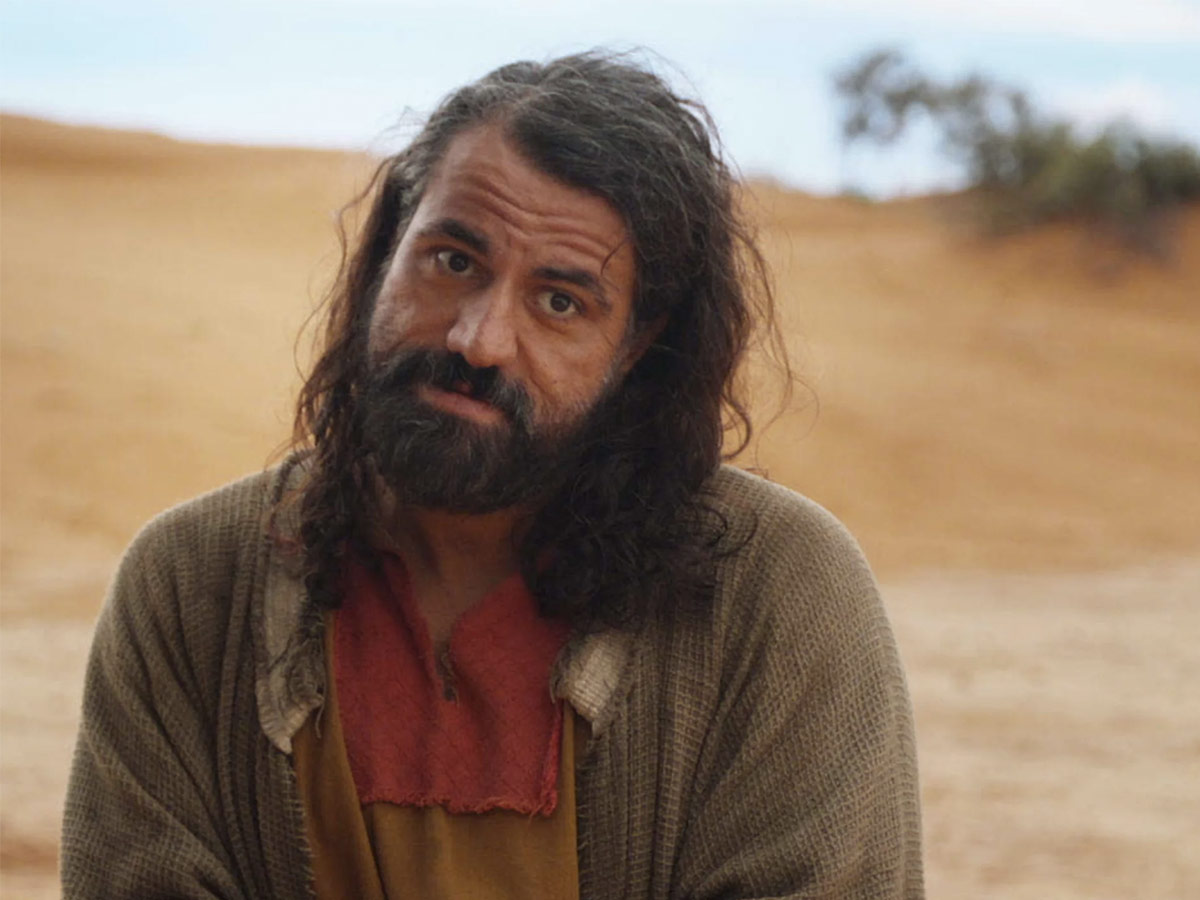
For generations, the story of Moses has been told in sweeping, reverent tones: plagues, pillars of fire, parted seas, and a leader chosen by God to guide His people to freedom. But a new comedy series is inviting audiences to see the Exodus story from a very different angle—one where the desert journey includes awkward leadership moments, family tension, and the occasional look straight into the camera.
“The Promised Land,” a mockumentary-style biblical comedy created by “The Chosen” collaborator Mitch Hudson, reimagines Moses and his family through the familiar lens of modern workplace comedies like The Office and Parks and Recreation. The result is a series that finds humor in human frailty while maintaining a clear reverence for Scripture—a balance Hudson says was essential from the beginning.
“If you think about Moses, you’re going to probably think about Charlton Heston,” Hudson said, referencing the iconic portrayal in the 1956 epic The Ten Commandments. “In a traditional biblical epic, Moses is defined by his biggest moments.” But “The Promised Land,” he explained, is more interested in the day-to-day reality of leading a restless nation through the wilderness—what it felt like to be overwhelmed, uncertain, and trying to obey God anyway.
The show’s mockumentary format allows characters to break the fourth wall in confessional “talking head” moments, sharing doubts, frustrations, and hopes directly with viewers. Hudson believes that the device opens a door for audiences to connect with biblical figures as real people rather than distant icons. “It’s just a really nice opportunity to get an inside look at what leadership looked like in that time period,” he said, noting that Moses and his siblings, Aaron and Miriam, were hardly natural leaders. “He was not a natural leader, and the people who helped him lead were his brother and sister, who also weren’t natural leaders.”
That emphasis on humanity, Hudson argues, doesn’t diminish the sacredness of the biblical narrative—it highlights it. In Scripture itself, Moses wrestles with insecurity when God calls him, pleading, “Please send someone else.” Hudson sees that reluctance as central to Moses’ story. “I think Moses definitely dealt with impostor syndrome,” he said. Yet despite feeling unqualified, Moses steps forward in obedience. “It’s not about being the best, it’s about doing your best. And I think that was very much what Moses did in the scriptures.”
Hudson was intentional about ensuring that humor never undercut faith. “I want to make sure that we keep it sacred,” he said, drawing a clear boundary for the writers’ room: “Jokes about people are fair game… people are naturally going to fail, going to make mistakes. People are funny.” But the comedy, he stressed, is never aimed at belief itself. “The joke is never… that God’s not real.” Instead, God remains a genuine and meaningful presence in the characters’ lives, with humor emerging from how imperfect humans respond to divine calling under pressure.
That approach allows the series to shift naturally between laughter and sincerity. Hudson resisted making it “a string of sketches built around biblical punchlines,” saying it would do the Exodus story “a disservice if it was only funny.” The team wanted viewers to feel both joy and weight as they journeyed alongside the Israelites. “When they’re hurting, we’ll hurt with them. And then when they’re laughing, we’re going to laugh, too,” he said. “Comedy is usually a reflection of life. I think we like to see all of the life, not just the jokes.”
Perhaps most striking is the audience the show is reaching. While faith-based content has often been marketed primarily to families or older viewers, Hudson said “The Promised Land” has found particular traction among younger audiences online. Most YouTube viewers are between 18 and 25 years old—a demographic not always associated with biblical storytelling. He believes the comedic format lowers the barrier for those who might otherwise hesitate to engage Scripture. “Telling someone, ‘Hey, go read Exodus,’ sounds like a more daunting task than saying, ‘Hey, watch a TV show about Moses, that is also extremely true to the scriptures.'”
For Hudson, that accessibility matters because the message beneath the humor remains deeply biblical: God works through ordinary, imperfect people. “He picked Moses. He picked Miriam. He picked Aaron, and he used them, even though they weren’t perfect,” he said. By portraying Moses as flawed and uncertain, the series aims to remind viewers that calling does not require perfection. “God used regular human people then, and he still does now… He used them. He can use us.”
The show’s success has already led to a second-season greenlight, despite the practical challenges of filming in desert conditions—complete with noisy off-road vehicles, rogue baby bats, and relentless sand. Hudson said the enthusiastic response has energized the team to keep creating stories that blend faith and humor in a way rarely seen in today’s media landscape.
In an era when many reboots lean toward cynicism, Hudson sees something almost countercultural about a series that is both irreverent in style and sincere in faith. “I think it’s kind of punk rock in a way for just being a funny, faith-based show about Moses,” he said with a laugh. “It sounds impossible, but it’s a lot of fun.”
And perhaps that unlikely combination—comedy and conviction, humanity and holiness—is exactly why viewers are responding. By letting Moses crack a joke, confess his fears, and occasionally glance at the camera, “The Promised Land” doesn’t shrink the Exodus story. Instead, it reminds audiences that the God who parted the Red Sea has always worked through people who feel overwhelmed, underprepared, and very human—people not so different from us.
 Read Previous Post